
Picking
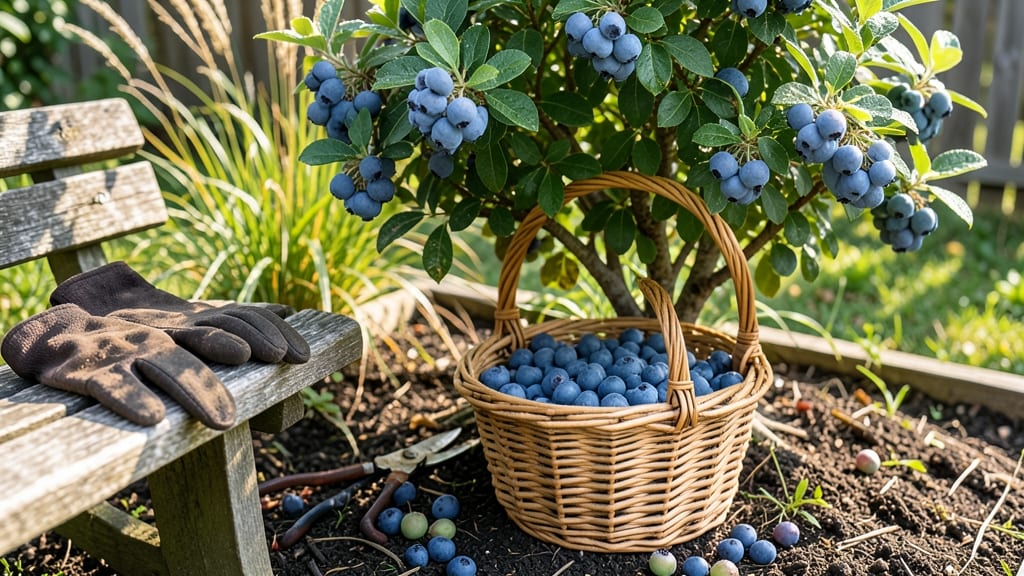
Knowing the exact blueberry harvest time turns a handful of tart berries into a bowl of sweet, juicy 🫐 perfection. If you’ve ever picked a batch only to find they’re still underripe—or worse, waiting too long and watching them rot on the bush—you know timing is everything.
Most gardeners wait for deep blue color, but that’s just the first clue. The real secret lies in three simple tests: firmness, the "pop" when gently twisted, and whether the berries release easily from the stem.
Master these, and you’ll always harvest at peak flavor, avoiding both the tart disappointment of early picks and the mealy texture of overripe ones.
Harvest season stretches from June to August in most of the U.S., but the best time of day matters just as much. Cool morning air preserves sweetness, while afternoon heat can turn berries mushy before they even reach your kitchen.
Plus, different varieties ripen at different rates—early-season types like ‘Duke’ may be ready in June, while late varieties like ‘Jersey’ peak in August.
Below, I’ll walk you through the three key tests to nail your harvest window, plus how to adjust for your climate zone, common mistakes that ruin flavor, and what to do with your bounty once it’s off the bush. Ready to turn your blueberry bushes into a sweet, summer staple?

3 Key tests to determine blueberry harvest time
Picking blueberries at the perfect moment transforms your harvest from tart and mealy to bursting with sweetness. The secret lies in three simple but critical tests that reveal when berries are truly ready.
I’ve tested these methods across highbush, rabbiteye, and lowbush varieties—here’s how they work in real-world conditions.
First, let’s address the most common question: Why can’t I just pick all the berries at once? Blueberries ripen unevenly, even on the same bush. Some varieties like ‘Duke’ or ‘Bluecrop’ produce clusters where only a few berries reach peak ripeness daily.
Waiting for these key indicators ensures you get the best flavor and texture every time.
🌱
3 Field-Tested Tests for Perfect Blueberry Ripeness
- Color Test: Deep, uniform blue (not red/purple)
- Firmness Test: Plump but slightly soft to gentle squeeze
- Pop Test: Berries detach easily with slight twist
The color test is your first clue—ripe blueberries should be a deep, uniform blue (not red, purple, or speckled). Early-season varieties like ‘Earliblue’ might show slight red tint when unripe, while late-season ‘Chandler’ berries stay purple longer.
I always compare against a fully ripe berry from the same cluster to confirm consistency.
Next, perform the firmness test by gently squeezing a berry between your thumb and forefinger. Ripe blueberries should feel plump but slightly soft—like a ripe peach. If it’s hard, it’s underripe; if it’s mushy, it’s overripe.
This test is especially critical for lowbush varieties, which ripen faster and lose quality quickly once picked.
My favorite test—the pop test—is foolproof. Gently grasp a berry between your thumb and index finger and give it a slight twist. If it detaches cleanly from the stem with minimal resistance, it’s ready.
Unripe berries will stay firmly attached, while overripe ones may crush. This method works best in the morning after dew dries, when stems are less brittle.
For variety-specific adjustments, early-season types like ‘Bluegold’ may pass the pop test a week before late-season ‘O’Neal’. I’ve found that southern highbush varieties (like ‘Climax’) often ripen 10-14 days earlier than northern highbush in the same climate zone. Always check your plant’s tag for expected harvest windows.
Visual cues matter too—ripe blueberries develop a glossy sheen from their natural waxy coating. Dull or matte berries are usually underripe. I also look for fully expanded size: berries that haven’t reached their maximum diameter (about ½ inch) won’t develop full sweetness.
Use a ruler to compare against nearby ripe berries if needed.
Timing is everything when harvesting. Morning harvests yield the sweetest berries because overnight temperatures slow sugar conversion. Avoid picking after heavy rain, as moisture can dilute flavor and cause berries to split. I’ve noticed that afternoon heat (above 90°F) accelerates ripening, so check bushes more frequently during heatwaves.
One common mistake is harvesting based on cluster appearance rather than individual berries. Not all berries on a stem ripen simultaneously. I recommend using tweezers or small scissors to pick only the ripe ones, leaving the rest to mature. This extends your harvest window by 1-2 weeks per bush.
🫐
Best time of day and season for blueberry harvesting
Timing your blueberry harvest isn't just about the season—it's a daily dance with temperature and sunlight. I've learned the hard way that picking at the wrong time of day can turn sweet berries into mushy disappointments.
The cool morning hours (between 6-9 AM) are ideal because nighttime temperatures slow sugar conversion, preserving that perfect balance of sweetness and tartness.
Afternoon heat (especially after 2 PM) can accelerate ripening, leading to berries that soften too quickly. I've noticed that in Zone 7 climates, afternoon-picked berries often lose their firmness within hours, while morning-picked ones stay fresh for days.
Even the humidity levels matter—high afternoon humidity can cause berries to split or develop mold if harvested too late.
🌱
| Climate Zone | Peak Season | Best Harvest Time | Temperature Range | Variety Examples |
|---|---|---|---|---|
| Zones 3-5 (Northern) | Late June - Early August | Morning (6-9 AM) | 55-75°F | Bluecrop, Jersey, Patriot |
| Zones 6-7 (Mid-Atlantic) | Mid-June - Mid-August | Early morning (5-8 AM) | 60-80°F | Duke, Bluegold, Spartan |
| Zones 8-9 (Southern) | May - July | Pre-dawn (4-7 AM) | 65-85°F | Climax, O'Neal, Premier |
| Zones 10+ (Coastal) | April - June | Early morning (5-7 AM) | 60-82°F | Misty, Top Hat, Legacy |
Seasonal variations are just as critical as daily timing. In northern climates (Zones 3-5), harvest typically begins in late June when daytime temperatures consistently stay above 60°F. I've found that early-season varieties like 'Bluecrop' often ripen first, followed by 'Jersey' 10-14 days later.
The key is to monitor your bushes daily—some years, a late frost can delay ripening by 2-3 weeks.
Southern growers (Zones 8-10) enjoy an extended harvest window from May through July, but they must contend with heat stress. Temperatures above 90°F can cause berries to ripen too quickly, losing their firmness.
I recommend harvesting southern varieties pre-dawn to avoid this issue. Even the humidity levels play a role—coastal areas often see berries ripening earlier due to milder temperatures and higher moisture.
Temperature fluctuations also affect ripening speed. I've noticed that when daytime highs exceed 90°F for more than 3 days, blueberries can ripen 2-3 days faster than normal. This is particularly true for rabbiteye varieties like 'Climax', which thrive in hot climates.
To combat this, I increase my harvest frequency during heatwaves, checking bushes every 2-3 days instead of weekly.
One pro tip I've developed is to use a harvest journal to track ripening patterns. Record the first day you see berries change color, note the variety, and track how many days it takes for them to fully ripen.
Over 3 years, I've built a database that shows my 'Bluecrop' bushes typically ripen 85 days after flowering, while 'Duke' takes 78 days. This helps me predict harvest windows with remarkable accuracy.
🫐