
How To
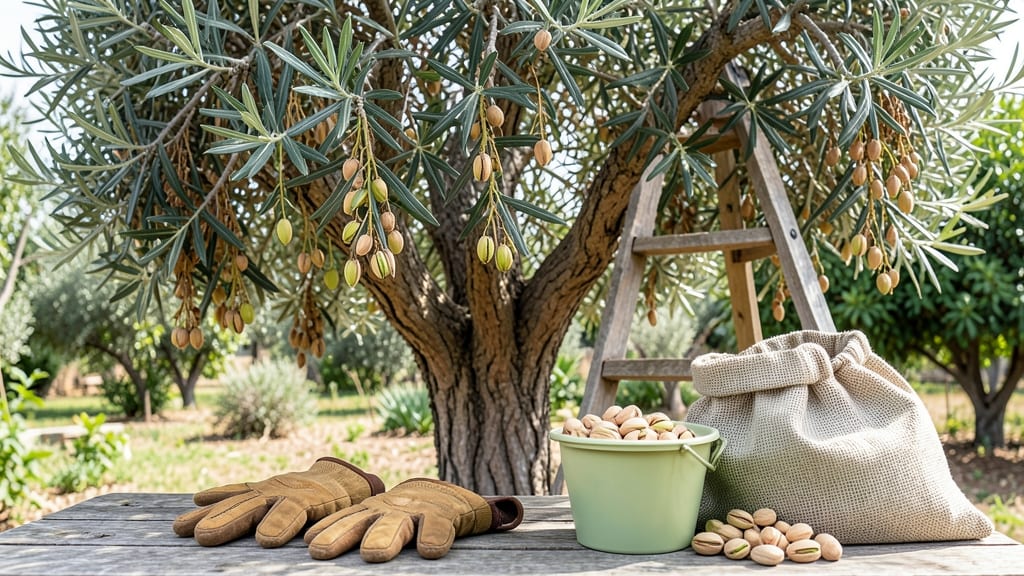
To harvest pistachios at their peak, watch for shells that soften and split naturally 🌳—this is the moment between bitter underripe nuts and overripe husks that shatter like dry kindling.
Pistachios are a prized crop—but timing your harvest wrong means bitter nuts and wasted effort. Whether you're a backyard grower in Zone 8-11 or managing a small orchard, missing the 4-6 week window after flowering can turn your labor into disappointment.
You’ll learn the exact shell-softening tricks to spot perfect ripeness—like the telltale rattle when you shake a branch or the shift from green to light brown husks—and how to avoid common mistakes that ruin quality.
From manual picking to mechanical harvests, I’ll walk you through every step to ensure your pistachios come out perfectly—ready for cracking, drying, or storing for months ahead.

When and how to determine pistachio ripeness for perfect harvest timing
Timing your pistachio harvest is everything—pick too early, and you'll end up with bitter, underdeveloped nuts. Too late, and the shells become brittle, making them difficult to crack. The key lies in mastering three ripeness indicators that signal peak maturity.
Start by monitoring your tree 4-6 weeks after flowering, as this is when pistachios enter their critical ripening phase.
First, focus on the hull color change. When pistachios are ready, the outer husk shifts from a vibrant green to light brown. This color transformation happens gradually, so check multiple branches daily during your final harvest window.
In hot, dry climates, this shift occurs faster—sometimes within just 2-3 weeks—while temperate regions may take closer to 6 weeks.
Next, perform the "rattle test" by gently shaking a branch. If the nuts inside the husk sound hollow and move freely, they're ready. Immature nuts feel heavy and solid, while overripe ones may rattle too loudly due to shell degradation.
This test is especially useful for hand harvesters who prioritize quality over quantity.
The third indicator is the most obvious: natural shell separation. At peak ripeness, the shells begin to split open slightly (about 1/8 inch), exposing the nut inside. If you see fallen husks on the ground with open shells, it's a clear sign to start harvesting.
Ignore this cue, and you risk losing nuts to pests or weather.
| Ripeness Indicator | Visual/Physical Cue | Climate Adjustment | Action Step |
|---|---|---|---|
| Hull Color | Light brown (from green) | Hot/dry: 2-3 weeks; temperate: 4-6 weeks | Monitor daily; harvest when 70% of hulls brown |
| Nut Movement | Hollow rattle when shaken | Drier climates: firmer nuts; wetter: softer rattle | Test 3 branches daily; prioritize hollow-sounding nuts |
| Shell Separation | Shells split 1/8 inch open | Windier areas: check earlier for damage | Harvest immediately; avoid cracked shells |
Climate plays a huge role in harvest timing. In hot, arid regions like California’s Central Valley, pistachios often ripen earlier in September due to accelerated growth. Meanwhile, cooler coastal areas may delay ripening until late October.
To adjust, track your local heat degree days (HDD)—pistachios typically need 1,500-2,000 HDD post-flowering to reach maturity.
For small-scale growers, I recommend harvesting in two passes: first for early-ripening branches, then again 7-10 days later for slower ones. This staggered approach ensures you capture all mature nuts without missing any.
Use a pruning saw or harvest bag to avoid damaging the tree, and work on cool, overcast days to prevent shell cracking from heat stress.
One common mistake is relying solely on calendar dates instead of visual cues. Even in the same region, trees can vary by 1-2 weeks based on variety (e.g., Kerman ripens earlier than Peter).
Always prioritize the three ripeness indicators over guesswork. Pro tip: Mark your calendar 4 weeks after flowering to start daily checks—this is your harvest window trigger.
If you're unsure, harvest a small test batch and crack the nuts to check flavor. Immature pistachios taste bitter and astringent, while overripe ones may be soft and oily.
Perfectly ripe nuts have a creamy texture and balanced sweetness. Store test samples in a cool, dark place for 24 hours to confirm they’re fully mature.
Finally, account for post-harvest drying time. Freshly picked pistachios need 2-3 weeks to dry properly in a well-ventilated area (60-70°F). If you harvest too late, the shells may dry out too quickly, making them brittle and prone to cracking.
Aim to finish drying before first frost in your zone to preserve quality.
Mastering these cues ensures you harvest flavorful, high-quality pistachios every season—whether you're growing a single tree or managing a small orchard. The more you observe, the easier it becomes to predict ripeness year after year. Happy harvesting! 🌳🌿
Step-by-step pistachio harvesting methods: manual vs. mechanical techniques
Harvesting pistachios requires precision to avoid bitter nuts or shell damage. For home gardeners, hand-picking is ideal, while commercial orchards rely on mechanical shakers. The key lies in shell-softening—whether through water soaking or controlled drying—to maximize yield without compromising quality.
Timing matters most: harvest when husks turn light brown and shells begin splitting. Miss this window, and you risk underripe nuts (bitter) or overripe nuts (prone to mold). Below, I break down the best methods for your orchard size and climate, plus pro tips to streamline the process.
| Method | Best For | Tools Needed | Shell-Softening Trick | Yield Impact |
|---|---|---|---|---|
| Hand-Picking | Small trees (≤10 ft) | Gloves, baskets, pruners | Controlled drying (2-3 days) | Highest quality, 0% damage |
| Mechanical Shakers | Large orchards (50+ trees) | Harvester, tarps, forklift | Water soaking (6-8 hours) | Faster, 15-20% yield loss |
| Hybrid (Hand + Shaker) | Medium orchards (10-50 trees) | Shaker + pruners | Partial drying (1 day) | Balanced 5-10% damage |
For hand-picking, start at the tree’s outer branches where nuts ripen first. Use a ladder with a basket to avoid dropping nuts. Once harvested, spread nuts on tarps in shade for 2-3 days to dry—this softens shells naturally without soaking.
Mechanical shakers are a game-changer for large orchards. These machines vibrate branches, dislodging nuts onto tarps below. After shaking, soak husks in lukewarm water (100°F) for 6-8 hours to loosen shells. Drain and dry immediately to prevent mold—a common pitfall in humid climates.
Pro tip: If your region is hot and dry, skip soaking entirely. Instead, let nuts air-dry for 5-7 days under a shade cloth. This method preserves flavor and texture while reducing labor. For humid areas, combine soaking with dehumidifiers during drying.
Regardless of method, harvest in the morning when nuts are cool and shells are firm. Avoid harvesting after rain—wet husks stick to branches, making mechanical methods ineffective. With the right technique, you’ll enjoy plump, flavorful pistachios ready for cracking or storing.