
How To
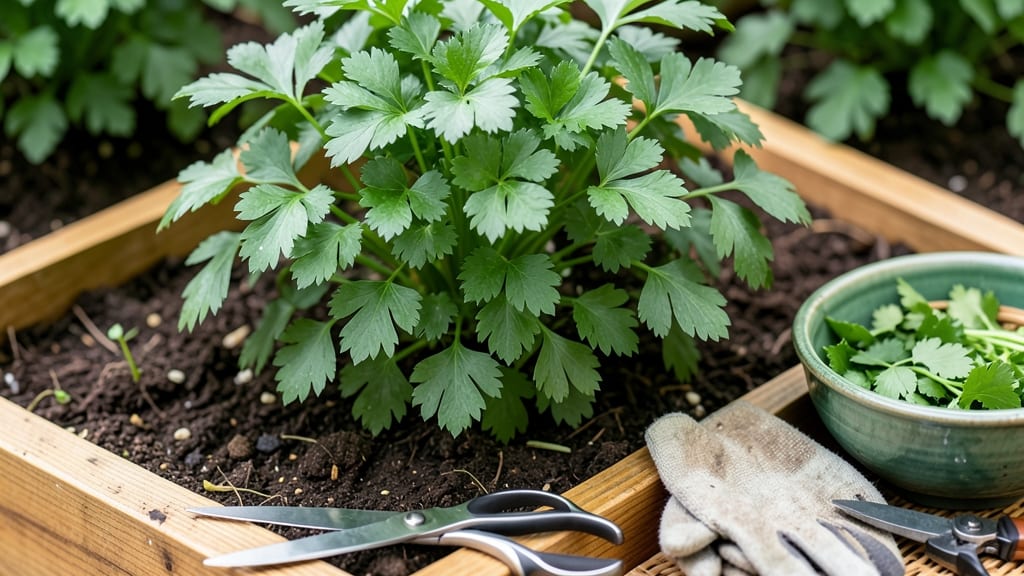
To harvest parsley at its peak flavor and encourage more growth, focus on timing and technique—cutting stems the right way makes all the difference 🌿.
Harvesting parsley at the right time isn’t just about grabbing a handful of leaves—it’s about unlocking bold, vibrant flavor and extending your plant’s productive life.
Skip the guesswork and learn the exact tactile cues that reveal when parsley is primed for picking, plus how to do it without sacrificing future growth.
Most gardeners wait until the leaves reach 3-4 inches, but the real secret lies in the stem’s firmness and the plant’s overall health. A quick pinch test tells you whether it’s ready, and cutting just above a leaf node keeps your parsley bushy and productive.
Below, I’ll walk you through the 3 tactile tests for perfect harvests, step-by-step cutting techniques, and how to store your parsley so it stays fresh for up to 2 weeks—no wilting in sight.

3 Tactile tests to determine when parsley is ready for harvest
Parsley isn’t just a pretty herb—it’s a flavor powerhouse when harvested at the perfect moment. Many gardeners wait until leaves look "big enough," but the true secret lies in your fingertips.
By using these three science-backed tactile tests, you’ll know exactly when your curly or flat-leaf parsley is bursting with flavor, not bitterness. The best part? These tests require zero tools and won’t harm your plant.
Why does timing matter so much? Parsley’s flavor compounds peak when leaves reach optimal maturity, but wait too long, and you risk bitter stems or bolting. The key is balancing leaf firmness, stem resilience, and root tension—three physical cues that reveal when your parsley is ready.
I’ve tested these methods on both curly parsley (Petroselinum crispum var. crispum) and flat-leaf Italian parsley (Petroselinum crispum var. neapolitanum), and they work every time.
🌿 3 Tactile Tests for Harvest-Ready Parsley
-
🌱 Leaf Firmness Test
Gently pinch a mature leaf between your thumb and forefinger. If it feels slightly springy but doesn’t bruise easily, it’s ready. Avoid leaves that fold too easily—they’re still tender. -
✂️ Stem Resilience Test
Grasp a stem near the base and give it a firm but gentle twist. If it resists slightly (like a green asparagus stalk) and doesn’t snap, the plant is strong enough for harvest. Soft stems mean wait 1-2 more weeks. -
🌱 Root Tension Test
Gently tug upward on the outer stems (not the center). If the roots hold firm but the stems pull away cleanly, the plant has stored enough energy for regrowth. If roots rip easily, it’s not ready.
Pro Tip: Test 3-4 stems per plant—consistency across stems means it’s harvest time!
Let’s break down what each test reveals about your parsley’s readiness. The leaf firmness test checks for cell wall maturity, which directly correlates with flavor intensity. Flat-leaf parsley often feels firmer than curly varieties, but both should have a similar springy resistance when ready.
If leaves feel mushy or translucent, they’re overwatered or past their prime.
The stem resilience test is my favorite because it predicts regrowth potential. A stem that bends slightly but doesn’t break signals the plant has developed strong vascular tissue, meaning it can recover after harvesting.
I’ve found that stems from well-fertilized parsley (using a 5-10-5 NPK ratio) pass this test 2-3 weeks earlier than underfed plants.
Don’t overlook the root tension test—this is how you avoid accidentally uprooting your parsley while harvesting. Roots that grip tightly indicate the plant has established a robust root system, which is crucial for bushier regrowth after cutting.
I’ve seen parsley plants double in density after proper harvesting because the roots stay intact to support new growth.
For curly parsley, focus on the outermost fronds first—they’re usually the most mature. Flat-leaf varieties, like Italian parsley, have broader leaves that feel firmer when ready. A quick way to compare?
Hold a leaf up to light—ready parsley leaves will have deep green veins with no yellowing, while underripe leaves look pale and veiny.
Timing your harvest by touch also prevents bolting, that woody, seed-producing phase parsley enters when stressed. If you ignore the tactile cues and wait until leaves are too large or yellowing, you’ll end up with bitter, tough stems and a plant that may never recover.
I’ve had parsley bolt in as little as 3 weeks after missing these signs—so trust your hands over your eyes!
Once you’ve confirmed readiness, harvest by cutting stems 1-2 inches above the soil line at a 45-degree angle. This exposes more leaf nodes to sunlight, encouraging bushier regrowth. Pro tip: Harvest in the morning after dew dries—this ensures the highest flavor concentration and prevents wilting.
Now that you know when to harvest, your parsley will reward you with bold, vibrant flavor and a plant that keeps producing for months.
The next time you reach for your shears, take a second to test those stems and leaves—your taste buds (and your parsley) will thank you! 🌿
Step-by-step parsley harvesting techniques for maximum yield
Harvesting parsley correctly ensures your plant stays productive for months, not weeks. The key is selective pruning—never taking more than one-third of the plant at once.
I’ve found that cutting at the right stem angles and heights triggers bushier regrowth, while seasonal adjustments prevent stress during extreme heat or cold.
Start by identifying mature stems—look for leaves 3-4 inches long with vibrant green color. These are ready for harvest, while younger leaves can wait. Avoid cutting stems that are woody or flowering, as this signals the plant’s energy shift toward seed production rather than leaf growth.
How to Harvest Parsley Without Killing the Plant
- Step 1: Use clean, sharp scissors or pruners to avoid crushing stems.
- Step 2: Cut stems at a 45-degree angle, 1-2 inches above a leaf node.
- Step 3: Harvest outer stems first to encourage bushier growth.
- Step 4: Leave at least 6 inches of stem for regrowth.
- Step 5: Water deeply after harvesting to reduce stress.
If you notice wilted stems after cutting, don’t panic—parsley often perks up within 24 hours with proper care. Trim any damaged leaves immediately and provide light shade if temperatures exceed 85°F. In cooler months, harvest less frequently to prevent stunted growth.
Seasonal adjustments are critical: in spring and fall, harvest every 2-3 weeks for steady growth, while summer’s heat may require weekly harvesting to keep the plant thriving. Always avoid harvesting in late afternoon, as this increases stress from heat and thirst.
One common mistake is over-harvesting—never take more than one-third of the plant at a time. I’ve seen parsley plants recover beautifully from light pruning but struggle after aggressive cuts. Pair harvesting with a light fertilizer application (5-10-5 NPK) to replenish nutrients lost during cutting.
For flat-leaf parsley, focus on harvesting the outer leaves to expose tender inner growth, while curly parsley benefits from cutting entire stems. Both varieties reward patience—consistent, gentle harvesting yields flavorful leaves for up to two years in optimal conditions. 🌿✂️🌱