
Flowers
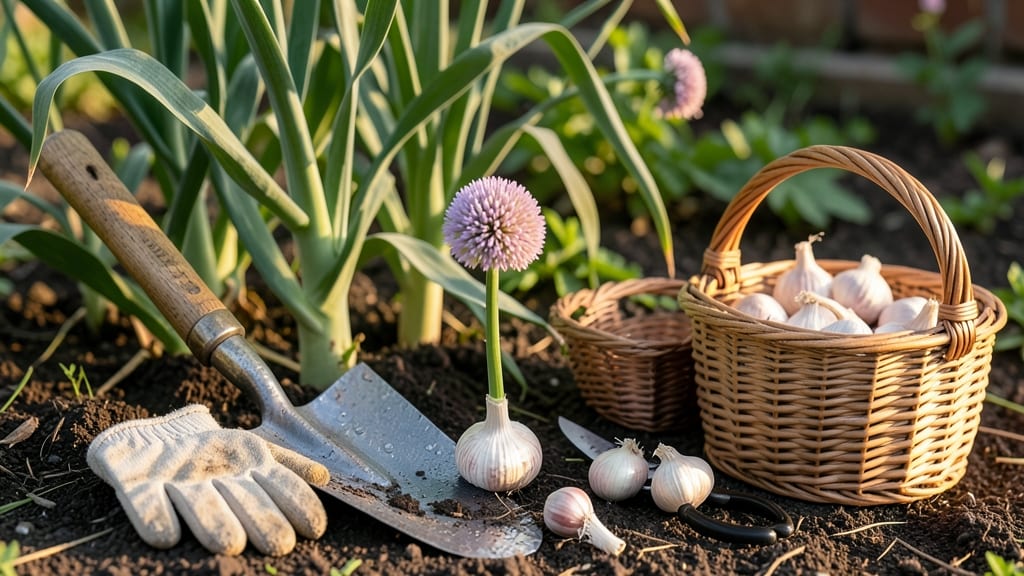
Harvesting garlic before or after it flowers determines whether you get large, flavorful bulbs or seed potential — and getting it wrong can cost you half your harvest.
Picture this: You’ve spent months nurturing your 🧄 garlic, only to stare at a field of tiny cloves because you waited too long. Or worse, you harvest early and miss out on seed-saving opportunities. The right timing balances both goals, and the science is simpler than you’d think.
Most gardeners focus on bulb size, but the flower stalk (called a scape) holds the key to seed production. Hardneck varieties, common in USDA Zone 6a, produce scapes that can be removed to redirect energy into bigger bulbs — or left to flower for seeds.
Softnecks, meanwhile, rarely flower and are all about bulb development.
In this guide, I’ll break down the exact signs to watch for — from leaf browning to bulb firmness — and how to adjust for your climate. By the end, you’ll know when to harvest for maximum yield, whether you’re after dinner-table garlic or next year’s planting stock.

When to harvest garlic for largest bulbs: pre-flowering timing explained
Harvesting garlic at the right time ensures you get large, flavorful bulbs instead of tiny cloves. The key is understanding your variety type and soil temperature cues. Most gardeners aim to harvest before flowering begins, but hardneck and softneck varieties have different timelines.
For hardnecks, the flower stalk (scape) signals maturity, while softnecks rarely flower and rely on leaf browning.
Your harvest window opens when the lower leaves turn brown and crispy, but the upper leaves remain green. This usually happens 6-8 weeks before the first frost in your USDA Zone 6a.
In warmer climates, like Zone 8-10, this window shifts to late spring or early summer. The goal is to harvest when bulbs feel firm but before the tops flop over completely.
Here’s the critical decision: hardneck varieties produce scapes (flower stalks) that can be removed to redirect energy into bulb growth. If you leave the scape, the bulb will be smaller but you’ll get seeds. Softneck varieties, like Silverskin, rarely flower and focus entirely on bulb development.
Knowing your variety’s behavior saves you from harvesting too early or too late.
Soil temperature plays a huge role in timing. For spring-planted garlic, harvest when soil temps hit 75-80°F and lower leaves start browning. In fall-planted garlic, aim for harvest in late June to early July, before the heat peaks.
If you’re in a cool climate, like Zone 4-5, extend your harvest window by a few weeks—just watch for frost warnings.
To check bulb maturity, gently dig up one plant and examine the bulb. It should feel firm and solid, with a tight neck where the cloves meet. If the bulb feels soft or spongy, it’s not ready.
Overripe garlic splits or develops mold, ruining your harvest. The papery skin forming around the bulb is your final green light.
Regional adjustments matter. In early-season planting zones (like Zone 7+), garlic may mature faster. In late-season zones (like Zone 5 or colder4-6 weeks before your first frost for a reliable harvest. For example, in Zone 6a, aim for a September planting date.
If you’re growing garlic for seed production, leave the scapes intact until they flower. However, this reduces bulb size by 30-50%. For the largest bulbs, remove scapes as soon as they appear—this redirects energy to the bulb.
Use sharp scissors to cut scapes 2-3 inches above the bulb to avoid damaging the plant. Save the scapes for garlic chives or seed collection.
One common mistake is waiting too long. If you harvest after the tops flop over, bulbs shrink and cloves separate. Another is harvesting too early, resulting in small, underdeveloped bulbs.
The ideal harvest day is when the lower leaves are brown but the upper leaves are still green. This balance ensures maximum bulb size without sacrificing quality.
Pro tip: Mark your calendar based on your last frost date. For Zone 6a, count back 240 days from your first frost to determine planting time.
Then, plan to harvest 60-70 days before the first frost. This timing ensures bulbs mature fully but avoids overripening. Adjust by ±10 days for earlier or later zones.
Finally, cure your harvested garlic properly to preserve its quality. Lay bulbs in a shady, well-ventilated area for 2-4 weeks to dry the skins. Avoid direct sunlight, which can cause bleaching.
Once cured, store bulbs in a cool, dark place with good airflow. This step is crucial for long-term storage and flavor retention.
Garlic flowering stages: how to collect seeds without sacrificing bulb quality
When your garlic scapes emerge, you’re standing at a crossroads: harvest them to boost bulb size or let them flower for seeds. Hardneck varieties like ‘German White’ or ‘Music’ produce these curly stalks, while softnecks rarely flower. The decision hinges on your goals—flavorful bulbs or seed-saving for next year’s crop.
Removing scapes redirects energy to bulb development, often increasing size by 20-30%. But leaving them intact allows pollination, producing seeds for hardneck varieties—though bulbs may shrink by 10-20%.
The key is timing: prune scapes when they curl into a loop (about 1/3 of their length) to avoid wasting energy on flower development.
🌱 Pros & Cons: Harvest Scapes or Let Them Flower?
✅ Harvest Scapes
- Bigger bulbs (20-30% larger)
- More energy for root growth
- Easier storage (drier bulbs)
- No seed loss (if you don’t need seeds)
❌ Let Them Flower
- Smaller bulbs (10-20% reduction)
- Seed production (for hardnecks)
- Genetic diversity for heirloom varieties
- Longer harvest season (wait for seed pods)
To collect seeds, leave scapes intact until they form green seed pods (about 6-8 weeks after flowering). Harvest pods when they turn brown and dry, then store them in a cool, dark place for 3-4 months to dry.
Plant dried seeds in fall for next year’s crop—just remember, seed-grown garlic takes 2 years to mature.
For seed viability, prioritize healthy, disease-free scapes. Avoid harvesting seeds from bulbs showing signs of rust or mold, as these traits can carry over. Store seeds in paper envelopes with their variety name and harvest date labeled—this prevents cross-contamination and helps track performance over time.
If you’re torn between bulbs and seeds, consider dedicating half your patch to each goal. For example, harvest scapes from 60% of plants for larger bulbs and leave the rest to flower.
This way, you get both immediate harvests and future seed stock. Just monitor soil moisture—drought stress can reduce bulb size even if scapes are removed.
Pro tip: Use a sharp pruning shear to cut scapes cleanly, about 2 inches above the bulb. This minimizes damage and encourages faster bulb maturation. For seed collection, wait until pods are fully dry before handling—wet seeds mold quickly and lose viability.