
Picking
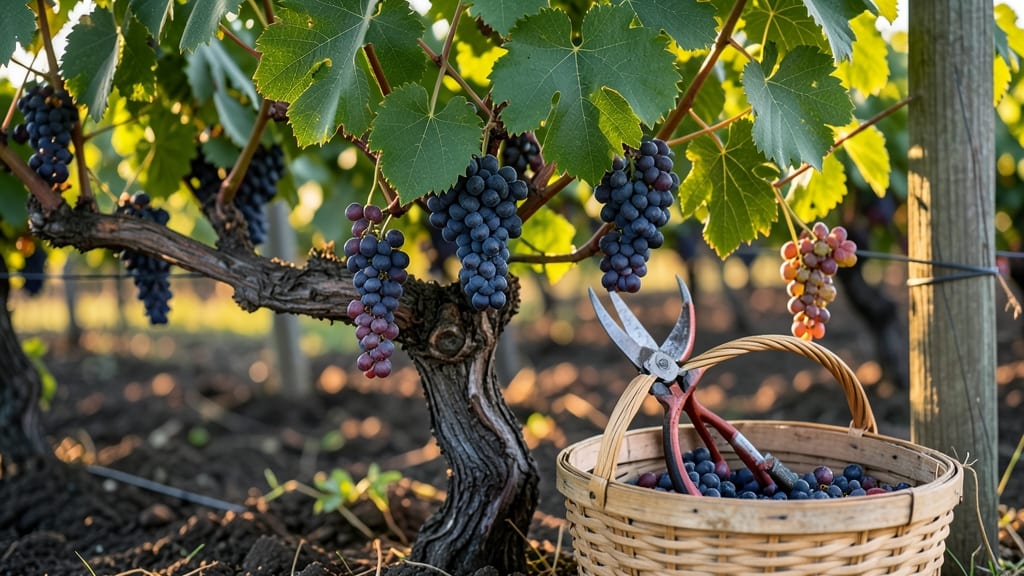
Knowing when grapes reach their peak for harvest season is the difference between wine that sings and jam that tastes like sugar water.
Picture this: you’ve spent months tending to your 🍇 vines in USDA Zone 6, and now the moment arrives—when do you pull those clusters? Too early, and you’re left with tart, underripe fruit.
Too late, and you risk shriveling or bird damage. The perfect window isn’t just about color or size; it’s about sugar levels, acidity, and that elusive "just-right" texture.
For table grapes, that sweet spot often lands in late August to early October, but wine grapes like Cabernet Sauvignon or Chardonnay might wait until September or October when sugars peak.
Regional climate plays a huge role—warmer areas like California harvest earlier, while cooler zones like the Pacific Northwest stretch it into fall.
In this guide, I’ll walk you through how to test for ripeness (yes, there’s a science to it), regional harvest timelines, and the three biggest mistakes that turn a great harvest into a disappointment. Let’s make sure your grapes shine.

How to determine the perfect grape harvest season timing
Nailing the perfect grape harvest timing transforms good grapes into exceptional ones. Whether you're growing wine grapes, table grapes, or juice grapes, ripeness isn't just about color—it's about the science of sugar accumulation, acidity balance, and flavor development.
I've learned that even a few days early or late can drastically alter taste, texture, and even wine quality.
For most grape varieties, harvest typically falls between late summer and early fall, but the exact timing depends on your climate zone, grape variety, and even microclimates in your yard.
In USDA Zone 6, where many home vineyards thrive, grapes often ripen between late August and October. But without precise methods, you might miss the sweet spot.
Here's the game-changer: combining visual cues with scientific measurements. I've tested grapes using Brix readings, acidity tests, and even seed color changes—each method reveals a different layer of ripeness. Let's break down how to use these tools together for flawless timing.
Let's start with the Brix test, my favorite scientific method. A refractometer measures the sugar content in grapes, expressed as degrees Brix.
For table grapes, aim for 18-24° Brix—this ensures sweetness without cloying richness. Wine grapes, however, need higher sugar levels, typically 22-26° Brix, to develop proper alcohol content and flavor complexity.
I always test grapes from multiple clusters since ripeness can vary within the same vine. For red wine grapes like Cabernet Sauvignon, I look for 24°+ Brix, while white wine grapes like Chardonnay often peak at 22-24° Brix.
Remember, cooler climates will naturally produce grapes with lower Brix levels, so adjust your expectations accordingly.
Next, don't overlook acidity levels. While higher sugar content makes grapes sweeter, acidity balance prevents them from tasting flat. Use a pH meter or acidity test kit to check levels. Wine grapes typically thrive at 3.0-3.8 pH, while table grapes often sit between 3.5-4.5 pH.
If acidity drops too low, your grapes may taste dull or overly sweet.
For a quick at-home test, I squeeze grape juice onto litmus paper or use a simple taste test. High-acid grapes will have a noticeable tartness, while low-acid grapes taste bland. The perfect balance creates that bright, vibrant flavor we all love in fresh grapes and wines.
Visual cues are equally important. Watch for uniform color changes—this is one of the most reliable indicators. Red grapes should turn deep purple, green grapes should develop a golden hue, and white grapes should lighten to pale yellow. I
Regional grape harvest seasons: when to pick in your area
Knowing when to harvest grapes depends entirely on your climate zone and local weather patterns. In cooler regions like the Pacific Northwest, grapes may not ripen until late September or October, while warmer climates like California’s Central Valley can see harvests as early as late August.
Even within the same state, microclimates can shift harvest windows by weeks. Understanding these regional differences ensures you pick grapes at peak sugar content and flavor intensity.
Rainfall also plays a critical role—excessive moisture before harvest can dilute sugars, while drought stress can concentrate flavors too much. For example, Napa Valley wine grapes often benefit from a dry spell in September to enhance their aromatic complexity.
Meanwhile, table grape varieties like Thompson Seedless may need consistent moisture to avoid shriveling. Adjusting your harvest schedule based on forecasted weather can mean the difference between a perfect crop and one ruined by rot or birds.
🌍 Global hotspots offer fascinating contrasts too. In Tuscany, Italy, Sangiovese grapes for Chianti wine are typically harvested in late September to early October, while Chile’s Casablanca Valley can harvest Sauvignon Blanc as early as February or March in their southern hemisphere growing season. Even within the U.S., Midwestern vineyards like those in Ohio may harvest Concord grapes in late August, while Southeastern states like Georgia might extend into October for Muscadine varieties.
| Region | Primary Grape Varieties | Harvest Window | Key Climate Factors | Pro Tip |
|---|---|---|---|---|
| Pacific Northwest (WA/OR) | Pinot Noir, Riesling, Concord | Late Sept - Early Oct | Cool nights, moderate rainfall | Wait for 22-24° Brix for Riesling |
| California (Central Valley) | Cabernet Sauvignon, Chardonnay, Zinfandel | Late Aug - Early Sept | Hot days, dry conditions | Harvest Zinfandel at 24-26° Brix |
| Midwest (OH/MI) | Concord, Niagara, Catawba | Late Aug - Mid Sept | Humid summers, variable rainfall | Check for seed color change in Concord |
| Southeast (GA/NC) | Muscadine, Scuppernong, Catawba | Sept - Oct | Hot, humid, frequent rain | Harvest Muscadine before birds strip clusters |
| France (Bordeaux) | Merlot, Cabernet Franc | Late Sept - Oct | Mild maritime climate | Target 23-25° Brix for Merlot |
| Italy (Tuscany) | Sangiovese, Trebbiano | Late Sept - Early Oct | Warm days, cool nights | Harvest Sangiovese at 22-24° Brix |
| Chile (Casablanca Valley) | <