
Vegetables
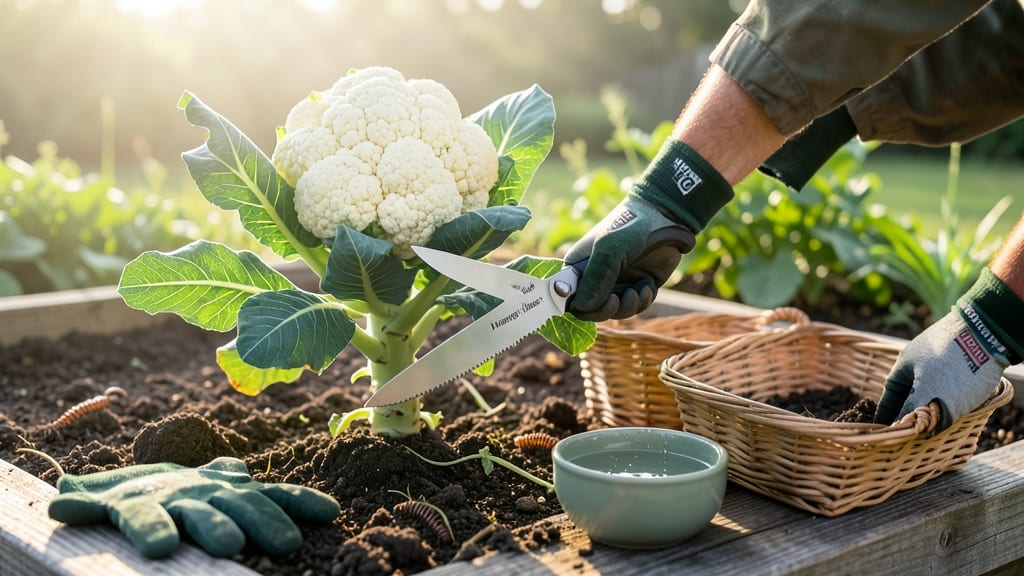
The time to harvest cauliflower is when the heads reach 6-8 inches and the outer leaves begin turning yellow 🥬—any later and you’ll lose that signature crunch.
Picture this: you’ve nurtured your plants for months, and now the moment is here. But wait too long, and those tight buds loosen, turning bitter or woody.
The difference between a restaurant-worthy head and a sad, overripe mess comes down to three key visual cues—and I’ll show you exactly what to look for.
Whether you’re in Zone 6a or further south, timing matters. Cauliflower thrives in cool weather, so harvest between June and August to beat the heat. Miss the window, and you’ll end up with tough, stringy florets instead of the tender bites you’re after.
In this guide, I’ll walk you through the perfect harvest technique, how to spot underripe or overripe heads, and what to do if you’ve already missed the boat. No more guesswork—just crisp, flavorful cauliflower every time.

3 Visual cues to identify perfectly ripe cauliflower heads
Timing your cauliflower harvest is everything—one day too early means a small, underdeveloped head, while waiting too long results in a tough, bitter mess. The secret lies in these 3 visual cues that guarantee you’ll pick your crop at its peak.
Trust me, your taste buds will thank you when you serve that perfectly crisp, flavorful cauliflower instead of a sad, overripe disappointment.
First, let’s address the most common mistake: assuming size alone determines ripeness. A 6-8 inch diameter head is ideal, but color and leaf condition matter just as much. Ignoring these signals often leads to harvests that fall short of restaurant-quality texture.
I’ve learned this the hard way after growing cauliflower for years—now I check all three cues before making the cut.
- 🟢 Color Consistency: Perfect heads show uniform white, purple, or green (depending on variety) with no yellowing or browning on the curds. Uneven coloring means it’s either underripe or stressed.
- 📏 Head Size & Firmness: Aim for 6-8 inches in diameter—any smaller lacks full flavor, and larger heads become woody. Gently squeeze: a ripe head feels solid and dense, never spongy.
- 🍂 Leaf Signals: The outer curly leaves should start browning at the edges (a sign of maturity), but the head itself must remain tightly wrapped. If leaves are fully green, wait 3-5 days.
Let’s break down the color cue first, because this is where most gardeners go wrong. White cauliflower should be a creamy, bright white—think fresh snow, not off-white or dull. For purple varieties like Graffiti, the color should be deep and vibrant, not faded.
I once harvested a batch of purple cauliflower that looked beautiful but tasted bland because the color had faded—turns out, it was overripe. Always check the inner curds by peeling back a few leaves.
The size and firmness test is non-negotiable. A head that’s 6-8 inches wide is your sweet spot—anything smaller is still developing its full flavor profile, while larger heads become woody and fibrous. To test firmness, gently press the head with your thumb.
It should feel firm like a tennis ball, not soft like a sponge. Pro tip: If you see tiny yellow flowers starting to form in the center, you’ve waited too long—those buds turn the head bitter.
Now, let’s talk about the leaf signals, which are often overlooked. The outer leaves should be starting to yellow and brown at the edges, but the head itself must remain fully enclosed.
If the leaves are still bright green and tightly wrapped, your cauliflower needs 3-5 more days of growth. I learned this lesson when I harvested a batch too early—my cauliflower tasted bland and lacked that satisfying crunch.
Conversely, if the leaves are completely brown and crispy while the head is still white, it’s overripe and past its prime.
Here’s how to troubleshoot overripe vs. underripe cauliflower using these cues. An underripe head will be small (4-5 inches), pale in color, and have tightly wrapped green leaves. The texture will be loose and watery when squeezed.
On the flip side, an overripe head might look impressive in size but will have yellowing or brown curds, loose leaves, and a woody, bitter taste. Both scenarios are avoidable with these visual checks.
One trick I swear by is the "finger test" for firmness. Run your fingers over the head’s surface—it should feel smooth and slightly bumpy, like a well-made cheese wheel. If it feels rough or grainy, it’s overripe.
For extra peace of mind, I also check the stem end: a ripe head will have a small, tight base, while an overripe one will feel spongy or hollow when pressed gently.
Seasoned gardeners often ask, "What if my cauliflower heads split?" This usually happens when the plant is stressed by uneven watering or temperature swings. If you see cracks, harvest immediately—even if it’s not perfectly ripe—because the head will continue to deteriorate.
In my garden, I’ve found that consistent morning watering and light mulching prevent this issue entirely. Split heads are still edible, but they won’t have that prized restaurant-quality texture.
Finally, don’t forget that variety matters. Purple cauliflower like Graffiti or Primo might look stunning but need slightly different care than white varieties. For example, purple heads often ripen 1-2 days faster and can tolerate slightly cooler temps.
Always check your seed packet for days to maturity and adjust your visual cues accordingly. I’ve grown both types side by side, and while the color cues differ, the size and firmness rules remain the same.
Mastering these 3 visual cues will transform your cauliflower harvests from "meh" to "Michelin-star-worthy." Once you start picking at peak ripeness, you’ll never go back. Trust the color, size, and leaf signals, and your garden will thank you with crisp, flavorful heads every time. Happy harvesting! 🥬
How to harvest cauliflower without damaging future growth
Once you’ve spotted that perfectly ripe cauliflower head, the next step is harvesting it without harming your plant’s ability to produce more. A sharp cut and gentle handling make all the difference—especially if your plant is still capable of producing secondary heads.
I’ve learned the hard way that a clumsy harvest can leave your plant vulnerable to pests or disease, so let’s do this right.
You’ll need just two tools: a clean, sharp knife or pruners (sterilized with rubbing alcohol) and a small bowl to collect your harvest. Avoid using dull tools—they crush the stems and invite rot.
And here’s a pro tip: harvest on a cool morning when the plant’s moisture levels are balanced, making the cut cleaner and reducing stress on the plant.
Step-by-Step Harvesting Guide
- 1 Locate the stem: Find the thick, woody stem where the head meets the plant. This is your cutting point—aim 1-2 inches below the head to avoid damaging the growing tip.
- 2 Make a clean cut: Use your sterilized knife to slice through the stem at a 45-degree angle. This prevents water from pooling on the cut, which can cause rot. A swift, single motion is key—no sawing!
- 3 Remove outer leaves: Strip away the yellowing outer leaves but leave the inner ones intact. These protect the head and help it stay fresh longer. Toss the leaves into your compost—no waste here!
- 4 Inspect the plant: After harvesting, check the plant for secondary heads forming at the base. If you see small, tight buds, your plant might produce another head in 4-6 weeks with proper care.
- 5 Post-harvest care: Water the plant deeply right after harvesting to help it recover. Avoid fertilizing for 1-2 weeks—let it focus on regrowth, not new leaves.
After harvesting, store your cauliflower in a perforated plastic bag in the fridge for up to 5-7 days. The perforations keep it crisp by allowing airflow. If you’re not using it right away, consider blanching and freezing—this preserves texture and flavor for months.
And here’s a bonus tip: companion planting with thyme or dill can deter pests and improve your plant’s resilience after harvest.
If your cauliflower plant is still healthy, it might surprise you with side shoots or even another head. Keep an eye out for those tight, compact buds forming near the base.
With the right care, one plant can give you two or three harvests in a season—talk about a gardener’s reward!
Remember, the goal is to minimize stress on the plant while maximizing your yield. A little patience and precision go a long way in turning your garden into a cauliflower powerhouse. Happy harvesting! 🥬