
Flowers
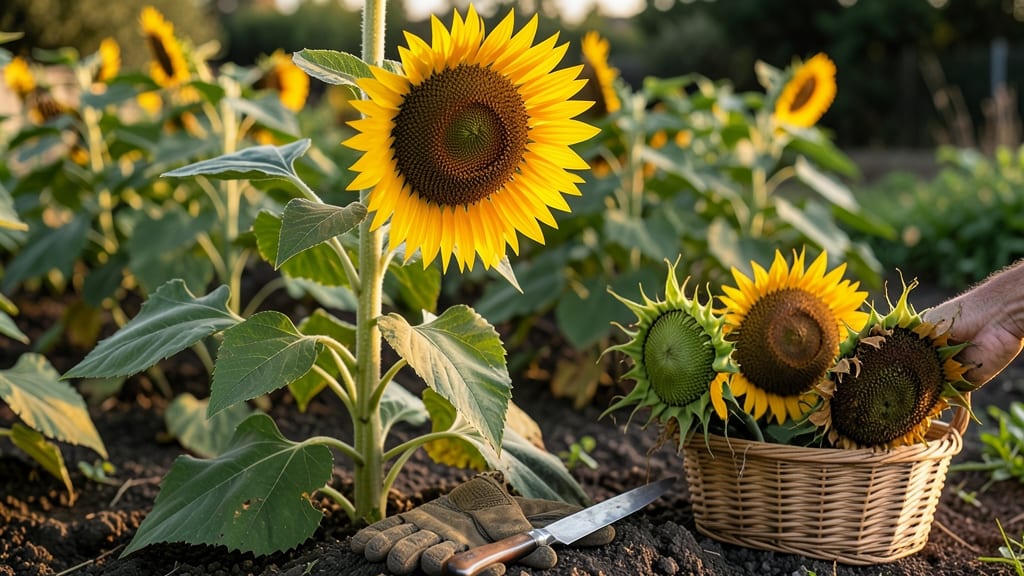
Harvesting sunflowers at the right time ensures you get crisp, flavorful seeds instead of bitter, shriveled ones — and the key is watching for those perfect visual cues.
Picture this: your 🌻 sunflowers stand tall in your USDA Zone 6a garden, their petals wilted and turning brown while the back of the head shifts to a pale yellow.
That’s your golden window — usually between August and September — when seeds are ripe but before birds or squirrels beat you to them.
Too early, and you’ll end up with green, underdeveloped seeds; too late, and they’ll dry out or sprout in the head. The difference between these extremes is all in the timing, and I’ll break down exactly how to spot the signs so you never miss the harvest again.
From the petal drop to the seed’s firmness, here’s what to watch for — plus how to store your harvest for months of freshness, whether you’re saving seeds or drying flowers for arrangements.

Sunflower harvest timeline: petal drop vs. seed maturity stages
Harvesting sunflowers at the right time ensures you get high-quality seeds with maximum flavor and viability. The key is watching for petal drop and seed head maturity, which can vary by early vs. late varieties.
Early varieties like 'Teddy Bear' mature in 50-60 days, while standard types like 'Mammoth' take 80-120 days to reach harvest readiness.
Most gardeners focus on visual cues rather than days after planting since weather and soil conditions affect maturity. The first sign is when petals begin wilting and turn brown—this signals the plant is redirecting energy to seed development.
However, the seeds aren't ready yet; you'll need to wait 2-4 more weeks for full maturity.
⚠️ Critical Mistake: Harvesting too early (when petals are still vibrant) results in underdeveloped seeds that won't germinate well. Harvesting too late (when seeds turn black or sprout) produces bitter, low-quality seeds. Timing is everything for optimal seed quality.
For early varieties, the harvest window typically opens in late July to early August, while standard varieties reach maturity in August to September. In cooler climates (USDA zones 3-5), expect harvests to shift 2-4 weeks later compared to warmer zones (7-10).
Always account for your local frost dates—if frost threatens before seeds mature, harvest early and complete drying indoors.
Pay attention to the seed head's physical characteristics. A mature sunflower head should feel solid and dry when gently squeezed—if it crumbles easily, it's underripe. Conversely, if the seeds inside are black and shriveled, the head has passed its prime.
The perfect harvest moment occurs when you can hear seeds rattle inside when shaken gently.
If you're growing sunflowers for cut flowers rather than seeds, harvest when petals are fully open but before they wilt. Use sharp pruners to cut the stem at a 45-degree angle just above a leaf node.
For seed production, leave the flower heads on the plant until fully mature, then cut the entire stem and hang it upside down in a dry, well-ventilated space to complete drying.
Regional climate plays a huge role in timing. In Southern states (zones 8-10), early varieties may mature as soon as June, while in Northern states (zones 1-4), even late varieties might not reach maturity until September or October.
Always monitor your plants daily during the harvest window—missing the optimal time by even a few days can reduce seed quality significantly.
Pro tip: Keep a harvest journal to track maturity dates for your specific varieties and climate. Note the days to maturity, petal drop date, and final harvest date.
This helps you predict future harvests more accurately and adjust planting times for next season. Over time, you'll develop an intuitive sense for when your sunflowers are ready to harvest.
Remember that seed maturity is the ultimate goal for most gardeners, but the petal drop stage is your first warning that the clock is ticking. Don't rush—patience ensures you'll reap the rewards of flavorful, viable seeds ready for planting or snacking. 🌻
How to test sunflower seed maturity before harvesting
Testing sunflower seed maturity is all about three key indicators: petal condition, seed head color, and physical firmness. When these align, you’ve hit the perfect harvest window—typically 70-90 days after planting for most varieties.
Start by checking the petal drop—when they begin wilting and turning brown, that’s your first sign.
Next, examine the back of the flower head. It should shift from green to a pale yellow or tan color, indicating the seeds inside are maturing. This color change happens gradually, so monitor your plants daily during late summer to catch the exact moment.
Premature harvesting (green seeds) results in bitter, underdeveloped seeds that won’t store well. Overripe seeds (dry, cracked heads) lose flavor and may sprout in the head. Test one flower head first to confirm maturity before cutting the entire stalk.
The squeeze test is your most reliable method. Gently press a seed head—it should feel firm and dry (like a hard-boiled egg) with no give. If it’s still soft or squishy, wait 3-5 more days.
For extra accuracy, cut open a seed head: mature seeds will be plump and grayish-black, while immature ones stay green and moist.
Moisture content is another critical factor. Use a moisture meter (or the finger test) to check seed heads—ideal moisture is 10-12%. If seeds feel damp when touched, they’re not ready. Harvest on a dry, sunny morning to ensure quick drying post-harvest, which prevents mold and extends storage life.
Don’t forget to cut stems at the base with pruning shears, leaving 2-3 inches of stem attached. Hang harvested heads upside down in a dry, dark place (like a garage) for 2-3 weeks to fully dry. This step is crucial—rushing drying leads to shriveled, unusable seeds.
Pro tip: Label your varieties if growing multiple types, as maturity timelines can vary by 1-2 weeks. Early varieties (like 'Teddy Bear') may be ready by mid-August, while standard types (like 'Russian Giant') peak in September.
Keep a harvest journal to track your garden’s unique schedule!