
Picking
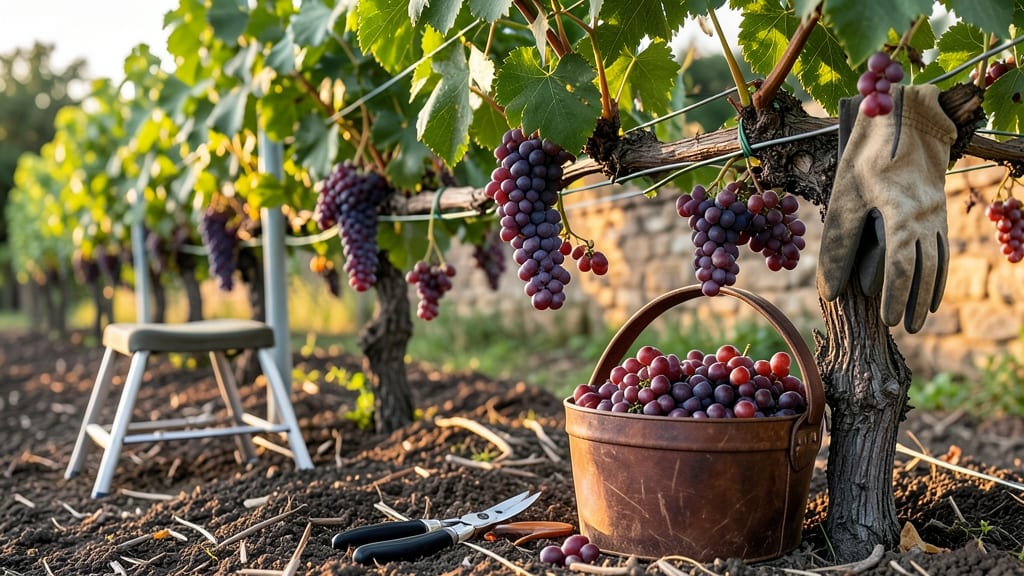
The time to harvest grapes depends on color, sugar levels, and how you plan to use them — but getting it wrong means bitter fruit or lost flavor.
Picture this: you’ve waited months for your 🍇 vines to ripen, only to pick grapes that taste more like vinegar than dessert. That’s the risk when you harvest too early. Or worse, you wait too long, and the birds get to them first.
Here’s the good news: with a few simple tests — like the stem twist, berry color, and sugar check — you can nail the perfect harvest window for table grapes, wine, or even raisins. I’ll walk you through each method, plus how climate and grape type change the timing.
By the end, you’ll know exactly when to reach for those pruners, whether you’re in Zone 6a or a warmer region. No more guesswork, just sweet, juicy grapes every time.

How to determine the perfect grape harvest time using berry color and stem tests
Harvesting grapes at the perfect moment ensures maximum sweetness, flavor, and texture—whether you're growing table grapes, wine grapes, or raisins. Unlike many fruits, grapes don’t ripen further after picking, so timing is everything.
The key lies in combining visual cues (berry color) with tactile tests (stem detachment and seed development) to avoid the pitfalls of overripe or underripe fruit.
For table grapes, aim for a balance of sweetness and firmness, while wine grapes need slightly higher sugar levels and lower acidity. Raisin grapes, on the other hand, should be harvested when they’re overripe to concentrate sugars naturally.
Below, I’ll break down the berry color changes and stem tests that signal it’s time to harvest, plus how to adapt these methods for your specific grape variety and climate.
| Grape Type | Berry Color Cue | Stem Detachment Test | Seed Development | Harvest Window |
|---|---|---|---|---|
| Table Grapes (e.g., Thompson Seedless) | Deep, uniform color (green, red, or purple) | Stem separates easily with slight twist | Seeds fully brown inside | Late August–September |
| Wine Grapes (e.g., Cabernet Sauvignon) | Rich, deep purple/blue (no green tint) | Stem pops off with gentle pull | Seeds dark brown, slightly shriveled | Late September–October |
| Raisin Grapes (e.g., Muscat) | Overripe, slightly wrinkled skin | Stem detaches without resistance | Seeds black and brittle | Early October–November |
The berry color is your first clue—grapes should transition from pale green or dull hues to their full, vibrant color. For red grapes, this means a deep crimson; for purple varieties, a rich, wine-like shade.
Green grapes like Thompson Seedless should turn a bright, golden-green. Pro tip: Check grapes on the shady side of the vine first, as they ripen more slowly and indicate overall readiness.
A stem test is just as critical. Gently grasp a grape cluster and twist it toward the vine. If the stem detaches cleanly (without tearing the berry), it’s ready. For wine grapes, the stem should pop off with minimal effort, while table grapes may require a slight twist.
If the stem resists or the berry splits, wait 2–3 more days. This test ensures the grapes are ripe enough to handle transport and storage without bruising.
Don’t overlook the seed test, especially for wine and raisin grapes. Slice open a grape and inspect the seeds: they should be fully brown and firm for table grapes, while raisin grapes need seeds that are black and brittle.
Underripe seeds are pale or white, signaling the grapes need more time on the vine. This method is particularly useful for early-season varieties that ripen before color changes are obvious.
Climate plays a huge role in harvest timing. In warmer regions (USDA Zones 8–10), grapes may ripen 2–3 weeks earlier than in cooler zones (Zones 5–7). For example, Cabernet Sauvignon in California might be ready by early September, while the same variety in Oregon could wait until late October.
Always monitor local weather forecasts—a sudden heatwave can accelerate ripening, while cool nights may delay it.
One common mistake is harvesting based solely on size. Just because grapes are plump doesn’t mean they’re sweet! Always combine color, stem test, and seed development for accuracy. For organic growers, avoid using synthetic ripening agents; instead, rely on these natural indicators.
If you’re unsure, harvest a small batch first and taste-test after 24 hours—this gives you a real-world gauge of ripeness.
For large-scale harvests, pick grapes in the early morning when temperatures are cool. This preserves flavor and reduces spoilage. Store harvested grapes in a single-layer tray in the fridge (32–35°F) for up to 2 weeks.
If you’re drying grapes for raisins, harvest when they’re slightly overripe—this ensures they’ll plump up properly during the drying process.
Remember, every grape variety has its quirks. For instance, Concord grapes (used for jelly) should be harvested when they’re deep purple and slightly soft, while Flame Seedless grapes (a table grape) are best when their skin turns a bright red-orange.
When in doubt, refer to your variety’s specific growing guidelines or consult local extension services for regional advice.
Mastering the art of grape harvesting takes practice, but once you
The sugar test method: Brix levels for ideal grape ripeness
When it comes to grape harvesting, the sugar content (measured in Brix levels) is one of the most reliable indicators of ripeness.
Unlike visual cues, which can be misleading, a refractometer gives you precise data to determine the perfect harvest window for your grapes—whether you're growing them for fresh eating, wine, or drying.
A refractometer measures the sugar concentration in grape juice, expressed as a percentage (Brix). For example, a 20 Brix reading means 20% of the grape’s weight is sugar.
This method is especially useful for wine grapes, where sugar levels directly impact flavor and alcohol content, but it’s also valuable for table grapes and raisins.
Here’s how to use Brix levels to guide your harvest decisions, tailored to your grape’s intended use:
| Grape Type | Ideal Brix Range | Best For | Harvest Tip |
|---|---|---|---|
| Table Grapes | 18-22 Brix | Fresh eating | Harvest when Brix stabilizes for sweetness. |
| Wine Grapes | 22-26 Brix | Fermentation | Higher Brix = more alcohol; adjust for desired wine style. |
| Raisins | 24-28 Brix | Drying | Wait for maximum sugar to prevent shriveled raisins. |
| Hybrid Grapes | 16-20 Brix | Versatile use | Test clusters for consistency across the vine. |
To test your grapes, crush a small sample into a bowl and place a few drops of the juice onto the refractometer’s prism. Follow the manufacturer’s instructions to get an accurate Brix reading. For consistent results, test multiple clusters, especially if your vine is large or shaded unevenly.
Keep in mind that climate and variety play a role. Grapes in hotter climates may reach higher Brix levels faster than those in cooler regions. For example, Concord grapes typically hit 20-24 Brix, while Thompson Seedless grapes (common for raisins) often peak at 26-30 Brix.
If your grapes are falling short of the ideal Brix range, don’t rush to harvest—wait a few more days, especially if the weather forecast calls for warm, sunny conditions.
Patience pays off with sweeter, more flavorful grapes. Once you’ve hit the target, grab those pruners and enjoy the fruits of your labor!
🍇