
Picking
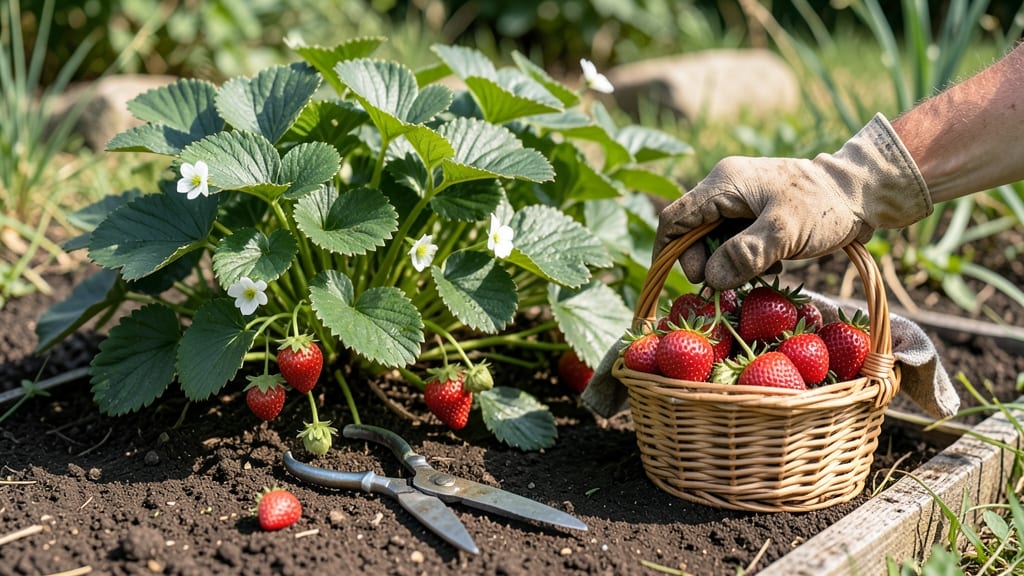
Timing the harvest for strawberries 🍓 is the secret to turning your garden into a sweet, juicy goldmine—but one wrong move ruins everything.
Picture this: you’re reaching for a berry, expecting that perfect burst of flavor, only to bite into something bland or seedy. That’s the difference between peak ripeness and disappointment. The right moment transforms a snack into a celebration.
Most strawberries in Zone 6a are ready between June and July for spring-planted varieties, but everbearing types stretch the season until October. The trick isn’t just the calendar—it’s knowing the three visual cues that guarantee sweetness every time.
Below, I’ll show you how to spot the ideal strawberry, when to pick for maximum flavor, and even how to stretch your harvest beyond the usual window. No more guesswork—just perfect, garden-fresh berries.

3 Visual cues to identify perfectly ripe strawberries
There’s nothing worse than biting into a strawberry that’s either too tart or mushy—both signs you picked it at the wrong time. The secret to peak sweetness lies in three simple visual cues: color, texture, and size.
Master these, and you’ll never settle for store-bought blandness again. I’ve learned the hard way that even a day too early or late can turn your harvest into disappointment.
Most gardeners focus only on color, but the true test of ripeness combines all three cues. For example, a strawberry might look red but still taste sour if it’s not fully developed.
Let’s break down what to look for—and what to avoid—to guarantee that burst of garden-fresh flavor every time you pick.
🌱 Numbered Highlights: 3 Visual Cues for Perfectly Ripe Strawberries
- 🔴 1. Full, Vibrant Color
Look for uniform color—no green patches. Red varieties should be deep red, yellow types bright yellow, and white varieties fully white. - 🤏 2. Slightly Soft Texture
Gently squeeze the berry—it should yield slightly to pressure like a ripe peach, not rock-hard or mushy. - 📏 3. Full Size for Variety
Compare to others on the plant. A ripe strawberry is plump and proportional to its type (e.g., 1-2 inches wide for standard varieties).
⚠️ Pro Tip: The stem should snaps cleanly when pulled gently—no tearing!
Let’s start with color, the most obvious cue but also the easiest to misjudge. A strawberry that’s fully red (or the correct hue for your variety) isn’t always ready. Some varieties, like Albion or Seascape, develop a deep, uniform color when ripe, while others might have slight shading.
If you see even a tiny green spot, wait another day—the flavor won’t be fully developed.
Next, texture is where most gardeners go wrong. A ripe strawberry should be slightly soft to the touch, almost like pressing your thumb against a ripe avocado. If it’s rock-hard, it’s underripe and will taste bland.
But if it’s mushy or leaking juice, it’s overripe and past its prime. The key is that gentle pressure should make it yield just a little—no more.
Don’t overlook size, especially if you’re growing multiple varieties. A strawberry that’s full-sized for its type is a good sign, but compare it to others on the plant. For example, everbearing varieties like Ozark Beauty produce smaller berries than June-bearing types like Chandler.
If a berry is smaller than usual, it might need more time—or the plant could be stressed from underwatering or poor soil.
Avoid these common mistakes that ruin flavor: picking berries with white or gray mold (a sign of botrytis), waiting until they’re shriveled, or harvesting in hot afternoon sun (which concentrates sugars but can also cause bruising).
Instead, pick in the cool morning hours when flavors are at their peak.
Here’s a quick visual checklist to use in your garden: Hold the strawberry up to the light—ripe ones will glow with deep, rich color. Then, give it a light squeeze—if it feels like a soft but firm ball, it’s ready.
Finally, check the stem: it should pull away cleanly, not drag or tear. If all three cues align, you’ve got a winner!
Remember, patience pays off. Strawberries won’t ripen further once picked, so if they’re not quite there, leave them on the plant. Overripe berries can split or attract pests, so harvest frequently during peak season. With these cues, you’ll turn your strawberry patch into a flavor factory every season.
🌱 Now that you’ve mastered the art of spotting ripe strawberries, the next step is timing your harvest for maximum sweetness—morning vs. afternoon makes a surprising difference! Stay tuned for my next tip on the best time of day to pick for that perfect balance of sugar and acid.
Best time of day and season to harvest strawberries for maximum flavor
Timing your strawberry harvest is like catching a sunrise—get it wrong, and you miss the peak sweetness entirely. The morning hours, ideally between 7 AM and 9 AM, are when strawberries pack the most natural sugars and aromatic intensity.
This is because overnight, the berries absorb moisture and cool temperatures, concentrating their flavors. Afternoon heat can make them softer and less sweet, while evening harvests risk overripe or seedy berries.
Seasonal timing also matters. For June-bearing varieties, the main harvest window is late May through July, while everbearing varieties produce two crops: one in early summer and another in fall.
Day-length and temperature play a role—cooler spring mornings (55°F–65°F) yield sweeter berries than hot summer afternoons, where temperatures above 85°F can cause flavor dilution and sunburn.
| Harvest Factor | Morning Pick (7-9 AM) | Afternoon Pick (12-3 PM) | Evening Pick (Post-6 PM) |
|---|---|---|---|
| Flavor Intensity | ⭐⭐⭐⭐⭐ (Peak sweetness) | ⭐⭐⭐ (Mild, watery) | ⭐⭐ (Overripe, seedy) |
| Texture | Firm yet yielding | Soft, prone to bruising | Mushy, collapsing |
| Best Season | Spring/Fall (cooler temps) | Summer (if shady) | Avoid (unless urgent) |
| Temperature Impact | Cooler = sweeter | Heat dilutes sugar | Overnight warmth spoils fast |
Regional climates shift these windows slightly. In warmer zones (8-10), strawberries may ripen earlier and require shade cloth during peak summer to prevent sun scald. Conversely, in cooler zones (3-6), a late June frost can delay harvests until July or August.
Always monitor your local frost dates—strawberries need consistent warmth to ripen properly.
Pro tip: If you must harvest in the afternoon, choose shady patches of your garden where berries stay cooler. Also, pick only what you’ll use immediately—strawberries harvested in the heat spoil faster and lose flavor within 24 hours.
For long-term storage, harvest in the morning and refrigerate unwashed in a ventilated container to preserve crispness.
Don’t overlook everbearing varieties like ‘Albion’ or ‘Seascape’, which produce fruit in two waves. Their fall harvests (September–October) benefit from cooler nights, which enhance sweetness. If your plants are overproducing, thin clusters to 3-4 berries per stem—this prevents overcrowding and ensures larger, sweeter fruits.
Remember, the best strawberries are those picked at the perfect moment—when they’re fully colored, plump to the touch, and easy to pluck. By following these timing tips, you’ll turn every harvest into a flavor explosion that rivals store-bought berries—no comparison! 🍓