
How To
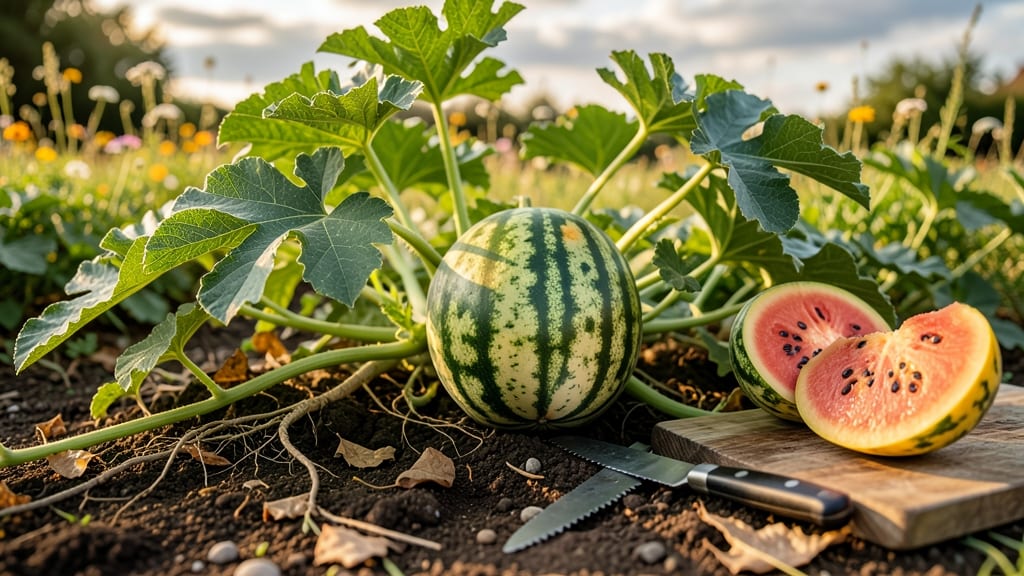
Knowing when to pick a watermelon means catching that perfect moment when sweetness peaks and seeds soften—before the fruit overripens or spoils on the vine.
Picture this: you’ve nurtured your 🍉 for months, and now the question looms—how do you really tell it’s ready? A single wrong guess could leave you with a mealy mess or a vine stripped of its prize.
The good news? Nature gives you clear signals if you know what to look for.
From the telltale yellowing of the vine’s tendrils to the deepening rind color and that satisfying thump when tapped, watermelons broadcast their ripeness in ways that don’t require guesswork.
Below, I’ll walk you through the visual cues, sound tests, and even the seed maturity timeline that separates a homegrown triumph from a disappointing bite.
Whether you’re in Zone 6a or further south, these tricks work for every variety—so you’ll never miss the harvest window again.

Watermelon ripeness signs: vine color changes & rind patterns to watch
Knowing when to pick a watermelon relies heavily on visual cues from the vine and rind. The vine color changes near the fruit and rind patterns are the most reliable indicators. These signs tell you the fruit is nearing peak sweetness—so don't miss them!
First, watch for the tendril nearest the watermelon to turn brown and dry out. This tendril, located where the stem meets the vine, acts like a natural timer.
When it withers, the fruit is typically 3-5 days from harvest. This is one of the first vine color changes to spot.
The ground spot on the watermelon's underside is another critical clue. When ripe, this area turns from white to a creamy-yellow or buttery color. This color shift signals the fruit has fully matured and developed its signature sweetness. Ignore this spot at your peril!
Next, examine the rind texture and color. A ripe watermelon's rind will feel hard and slightly dull to the touch. Press your thumbnail against it—if it doesn't dent easily, the fruit is ready. Additionally, the rind's color deepens from pale green to a rich, deep green with a slight sheen.
| Ripeness Indicator | What to Look For | Action |
|---|---|---|
| Vine Tendril | Brown and dried near fruit | Check daily for drying |
| Ground Spot | Creamy-yellow or buttery | Harvest within 2-3 days |
| Rind Texture | Hard, dull, resists thumbnail | Press to confirm readiness |
| Rind Color | Deep green with slight sheen | Avoid picking if still pale |
| Stem Color | Brown and hardened | Cut stem 1 inch from fruit |
Don't overlook the stem near the fruit, which should turn brown and feel hardened. This indicates the fruit has fully matured and is ready for harvest. If the stem remains green and soft, the watermelon needs more time on the vine.
Some gardeners also look for symmetrical shape and size as clues. A ripe watermelon will have a uniform shape and feel heavy for its size. This weight comes from the high water content and seed maturity, both signs of ripeness.
Lift the fruit gently—if it feels surprisingly heavy, it's likely ready!
For striped varieties, pay attention to the pattern's depth. The stripes should be well-defined and slightly raised, not faint or sunken. This visual cue ensures the fruit has had enough time to develop its characteristic appearance and flavor.
Finally, avoid picking watermelons too early based solely on size. While larger fruits might seem ripe, they could still be hard and bland inside. Always combine size with the other visual cues mentioned above to ensure you're harvesting at peak ripeness.
By mastering these vine color changes and rind patterns, you'll never miss the perfect moment to pick a watermelon again. Happy harvesting! 🍉
Seed maturity timeline: how long until watermelon is ready to harvest?
Watermelons follow a predictable 70-90 day maturity timeline from pollination to harvest, but environmental factors like heat waves or drought stress can speed this up—or slow it down. Understanding these stages helps you time your harvest perfectly, avoiding both underripe and overripe fruit.
Most varieties reach pollination around 30-40 days after planting, marked by tiny white flowers that wilt within 24 hours. This is when the real growth clock starts ticking. From pollination to harvest, count on 40-60 days for standard varieties, though some heirlooms may take up to 100 days.
- Day 30-40: Pollination occurs (flowers appear/disappear). This is your starting point for the 70-90 day countdown.
- Day 45-60: Fruit begins color change from pale green to deeper hues. The tendril near the fruit starts drying.
- Day 60-75: Ground spot (cream/yellow patch) appears on the side touching soil. Vine leaves may yellow.
- Day 70-90: Harvest window opens when the rind sounds dull when tapped and the stem turns brown.
- Day 90+: Overripe risk increases—fruit may crack or develop mealy flesh if left too long.
Heat and drought can shorten the timeline dramatically. In Zone 8 or higher, watermelons may mature in as few as 60 days due to intense sunlight. Conversely, cooler climates (Zone 6a) or inconsistent watering can stretch maturity to 100 days, so monitor your local weather closely.
For early harvests, opt for bush varieties like 'Sugar Baby' (58-68 days) or 'Crimson Sweet' (70-85 days). These are bred for faster maturity and perform well in shorter growing seasons.
If you're in a longer season, heirlooms like 'Moon and Stars' (85-95 days) reward patience with exceptional flavor.
Pro tip: Track your planting date and use a garden journal to note pollination days. This helps you predict harvest windows more accurately, especially if you're experimenting with succession planting or container growing, where timing can vary.
Once you spot the cream-colored ground spot and the vine’s tendril turns brown, act within 3-5 days—that’s when sweetness peaks. Waiting too long risks overripe fruit, while picking too early guarantees underwhelming texture. The clock is ticking, but nature’s cues make it easy! 🌱