
How To
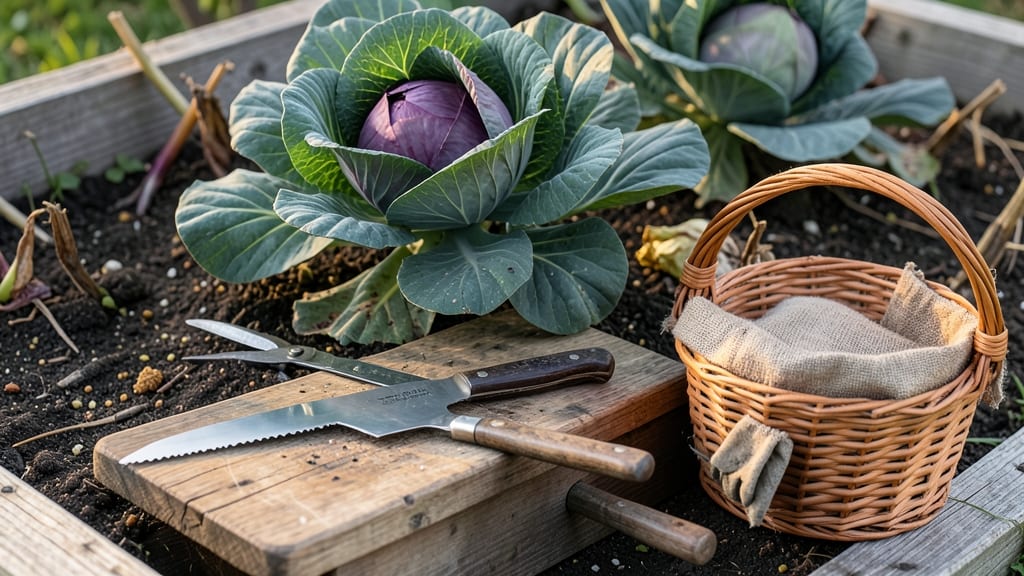
To harvest cabbage at its peak—when heads are crisp, tightly packed, and bursting with flavor—you’ll need to know the exact moment to cut, plus the right technique to avoid bruising or bolting.
Picture this: you’ve nurtured your 🥬 cabbage all season, and now the outer leaves are curling just slightly, the head feels dense when squeezed, and the color is deep and vibrant.
That’s your cue—harvest too early, and you’ll miss out on full flavor and size; too late, and the head may split or send up a bitter flower stalk.
Timing is everything, especially in Zone 6a, where spring and fall harvests demand precision. Whether you’re growing early varieties for June or holding out for October’s sweet heads, knowing when to cut ensures you get the most from your garden.
Plus, the method you use—sharp knife, clean grip, and proper storage—can extend freshness for weeks.
In this guide, I’ll walk you through when to harvest by visual and tactile cues, how to cut without damaging the head, and exactly how long your cabbage will stay fresh once pulled. No more guesswork—just crisp, flavorful heads every time.

When to harvest cabbage for optimal flavor and texture
Timing your cabbage harvest correctly ensures you enjoy crisp, flavorful heads at their peak. Most varieties take 70–100 days to mature, but don’t rely solely on days—watch for visual and tactile cues instead.
Harvesting too early means small, bland heads, while waiting too long risks bolting (flowering) or splitting, which ruins texture and taste.
Start checking your cabbage heads about 60 days after transplanting. Look for tightly packed leaves that resist separation when gently squeezed. The head should feel solid and dense, not hollow or spongy.
Color also matters—deep, consistent hues (green, purple, or white) signal readiness, while pale or uneven tones mean it’s not quite there yet.
Weather plays a critical role in harvest timing. Cool, dry conditions (ideal for cabbage) help heads firm up faster. If temperatures rise above 80°F (27°C), your cabbage may bolt prematurely, sending up a flower stalk.
In hot climates, opt for shade-tolerant varieties like ‘Golden Acre’ or harvest earlier in the season.
Variety matters too. Early maturing types (e.g., ‘Early Jersey Wakefield’) may be ready in 60–70 days, while late varieties (e.g., ‘Late Flat Dutch’) can take up to 100 days. Always check seed packets for days-to-maturity guidelines, but cross-reference with visual cues to avoid mistakes.
Head size is another clue. Aim for 4–8 inches in diameter, depending on the variety. Smaller heads (like those of baby cabbage varieties) can be harvested earlier, but larger varieties need more time. Avoid harvesting when heads are too large for their variety, as they may split or develop a tough core.
| Harvest Cue | What to Look For | Action |
|---|---|---|
| Head Firmness | Solid, dense when squeezed | Ready to harvest |
| Leaf Color | Deep, vibrant (green/purple/white) | Harvest soon |
| Head Size | 4–8 inches in diameter | Harvest at ideal size |
| Outer Leaves | Slightly curled at edges | Harvest within 2–3 days |
| Days to Maturity | 60–100 days (varies by variety) | Cross-check with visual cues |
One of the biggest mistakes gardeners make is ignoring the outer leaves. When they start curling slightly at the edges, it’s a sign the head is nearly ready. If you wait too long, the leaves may yellow or split, reducing storage life.
For baby cabbage varieties, harvest when heads are 3–4 inches wide, as they won’t grow much larger.
Seasonal timing also affects harvest windows. Spring-planted cabbage (March–April) typically matures in June–July, while fall-planted cabbage (July–August) is ready in October–November. In warmer climates, opt for cool-season varieties or use shade cloth to prevent bolting during heatwaves.
If your cabbage heads start to split or develop a tough core, it’s past its prime. Split heads often occur when plants are overwatered or fertilized late in the season.
To prevent this, reduce watering slightly as heads near maturity and avoid heavy nitrogen feeds in the final 4–6 weeks.
For continuous harvests, plant successive crops every 2–3 weeks throughout the growing season. This ensures a steady supply of fresh cabbage while allowing you to harvest at peak ripeness each time. Just remember: once you cut the head, the plant is done—no regrowth!
Step-by-step cabbage harvesting techniques for minimal damage
Harvesting cabbage the right way ensures you get crisp, flavorful heads without bruising or damage. The key lies in sharp tools, proper grip, and timing—especially when dealing with different head sizes or varieties.
A clean cut not only preserves the head’s quality but also prevents pests from entering through jagged edges.
I’ve found that using a sharp serrated knife or pruning shears makes all the difference. Dull tools crush the outer leaves, leading to bruising and shorter shelf life.
For larger heads, a handsaw (yes, really!) works surprisingly well—just sterilize it first to avoid disease transfer. Always harvest on a dry morning to reduce moisture buildup.
- 1 Choose the right tool: Use a sharp knife, pruning shears, or sterilized handsaw for large heads. Avoid dull tools that crush leaves.
- 2 Grip the head firmly: Hold the base of the head with one hand while supporting the outer leaves with the other. This prevents the head from rolling or twisting during the cut.
- 3 Make a clean cut: Angle the blade at 45 degrees and slice through the stem about 1 inch above the soil. For loose-leaf varieties, cut individual outer leaves as needed.
- 4 Handle with care: Gently lift the head by the stem (not the leaves) to avoid tearing. Place it in a shaded, well-ventilated area for 1–2 hours to dry before storing.
- 5 Store properly: Keep heads in a plastic bag with a paper towel to absorb moisture. For long-term storage, ferment or freeze within 5–7 days to preserve freshness.
For smaller heads (like baby cabbage varieties), use scissors to snip just above the lowest set of leaves. This encourages the plant to produce a second head in 3–4 weeks, giving you a second harvest without replanting.
Just avoid cutting more than 1/3 of the plant at once to prevent stress.
If your cabbage heads are loose or splitting, it’s a sign of overmaturity or nutrient stress. In this case, harvest what you can and compost the rest before it bolts.
Pro tip: Mulch heavily around the base after harvest to protect the soil and deter pests from feasting on leftover stems.
Post-harvest care is just as critical as the cut itself. I always rinse the heads lightly in cool water to remove dirt, then pat them dry with a clean towel. Store them in the crisper drawer of your fridge, where they’ll stay fresh for 2–4 weeks.
For longer storage, try fermenting—salted cabbage (like sauerkraut) can last 6+ months in the fridge!
Remember, the goal is to minimize damage while maximizing yield. A little practice makes perfect, and soon you’ll be harvesting cabbage like a pro—with heads so crisp and tight, they’ll make your neighbors jealous. Happy harvesting! 🥬