
How To
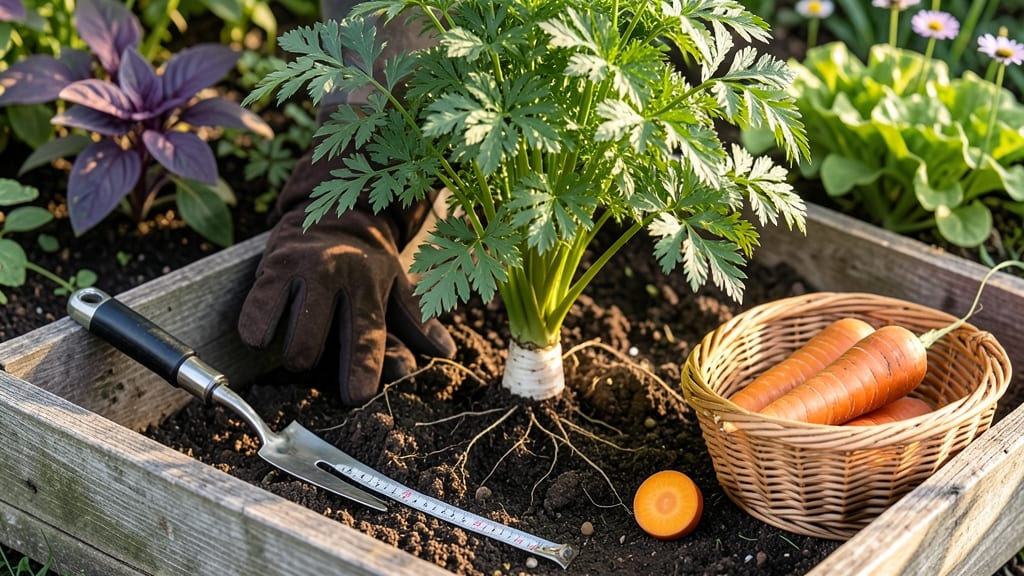
Knowing when to harvest carrots 🥕 means catching them at peak sweetness—before they turn woody or bitter, or worse, split in the soil.
Pulled a carrot too early and found it bitter? Or left them too long and ended up with tough, unappetizing roots? The difference between a crisp, flavorful harvest and a disappointing one often comes down to timing—and a few simple tricks most gardeners miss.
Here’s the secret: you don’t need a ruler or a calendar to judge maturity. Instead, use your hands to check for three key signs—firmness, size, and leaf health—that tell you the perfect moment to pull.
I’ll walk you through each test so you can avoid the most common mistakes and enjoy carrots at their best.
Ready to master the art of harvesting? You’ll learn how to read your soil, spot the ideal root size, and even troubleshoot problems like forking or cracking before they start.

3 Pro touch tests to determine carrot maturity (no digging required)
Harvesting carrots at the perfect moment transforms your garden into a sweet, crisp treasure trove—but timing is everything. The key lies in your hands, not a ruler. Instead of guessing, use these three tactile tests to assess maturity without digging.
These methods work because they measure the root's resistance, leaf vitality, and soil interaction, all of which change as the carrot matures.
Why rely on touch? Carrots grow underground, so visual cues are limited. By feeling the root crown firmness, checking leaf pull resistance, and testing soil squeeze pressure, you’ll know exactly when to harvest—even if you can’t see the root.
These tests are especially useful for short varieties (like Paris Market) or long varieties (like Danvers) that mature at different sizes.
🌱 Numbered Highlights: 3 Pro Touch Tests for Carrot Maturity
-
1. Soil Squeeze Test
Gently press the soil around the carrot’s leaf base. If the soil resists slightly but gives way, the root is ready. Too loose? Wait 5–7 days. Too firm? The carrot may be overgrown. -
2. Leaf Pull Resistance
Grasp a few outer leaves and pull gently. If they resist slightly but don’t snap, the root is mature. Leaves that bend easily mean the carrot needs more time; brittle leaves signal it’s past prime. -
3. Root Crown Firmness
Locate the crown (where leaves meet root). Press firmly—if it feels dense and springy, the carrot is ready. A soft or spongy crown means it’s underdeveloped; a hard, woody feel means it’s overripe.
The soil squeeze test works because mature carrots displace enough soil to create slight resistance when pressed. This happens as the root reaches its ideal diameter (typically 1–3 inches for most varieties).
For example, Nantes carrots often mature at 2 inches, while Chantenay varieties can reach 3 inches—the test adjusts for size.
Next, the leaf pull resistance test taps into the plant’s energy balance. Healthy, mature carrots allocate nutrients to both root and foliage, creating a balanced tension in the leaves.
If you pull and the leaves don’t snap but also don’t bend excessively, that’s your cue. This method is especially useful for container-grown carrots, where soil visibility is limited.
Finally, the root crown firmness test is the most reliable for avoiding woody textures or bitter flavors. The crown’s density reflects the carrot’s sugar content—a firm crown means starches have converted to sugars, while a soft crown indicates the carrot is still storing energy for growth.
Pro tip: Test a few carrots in a patch—maturity can vary by 3–5 days even in the same bed.
Here’s how to avoid mistakes: If your carrots feel too firm but the leaves are still flexible, they’re likely overcrowded. Thin them immediately to prevent forking.
Conversely, if the leaves are brittle but the crown feels soft, the carrot is underdeveloped—likely due to poor soil drainage or low sunlight. Adjust your growing conditions and wait another 7–10 days.
For short-day varieties (like Little Finger), harvest when the leaves reach 3–4 inches—they mature faster. For long-day varieties (like Imperator), wait until the leaves hit 6 inches.
The touch tests adapt to these differences, so you’re not guessing. Remember: harvest in the morning for the crispest texture, as roots draw up moisture overnight.
Master these tests, and you’ll never again pull a carrot that’s too small, too tough, or too bitter. The secret? Combine all three methods for the most accurate read. Your garden—and your taste buds—will thank you.
Carrot harvesting timeline: days to maturity by variety (with visual guide)
Timing your carrot harvest isn’t just about counting days—it’s about understanding how variety, soil temperature, and sunlight exposure interact to determine maturity. While most gardeners rely on seed packet days-to-maturity estimates, real-world conditions can shift harvest windows by 10–20 days.
For example, Danvers carrots might mature in 60–70 days in cool climates but take 80+ days in hot, dry summers. The key is adjusting for your microclimate while using the right variety for your season.
Let’s break down the harvest timelines for three popular varieties—Danvers, Nantes, and Chantenay—and how to fine-tune them based on your garden’s conditions. These varieties represent the spectrum of carrot shapes and sizes, from short, stout roots to long, tapered ones.
Each responds differently to soil warmth and daylight length, so knowing their ideal ranges helps you avoid the frustration of underdeveloped or overmature harvests.
| Variety | Days to Maturity | Root Size | Ideal Soil Temp | Sunlight Needs | Harvest Cue |
|---|---|---|---|---|---|
| Danvers | 60–75 days | 2–3" diameter | 55–70°F | Full sun (6–8 hrs) | Leaves 4–6" tall, firm crown |
| Nantes | 55–70 days | 1.5–2.5" diameter | 50–65°F | Full sun (6–7 hrs) | Leaves 3–5" tall, smooth skin |
| Chantenay | 65–80 days | 2.5–4" diameter | 55–75°F | Full sun (6–8 hrs) | Leaves 5–7" tall, dense crown |
🌱 Note: Adjust timelines by +10 days in hot climates or -10 days in cool regions.
Soil temperature plays a critical role in carrot maturity. Carrots grow best when soil stays between 55–70°F. Below 50°F, roots develop slowly and may become pithy (hollow). Above 80°F, they bolt prematurely or turn woody.
For example, if you plant Nantes carrots in late spring when soil is still cool, they might take 70–80 days to mature instead of the expected 60 days. Use a soil thermometer to monitor conditions—ideal planting occurs when soil reaches 60°F consistently.
Sunlight also shifts harvest windows. Carrots need 6–8 hours of direct sun daily, but partial shade (like morning sun + afternoon shade) can extend maturity by 10–14 days. For instance, Danvers carrots in a partial-shade garden might not reach full size until 85 days instead of 70.
If your garden lacks full sun, opt for shade-tolerant varieties like Paris Market (matures in 55 days) or Short ‘n Sweet (ready in 50 days).
Environmental stress—like drought or overwatering—can delay maturity by 2–3 weeks. For example, Chantenay carrots in dry soil may take 90 days to mature instead of 75. To speed up harvests, maintain consistent moisture (1 inch per week) and mulch with straw to keep roots cool.
Conversely, overwatering can cause cracking or forking, signaling it’s time to harvest sooner than expected.
Pro tip: Plant succession crops every 2 weeks to stagger harvests. This ensures a steady supply and lets you adjust for seasonal changes. For example, plant Nantes in early spring for a June harvest, then replant in late summer for a fall harvest before frost.
By aligning your planting schedule with soil temperature trends and daylight hours, you’ll maximize sweetness and crispness—no more bitter or woody surprises!
Remember, the touch tests from the previous section work alongside these timelines. Use the soil squeeze test to confirm readiness when days-to-maturity estimates feel uncertain. Pairing variety-specific timelines with tactile checks ensures you’ll harvest carrots at their peak—every time. 🥕