
How To
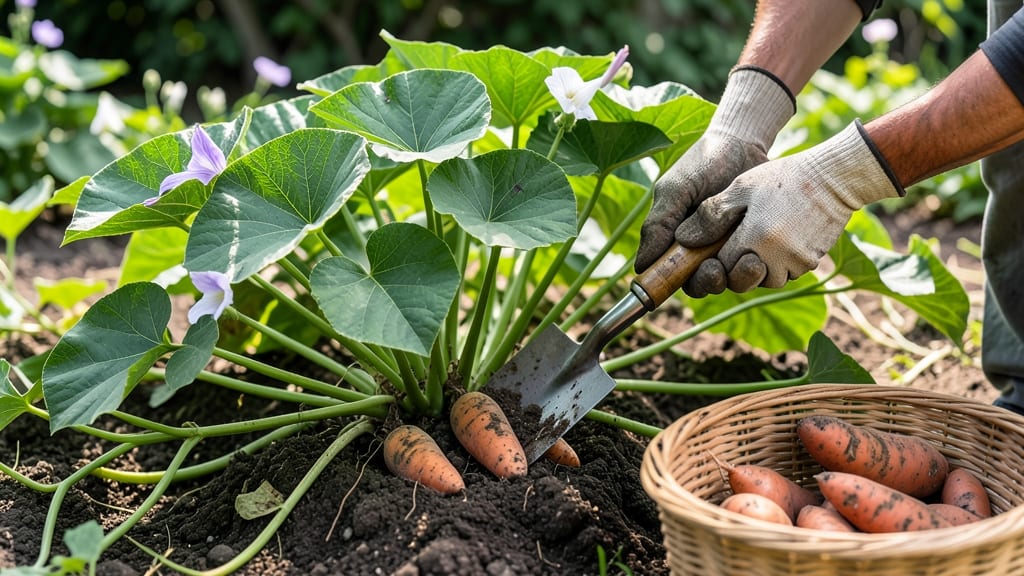
To know when to harvest sweet potatoes 🍠, watch for three key signs: the leaves yellowing, the skin resisting your fingernail, and the roots reaching 3-6 inches in diameter.
Sweet potatoes are a gardener’s reward—creamy, nutritious, and delicious—but timing their harvest wrong means tough, bland roots. Learn the foolproof methods to pick them at peak sweetness before the first frost ruins your crop.
Most gardeners in Zone 6a plant slips in May and count 110 days to harvest, but that’s just a starting point. The real test is what’s happening above and below ground: a vine that’s dying back and roots that slip free from the soil.
Here’s how to read those signals, plus how to handle early harvests, avoid frost damage, and store your sweet potatoes for months—no guesswork required.

The skin slip test: the most reliable way to harvest sweet potatoes
Timing the harvest of sweet potatoes can feel like guessing—too early and you get small, watery roots; too late and frost ruins your crop. The skin slip test is my go-to method because it eliminates guesswork by focusing on the physical maturity of the tubers, not just days since planting.
Unlike counting weeks (which varies by variety and climate), this test gives you real-time feedback from the plant itself.
This method works because as sweet potatoes mature, their skin thickens and becomes less prone to bruising. The test checks for this change by assessing how easily the skin slips off when you gently peel it.
It’s a simple tactile check that tells you exactly when your tubers are ready—no tools required. Plus, it’s far more accurate than relying on leaf color alone, which can be misleading in cloudy weather.
How to Perform the Skin Slip Test
- Step 1: Choose a sunny day – Test in the morning after a dry spell (no rain for 24+ hours). Wet soil makes the test unreliable.
- Step 2: Dig up 1-2 test tubers – Use a garden fork to gently loosen soil around the plant’s base. Avoid damaging nearby tubers.
- Step 3: Clean the tuber – Brush off excess soil with your hands or a soft brush. Focus on a 3-inch section of the skin.
-
Step 4: Perform the slip test – Hold the tuber firmly and try to peel off a 1-inch strip of skin with your thumbnail. Apply light pressure only.
- Skin slips easily → Not ready (tubers are still growing).
- Skin resists or tears → Ready to harvest.
- Step 5: Check the stem end – If the stem end turns brown or corky, it’s another sign of maturity. A green stem end means more time in the ground.
The skin slip test works because mature sweet potatoes develop a waxy coating called suberin, which makes their skin tougher and less prone to peeling. This coating also helps protect the tuber from rot and bruising during storage.
When the skin resists your thumbnail, it’s a clear signal that the starch-to-sugar conversion is complete, meaning your sweet potatoes will be sweeter and creamier.
One common mistake is testing after a heavy rain, which can make the skin appear slippery even if the tuber isn’t ready. Always wait for dry conditions to avoid false positives.
Another pitfall is testing tubers that are already overripe—their skin may feel tough, but the flesh could be woody or shriveled. To avoid this, harvest within 1-2 weeks of passing the slip test.
For longer storage, prioritize tubers that pass the slip test but haven’t yet reached their maximum size (3-6 inches in diameter). These will keep best because they’ve developed their protective skin but haven’t yet started converting starches into sugars at an accelerated rate.
Store them in a cool, dark place with high humidity (like a root cellar or paper bag) to maintain freshness for months.
If you’re growing multiple varieties, like both ‘Beauregard’ (early) and ‘Georgia Jet’ (late), perform the slip test on each separately. Varieties mature at different rates, and mixing them can lead to some tubers being harvested too early or too late.
For example, ‘Beauregard’ often passes the test in 90-100 days, while ‘Georgia Jet’ may need 110-120 days.
Remember, the skin slip test is just one tool in your harvest toolkit. Pair it with monitoring soil temperatures (ideal harvest range: 60-70°F) and watching for leaf dieback to confirm readiness.
When you combine these methods, you’ll never again wonder if your sweet potatoes are ready—you’ll know for sure.
Once you master this test, you’ll enjoy sweet potatoes at their peak: firm yet tender, with a rich, buttery texture and a perfect balance of sweetness.
There’s nothing like the satisfaction of harvesting a crop you’ve nurtured from slip to table, all thanks to a little skin and a lot of patience.
When to harvest based on soil temperature & weather conditions
Soil temperature and weather conditions are your secret weapons for harvesting sweet potatoes at peak flavor. Unlike many vegetables, sweet potatoes thrive in warm soil (ideally 70-85°F) and suffer when nighttime temperatures dip below 50°F.
A soil thermometer ($10 at garden centers) is your best tool—stick it in 2 inches deep to check daily.
In Zone 6a, where frost typically arrives by mid-October, aim to harvest between late September and early October. But don’t rely on dates—watch for vines yellowing and soil temps dropping.
If frost is forecast within 10 days, harvest early, even if roots aren’t fully sized. Smaller sweet potatoes store well too!
Regional variations matter: Northern gardeners (Zones 3-5) should harvest 2-3 weeks before the first frost, while Southern gardeners (Zones 7+) can wait until October-November. Use the National Weather Service’s frost prediction map to set your harvest window.
Pro tip: Black plastic mulch can extend your season by 2-3 weeks in cooler climates.
| Condition | Ideal Range | Action |
|---|---|---|
| Soil Temperature | 70-85°F | Harvest before dropping below 60°F |
| Nighttime Temp | Above 50°F | Frost risk? Harvest immediately |
| Daylight Hours | 10+ hours | Peak sweetness with long days |
| Rainfall Before Harvest | <2 inches/week | Dry soil = easier digging |
| Frost Forecast | Within 10 days | Harvest even if small |
Short growing seasons? Choose early-maturing varieties like ‘Beauregard’ (90 days) over ‘Georgia Jet’ (120 days). In long seasons, you can harvest in two batches: first when some roots reach 3 inches, then again 2 weeks later for larger ones.
Just cure harvested sweet potatoes at 85°F and 80% humidity for 10 days to develop flavor.
Weather watchers know: Humidity matters. High humidity before harvest can lead to disease-prone skin, while dry conditions make roots easier to dig. If rain is forecast, harvest 3-4 days ahead to let soil dry slightly.
And always harvest on a sunny, dry day—wet roots rot faster in storage.
Remember: Sweet potatoes don’t ripen after harvest like tomatoes. The clock starts ticking the moment vines die back. Use your soil thermometer, check frost alerts, and trust the skin slip test—when all signs align, it’s time to dig! 🍠