
How To
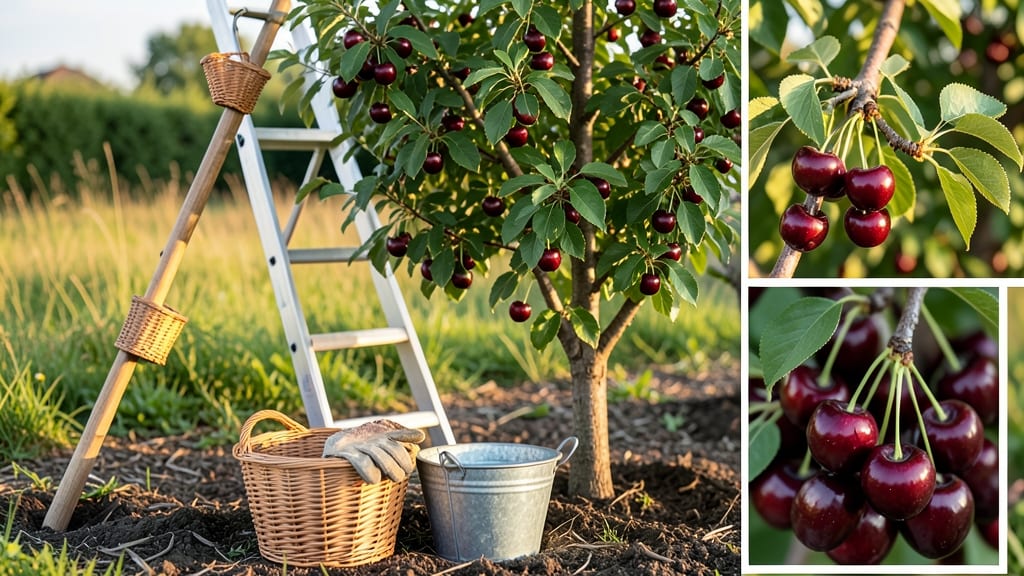
To pick cherries from a tree without bruising fruit or wasting your harvest, timing and technique are everything — and the right tools make all the difference.
Picture this: you’ve waited months for your Sweet Cherry 🍒 tree to burst with ripe fruit, only to end up with a pile of crushed cherries and frustrated birds eyeing your crop.
The key isn’t just grabbing what looks ready—it’s knowing when to shake, how to catch them, and which tools keep your harvest intact.
In this guide, I’ll walk you through the gentle shaking method that minimizes waste, the best harvest bags to avoid bruising, and the simple ripeness tests (like the stem twist) that tell you exactly when to start picking.
Whether you’re dealing with a 10-foot dwarf or a towering 30-foot standard, these tips will turn your cherry harvest from a messy chore into a zero-waste success—no ladder mishaps or bird thefts required.

Step-by-step guide to safely shaking cherries from a tree without damaging fruit
Harvesting cherries can feel like a delicate dance—one wrong move and you’re left with bruised fruit or a tree that looks like it’s been through a storm. The key to a successful harvest lies in gentle shaking techniques that preserve both your cherries and your tree’s health.
Whether you’re dealing with a 10-foot dwarf variety or a towering 25-foot standard tree, these methods will help you avoid common pitfalls like dropped cherries or broken branches.
Before you even think about climbing a ladder, you’ll need to master the art of identifying ripe cherries. Look for deep color (dark red, black, or yellow depending on the variety), a slight softness when pressed, and stems that snap cleanly.
Skipping this step means risking underripe or overripe fruit, which can spoil quickly or attract pests. Once you’ve confirmed ripeness, it’s time to gather your tools—a sturdy harvest bag, a long-handled picker, and a helper to shake the branches from below.
How to Pick Cherries Safely
-
Step 1: Choose the Right Tools
Use a mesh harvest bag (not a bucket) to prevent bruising, and wear gloves to protect your hands from thorns. A long-handled cherry picker or sturdy ladder is essential for taller trees.
-
Step 2: Test for Ripeness
Pick 3-5 cherries and perform the stem twist test: twist gently. If the stem snaps cleanly, the cherry is ready. Avoid picking if the fruit is still firm or pale.
-
Step 3: Shake Gently from Below
Have a helper stand at the base of the tree and shake branches lightly while you hold a harvest bag beneath. Focus on one branch at a time to avoid overwhelming the tree.
-
Step 4: Hand-Pick Remaining Fruit
After shaking, inspect branches for missed cherries. Use a picker or your hands to pluck them carefully, avoiding yanking or twisting the stems.
-
Step 5: Minimize Waste
Spread a tarpaulin or sheet under the tree to catch fallen cherries. Collect and sort them immediately to prevent bruising or bird damage.
-
Step 6: Store Properly
Keep cherries in a single layer in the fridge for up to a week, or freeze them for long-term storage. Avoid stacking to prevent moisture buildup and mold.
One of the biggest mistakes I see gardeners make is overloading branches with too many cherries at once. This can cause the tree to drop fruit prematurely or even snap under the weight. Instead, harvest in small batches, focusing on one section of the tree at a time.
If you’re dealing with a heavy crop, consider thinning branches slightly before shaking to reduce stress on the tree.
Timing is everything when it comes to harvesting cherries. The best time of day to pick is on a cool morning after the dew has dried but before the sun intensifies. This reduces the risk of sunburn or bruising from heat stress.
Avoid harvesting after rain, as wet cherries are more prone to cracking or disease. If you must pick after rain, wait at least 24 hours for the fruit to dry.
Birds are another major challenge during cherry season. They’ll swoop in as soon as they catch the scent of ripe fruit, leaving you with a messy, pecked harvest. To deter them, cover the tree with bird netting a few days before picking.
If netting isn’t an option, harvest cherries early in the morning when birds are less active, or use reflective tape to scare them away.
For taller trees, safety should be your top priority. Never climb a ladder while holding a heavy harvest bag—it’s a recipe for disaster. Instead, use a cherry picker or step stool with a stable base, and always have someone spot you.
If you’re working alone, consider using a long-handled picker to avoid climbing altogether. Remember, the goal is to harvest efficiently without risking injury.
After you’ve finished picking, take a moment to inspect your tree for any damaged branches or signs of stress. Prune away any broken limbs immediately to encourage healthy regrowth. If you notice excessive fruit drop or wilting leaves, your tree may be struggling from overharvesting or disease.
In this case, adjust your future harvesting methods or consult a local arborist for advice.
Finally, don’t forget to celebrate your harvest! Whether you’re planning to bake a pie, make jam, or simply enjoy fresh cherries straight from the tree, your efforts will be rewarded. Just remember: the secret to a successful cherry harvest lies in patience, timing, and a gentle touch.
With these techniques, you’ll maximize your yield while keeping your tree happy and healthy for years to come. 🍒
Best harvest bags and tools for cherry picking (plus how to avoid common mistakes)
The right harvest tools can transform cherry picking from a messy chore into a smooth, efficient process. I’ve learned the hard way that using the wrong container—like a metal bucket or plastic tote—will crush cherries, while a mesh harvest bag lets fruit fall through without damage.
The best bags also reduce bruising by allowing air circulation, and their lightweight design makes them easier to carry up ladders or cherry pickers.
For small dwarf trees (8-12 ft), a 5-gallon mesh bag is perfect—it’s easy to carry and fits under branches. But if you’re dealing with a standard 25-foot tree, you’ll need a larger, reinforced bag (10+ gallons) that won’t tear when overloaded.
Pro tip: Avoid plastic or hard-sided containers—they bruise cherries instantly when dropped.
| Tree Height | Yield Size | Best Harvest Bag | Essential Tools |
|---|---|---|---|
| 8-12 ft (Dwarf) | Small (<5 gallons) | 5-gallon mesh bag | Hand picker, step stool |
| 12-18 ft (Semi-Dwarf) | Medium (5-10 gallons) | 10-gallon reinforced mesh | Ladder, cherry picker |
| 20-30 ft (Standard) | Large (10+ gallons) | Heavy-duty mesh (12+ gal) | Cherry picker, pruning shears |
💡 Pro Tip: Always use thick gloves—cherry thorns are no joke!
Beyond bags, a long-handled cherry picker (12-18 ft) is a game-changer for taller trees. These extendable tools let you reach high branches without climbing, and many models include a built-in basket to hold your harvest.
For pruning or trimming during harvest, bypass pruners with ergonomic handles reduce hand fatigue—critical when you’re picking for hours.
⚠️ Warning: Overloading branches by picking too many cherries at once can cause them to snap. Harvest in small batches (one branch at a time) to avoid stressing the tree. Also, never pick before cherries are fully ripe—underripe fruit won’t sweeten properly and may spoil faster.
Another common mistake? Using metal containers to collect cherries. The impact bruises fruit instantly. Instead, opt for soft-sided mesh bags or even a large cardboard box lined with paper towels to cushion falls.
And if birds are a problem, cover the tree with netting 3-5 days before harvest—they’ll peck through bags in seconds!
For safety, always have a spotter when using ladders or cherry pickers. I’ve seen too many gardeners lose their balance while carrying heavy harvest bags. If you’re working alone, consider a harvest pole with a basket—it keeps your hands free and your balance steady.
Finally, don’t forget to inspect your tools after each use. Clean mesh bags with soapy water to remove sap, and sharpen pruners annually to make cutting stems easier.
With the right gear and a little patience, you’ll harvest perfect cherries every time—no bruises, no waste, just sweet success. 🍒