
Vegetables
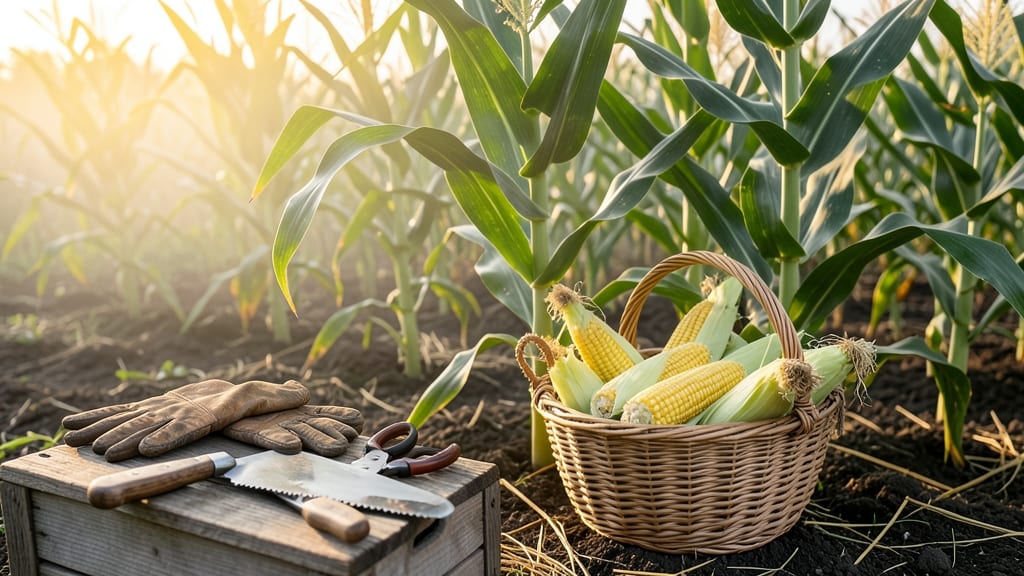
Harvesting sweet corn at the right time turns your 🌽 plants into a kitchen goldmine—when silks brown and kernels reach their peak sweetness, you’re just days away from buttery perfection.
Picture this: you’ve waited months for those towering stalks, only to pick an ear that’s tough as a shoe or past its prime. The difference between sweet, juicy kernels and a chewy disappointment comes down to timing—and a few simple visual cues most gardeners miss.
From the moment tassels dry to the silk turning brown, I’ll walk you through the exact signs to watch for, plus how weather and variety affect your harvest window in Zone 6a and beyond.
Skip the guesswork and learn how to test for ripeness, store your harvest like a pro, and even troubleshoot when Mother Nature throws a curveball.

How to identify sweet corn’s perfect harvest time by tassels and silk
Timing your sweet corn harvest correctly ensures peak flavor and tenderness. The 70–90 day maturity window after planting is your starting point, but visual cues like tassel drying and silk color are the real indicators.
Northern regions may need an extra 7–10 days due to cooler temperatures, while Southern gardens can harvest slightly earlier.
Start by checking the tassels—when they turn completely brown and brittle, it’s a sign the plant is nearing maturity. Meanwhile, the silks should dry out and turn a straw-like brown color. These visual signals correlate directly with the milk stage of kernel development, where sweetness peaks.
Regional variations matter: In USDA Zone 5, aim for 90 days to maturity, while Zone 8 gardens can harvest as early as 70 days. Always adjust for your local climate, as heatwaves or cold snaps can delay or speed up the process.
Here’s a quick reference to help you spot the perfect harvest time:
| Stage | Tassels | Silks | Husk Separation | Kernel Test | Days After Planting |
|---|---|---|---|---|---|
| Early Maturity | Green, moist | Green, fresh | Tightly closed | Hard, no liquid | 60–70 |
| Peak Ripeness | Brown, brittle | Dry, straw-colored | Slightly loose | Milky white liquid | 75–90 |
| Overripe | Crumbly, blackened | Dry, brittle | Fully open | Starchy, yellow | 90+ |
For the most accurate harvest, combine visual cues with the finger dent test. Pierce a kernel with your fingernail—if it releases a milky white liquid, it’s ready.
A clear or yellow liquid means it’s past its prime. This test is especially useful on cloudy days when tassels and silks are harder to assess.
Don’t overlook the husks either. When they begin to separate slightly at the tip, it’s another sign of maturity. However, if the husks are fully open or the silks have fallen off entirely, the corn has likely overmatured, leading to tough, starchy kernels.
In cooler climates, such as the Pacific Northwest, prioritize the silk drying over the tassel color, as tassels may brown earlier due to lower humidity. Conversely, in hot, dry regions like the Southwest, the husks may dry out faster, so focus on the kernel test to avoid premature harvesting.
Pro tip: Harvest in the morning when temperatures are cooler. This preserves sweetness and prevents the ears from drying out too quickly. Use a sharp knife to cut the stalk 1 inch below the ear, leaving the husks intact to protect the kernels.
Once harvested, store sweet corn in the refrigerator for up to 5 days or blanch and freeze for long-term storage. Proper timing in the garden ensures you’ll enjoy that fresh, buttery sweetness without compromise.
5 Common mistakes that ruin sweet corn harvest timing (and how to avoid them)
Harvesting sweet corn at the perfect moment means the difference between buttery, juicy kernels and tough, starchy cobs. Even experienced gardeners sometimes misjudge the timing, leading to wasted effort. I’ve made these mistakes myself—like assuming silk color alone determines readiness or ignoring weather delays that slow maturity.
Let’s fix that together with actionable tips to nail your harvest window every time.
One of the biggest pitfalls is overestimating maturity days. Many seed packets list a range like 70–90 days, but cooler weather or poor soil can stretch that timeline.
I once harvested a batch thinking they were ready, only to find underdeveloped kernels because I didn’t account for unseasonably cool nights. Always adjust your timeline based on your local climate and plant health.
Another mistake? Relying solely on silk color. Brown silks are a classic cue, but they can dry out before kernels reach peak sweetness—especially in hot, dry conditions. I learned this the hard way when my ‘Peaches and Cream’ ears had brown silks but hard, starchy kernels.
Instead, combine silk color with the finger dent test for accuracy.
- Ignoring weather delays – Cold snaps slow maturity; don’t rush harvests.
- Skipping the milk stage test – Brown silks ≠ always ready; pierce kernels!
- Harvesting on cloudy days – Husk color fades; use the finger test instead.
Cloudy days throw off visual cues like husk color and silk drying, making it hard to judge readiness. On overcast mornings, I switch to the finger dent test: Pierce a kernel with your thumbnail.
If it oozes milky white liquid, it’s perfect. If it’s clear or empty, wait 2–3 days. This trick works even in low light and saves you from harvesting too early or late.
Don’t forget to check ear size and fullness. A ready ear should feel heavy for its size and have plump, rounded kernels. I once picked ears that looked mature but were lightweight and hollow because I didn’t weigh them in my hand.
Pro tip: Twist a husk back—if the ear feels solid and full, it’s ready. If it’s shriveled or hollow-sounding, it’s past its prime.
Finally, regional variations matter. Sweet corn in Zone 5 may need 10–14 extra days to mature compared to Zone 8. I planted ‘Silver Queen’ in both zones one year and harvested 3 weeks apart.
Always track your local frost dates and adjust planting/harvest schedules accordingly. Use a planting calendar or app to stay on track.
By avoiding these common mistakes—adjusting for weather, testing kernels, and checking ear fullness—you’ll harvest perfectly sweet corn every season. Next time, trust the finger test and your ears (literally!) to guide you. Happy harvesting! 🌽