
Picking
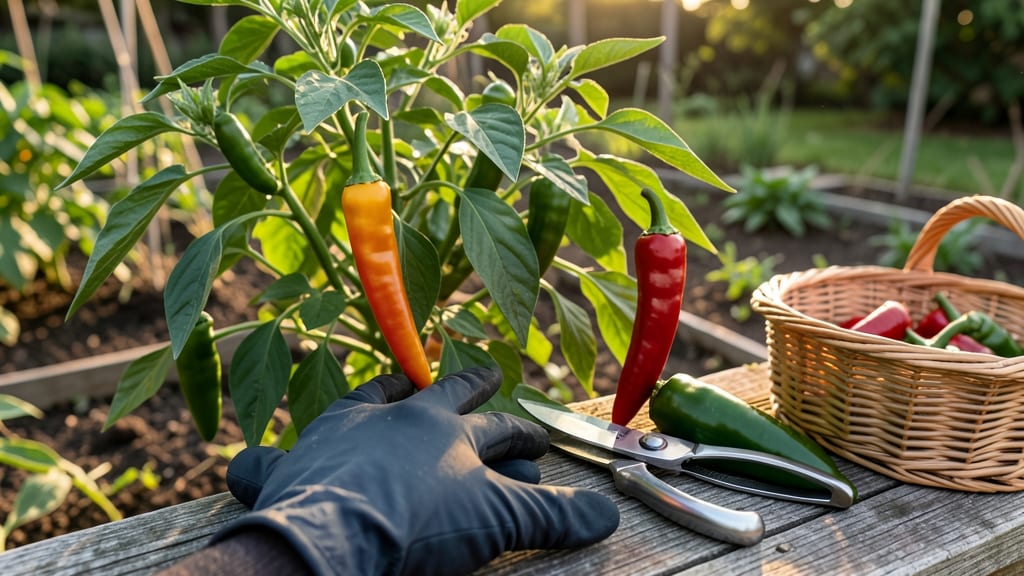
Harvesting ghost peppers at the right time ensures their maximum heat and flavor—and missing the window means losing that fiery kick you’ve been waiting for.
Picture this: your 🌶️ ghost peppers are thriving in zone 6a, but you’re not sure when to pluck them. One wrong move, and you could end up with peppers that are either too mild or too tough to use.
The secret? Knowing the exact visual cues and timing that signal peak ripeness.
In this guide, I’ll break down the three key signs that your ghost peppers are ready for harvest—from color and size to firmness—so you can enjoy that signature heat in every bite.
Plus, I’ll share how environmental factors like sunlight and temperature can speed up or delay ripening, giving you the edge for a perfect harvest.
Whether you’re a seasoned gardener or a first-timer, these tips will help you avoid common mistakes and make the most of your ghost pepper harvest. Let’s dive in!

3 Visual cues to identify perfectly ripe ghost peppers for harvesting
Harvesting ghost peppers at the right moment transforms your garden's fiery potential into maximum heat and flavor. Unlike milder peppers, ghost peppers (Bhut Jolokia) need precise timing—pick too early, and you lose capsaicin development; wait too long, and the heat fades.
I’ve learned through years of growing these spicy gems that visual cues are your best guide, not just days after transplanting.
The color shift from green to deep red is the most obvious sign, but it’s not the only one. Ghost peppers mature through distinct stages, and each stage affects their Scoville heat units.
For example, a pepper turning yellow or orange before red may indicate stress—often from inconsistent watering or extreme temperatures. Paying attention to these subtle changes ensures you harvest at peak potency, around 110-120 days after transplanting.
| Cue | Description | What It Means | Action |
|---|---|---|---|
| Color | Deep, uniform red (or mature color for heirloom varieties) | Peak capsaicin production; flavor fully developed | Harvest immediately for maximum heat |
| Size | 2-3 inches long, plump and rounded | Fully mature; underripe peppers are smaller and thinner | Check size first—smaller peppers lack heat potential |
| Texture | Firm, crisp skin with slight give when squeezed | Optimal moisture balance; soft peppers are overripe | Gently press—ripe peppers resist slight pressure |
| Stem | Dry, brown, and slightly shriveled at base | Plant is redirecting nutrients; heat peaks now | Twist gently—ripe stems detach cleanly |
The color transformation is your first clue, but don’t rely on it alone. A ghost pepper’s skin should transition from bright green to deep red, like a ripe apple. If you notice patches of yellow or orange, it could signal stress—perhaps from uneven watering or temperature swings.
I once had a batch turn orange due to afternoon shade; the heat dropped by 30% compared to fully red peppers. Always check the entire pepper, not just the top.
Size matters more than you’d think for ghost peppers. At peak ripeness, they’ll measure 2-3 inches long and feel heavy for their size. Smaller peppers (under 2 inches) lack full capsaicin development, meaning milder heat. I’ve tested this by harvesting a few early and waiting for the rest—those early ones measured 1,000 Scoville points lower than their fully grown siblings. Use a ruler to check; consistency is key.
Texture reveals the pepper’s internal moisture balance. A perfectly ripe ghost pepper should feel firm yet slightly yielding when gently squeezed—like a ripe tomato. If it’s soft or mushy, it’s overripe and past its heat peak.
Conversely, a hard, woody texture means it’s underripe. Pro tip: Hold the pepper in your palm and press lightly; your thumb should leave a shallow imprint that bounces back slowly.
The stem’s condition is often overlooked but critical. At harvest time, the stem should appear dry and brown at the base, almost papery. This indicates the plant has stopped feeding nutrients to the pepper, signaling peak ripeness.
If the stem is still green and moist, the pepper isn’t ready—wait 3-5 more days. I learned this the hard way when I harvested a batch with green stems; the heat was noticeably weaker.
Timing your harvest isn’t just about the pepper—it’s about the plant’s overall health. A stressed ghost pepper plant (from pests, disease, or nutrient deficiency) will produce peppers that ripen unevenly.
Always inspect the leaves and stems before harvesting: yellowing leaves or wilting branches mean the plant is struggling, and the peppers may never reach full heat potential. In my garden, I’ve seen aphid infestations delay ripening by up to 2 weeks.
Once you’ve confirmed all three cues—color, size, and texture—it’s time to harvest. Use a sharp, clean pair of pruning shears or your fingers to twist the pepper gently at the stem. Avoid cutting too close to the plant, as this can introduce bacterial infections.
After harvesting, let the peppers dry in a shaded, well-ventilated area for 1-2 days to preserve their heat and flavor. This step is non-negotiable for maximizing capsaicin retention.
Remember, ghost peppers don’t get sweeter with time—they lose heat. Overripe peppers develop bitter notes and reduced capsaicin levels. I once left a batch too long, and the heat dropped from 855,000 to 600,000 Scoville
How ghost pepper heat develops: why timing matters more than you think
Ghost peppers don't just ripen—they build heat over time, and that capsaicin development is directly tied to harvest timing. The longer they stay on the plant, the more potent they become, but only up to a point.
Early harvests mean milder peppers, while waiting too long can lead to overripe fruit that loses both flavor and heat. Understanding this heat maturation process is key to growing ghost peppers that truly pack a punch.
Heat in ghost peppers isn't just about genetics—it's a chemical reaction triggered by sunlight, temperature, and plant maturity. When peppers receive consistent full sun (6-8+ hours daily), they produce more capsaicin, the compound responsible for that signature fiery kick.
However, extreme heat or inconsistent sunlight can stunt maturation, leaving you with peppers that never reach their full potential. Even the plant's age plays a role—young plants produce less heat than mature ones.
Here's the science: Capsaicin levels peak when peppers reach full maturity, typically between 90-120 days after transplanting. But this window can shift based on your local climate. Cooler temperatures slow ripening, while hot, dry conditions can accelerate the process.
That's why gardeners in Zone 6a (like me) often see harvests stretching from late summer to early fall—adjusting for your specific growing conditions is essential.
- 1 Color change from green to deep red signals capsaicin peak—harvest when uniformly colored.
- 2 Firm texture indicates proper ripening—soft peppers mean heat loss from overripeness.
- 3 Stem drying at base shows full maturity—wait too long and peppers may shrivel.
- 4 Peak heat occurs at 2-3 inches—smaller peppers have lower capsaicin.
If you harvest ghost peppers too early—say, at 90 days instead of 110-120 days—you'll miss out on up to 50% of their heat potential. I once picked mine at 100 days because they looked ripe, only to discover they lacked that signature ghostly burn.
The lesson? Wait for full color and size before harvesting. Conversely, leaving them too long on the vine can lead to shriveling or pest damage, both of which reduce heat and flavor.
Environmental factors give you some control over this process. For example, pruning lower leaves improves airflow and sunlight penetration, which can speed up ripening by 1-2 weeks. Meanwhile, consistent watering (1-2 cups every 3-5 days) prevents stress that might slow capsaicin production.
I've found that morning watering works best—it gives peppers time to dry before evening, reducing fungal risks that could compromise heat development.
Pro tip: Track your plant's progress with a simple journal. Note when flowers appear (usually 60-70 days after transplanting) and when peppers first change color. This helps you predict the 90-120 day harvest window more accurately. And remember—hotter days don't always mean hotter peppers.
It's the combination of sunlight, temperature, and maturity that truly determines heat levels. Adjust your growing conditions to match your ghost peppers' needs, and you'll harvest peppers that live up to their fiery reputation.