
How To
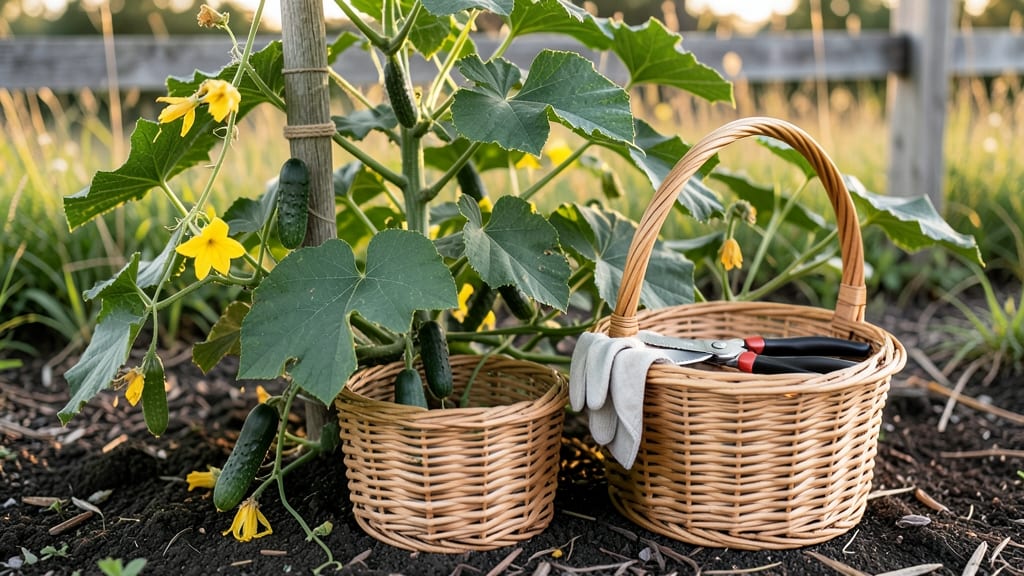
Harvesting Boston pickling cucumbers at the right time ensures crisp, tangy pickles—so timing matters more than you might think.
Picking too early gives you undersized, bland cucumbers, while waiting too long turns them into bitter, seedy giants. The difference between perfect pickles and a mushy mess often comes down to knowing when to pluck them from the vine 🥒.
For Boston pickling cucumbers, the ideal harvest window is about 60 days after planting, when they reach 2-4 inches in length. Look for firm skin that yields slightly when pressed and a bright, consistent green color—these are your telltale signs.
Climate plays a role too: in warmer zones, you might start harvesting as early as June, while cooler regions could push it to late July. Below, I’ll walk you through the 3 knuckle rule and other key cues to guarantee your harvest is always on point.

The 3 knuckle rule: how to tell when Boston pickling cucumbers are ready
Harvesting Boston pickling cucumbers at the perfect moment transforms your garden into a pickle-making powerhouse. The 3 knuckle rule is my go-to method for determining ideal size—it’s simple, foolproof, and ensures crisp, tangy results every time.
This finger-based test helps you avoid the common pitfalls of harvesting too early (underdeveloped flavor) or too late (seedy, bitter cucumbers).
When you master this technique, you’ll consistently pick cucumbers that measure 2-4 inches long, have smooth, bright green skin, and a firm yet slightly yielding texture. These are the hallmarks of a pickle-perfect cucumber, ready to be transformed into your favorite homemade pickles.
Let’s break down how to use this rule like a pro.
-
Step 1: Locate the Knuckles
Hold the cucumber firmly in your dominant hand. Use your thumb and index finger to pinch the cucumber’s widest middle section. Your three middle knuckles (not the fingertips) will naturally align with the ideal harvest size. -
Step 2: Measure Against Your Finger
Gently wrap your three middle knuckles around the cucumber’s length. If the cucumber’s tip reaches just past your ring finger, it’s ready to harvest. This typically measures 2-3 inches for smaller varieties. -
Step 3: Check for Firmness
Press lightly on the cucumber’s skin with your thumb and forefinger. It should yield slightly but not too much. If it feels spongy or bounces back quickly, it’s overripe. If it’s rock-hard, it’s not ready yet. -
Step 4: Inspect the Color
Look for a uniform bright green color. Avoid cucumbers with yellowing or pale spots, as these indicate overripeness. The skin should also be smooth, not bumpy. -
Step 5: Test the Stem
Gently bend the cucumber’s stem end. If it snaps cleanly, it’s ready. If it resists, wait a day or two. A stem that pulls away easily means the cucumber is past its prime.
Using the 3 knuckle rule isn’t just about size—it’s about texture and flavor. Cucumbers harvested at this stage will have thin, tender skin and minimal seeds, making them ideal for quick pickling.
Overripe cucumbers develop thick skins and bitter flavors, while underripe ones lack the crispness needed for perfect pickles.
Pro tip: Harvest in the morning when cucumbers are cool and hydrated. This ensures the best texture and flavor. If you’re in a hot, humid climate, cucumbers may ripen faster—check them every 2-3 days instead of weekly.
Visual cues are just as important as the finger test. Look for small bumps or ridges along the cucumber’s length—these indicate the early stages of overripeness. If you spot yellowing or soft spots, it’s time to harvest immediately or risk losing the crop.
Consistency is key, so make it a habit to check your plants daily during peak production.
One common mistake is assuming all cucumbers follow the same timeline. Boston pickling cucumbers mature faster than slicing varieties, so don’t compare them to English or Persian cucumbers. Stick to the 3 knuckle rule and your visual checks, and you’ll never second-guess your harvest again.
For maximum yield, pick cucumbers frequently. Removing ripe cucumbers encourages the plant to produce more, keeping it productive throughout the harvest season (June-August). If you notice fewer flowers or cucumbers, it might be time to adjust your watering or fertilizing routine.
Remember, the 3 knuckle rule is your secret weapon for crisp, flavorful pickles. Once you get the hang of it, you’ll be harvesting like a pro, ensuring every batch of homemade pickles turns out perfect. Happy gardening!
Common harvest mistakes and how to avoid them with Boston pickling cucumbers
Harvesting Boston pickling cucumbers at the wrong stage can ruin your entire batch of homemade pickles. Overripe cucumbers develop bitter flavors and seeds, while underripe ones lack the crisp texture you crave.
The key lies in recognizing the perfect harvest window—when these cucumbers are 2-4 inches long and still tender.
Many gardeners make the mistake of waiting too long, thinking bigger cucumbers mean better quality. But seeds and bitterness develop quickly once cucumbers exceed 4 inches. On the flip side, harvesting too early results in poor flavor and uneven texture, making them unappealing for pickling.
Let’s break down the visual cues and tactile tests to help you avoid these common pitfalls.
Overripe Boston pickling cucumbers (longer than 4 inches) develop large seeds and bitter compounds, ruining their ideal pickling texture. Harvest at 2-4 inches for the best flavor and crispness.
One of the easiest ways to gauge readiness is the 3 knuckle rule. Wrap your fingers around the cucumber—if it fits between your thumb and first three knuckles, it’s perfect.
This typically translates to 2-4 inches in length. Color consistency is another key indicator; look for a bright, even green hue without yellowing or dark spots.
Another mistake is ignoring the stem test. A ready cucumber’s stem should snap easily when bent gently at the base. If it resists, the cucumber is still maturing. Meanwhile, if the stem pulls away too easily, the cucumber may be overripe and past its prime.
Paying attention to these physical cues ensures you harvest at peak quality.
Climate and region also play a role in harvest timing. In warmer climates, cucumbers may mature faster, so check them every 2-3 days.
In cooler areas, they’ll take longer, so monitor growth progress closely. Consistent watering and balanced fertilization help maintain steady growth, reducing the risk of uneven ripening across your plants.
Finally, avoid the temptation to leave cucumbers on the vine hoping for bigger yields. Frequent harvesting actually encourages more production by signaling the plant to keep flowering. Skipping harvests can lead to overcrowded vines, which stress the plant and reduce overall quality.
Aim to pick at least 2-3 cucumbers per plant weekly for the best results.
By mastering these harvest cues and avoiding common mistakes, you’ll enjoy crisp, flavorful Boston pickling cucumbers every time—perfect for your next batch of homemade pickles! 🥒