
How To
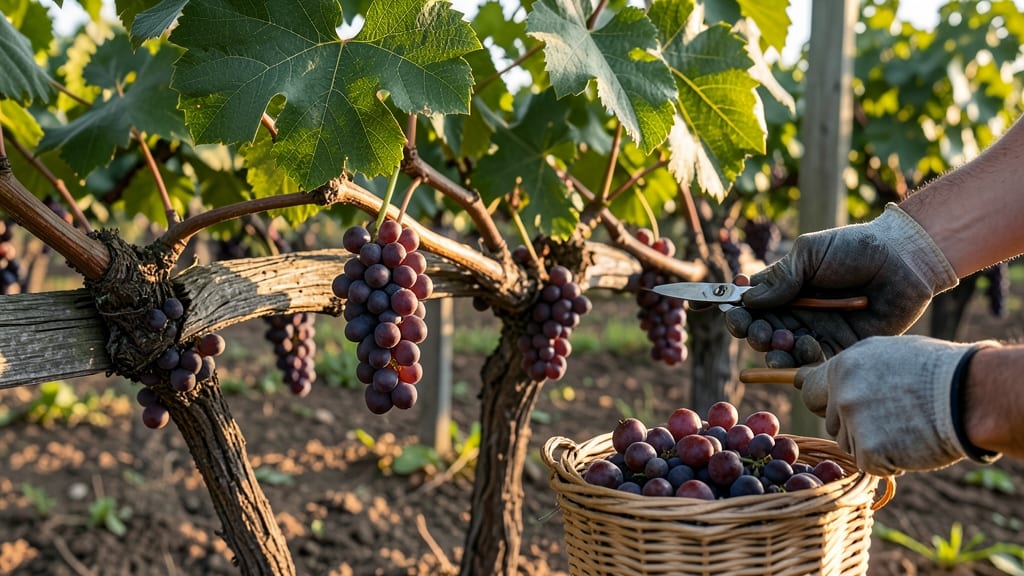
Harvesting muscadine grapes at the right time ensures they're bursting with sweetness and perfect texture—miss the window, and you're left with tart, underripe fruit or overripe mush.
Picture this: you've spent months tending to your 🍇 vines in USDA Zones 7-10, and now the moment of truth is here. But how do you know when those deep purple or bronze clusters are truly ready?
The answer lies in a mix of color, firmness, and even the way they smell.
Most gardeners wait until late summer or early fall, but the exact timing depends on your climate zone and the variety. A grape that's ideal for jelly-making might be too soft for fresh eating—and vice versa.
Below, I’ll walk you through the five foolproof signs of ripeness, so you never miss the sweet spot again.
From checking the skin’s color to testing sugar levels, you’ll learn how to turn your harvest into a flavor-packed success every season—no guesswork required.

5 Visual and physical signs muscadine grapes are ready to harvest
Harvesting muscadine grapes at peak ripeness transforms your vineyard from ordinary to extraordinary. Unlike table grapes, muscadines rely on visual cues and physical tests to determine perfect harvest timing. Ignoring these signs means missing out on the optimal sweetness and flavor complexity that define this Southern favorite.
I’ve learned through years of growing muscadines that color alone isn’t enough—you need to combine multiple indicators. For example, a deep purple grape might still be tart if the seeds aren’t fully developed.
Let’s break down the five essential signs that tell you when to pick your grapes for the best results.
-
1 Skin Color: Deep, uniform hue (purple, black, or bronze) with no green patches. Use this color chart as a guide: dark purple = ready; light purple = wait 3-5 days.
-
2 Berry Firmness: Grapes should yield slightly when gently squeezed (like a ripe peach). If they’re rock-hard, they’re underripe; if they’re mushy, they’re overripe.
-
3 Stem Separation: The stem should detach from the grape with minimal force. If it snaps off cleanly, they’re ready. If it resists, wait 2-3 more days.
-
4 Sugar Content: Use a refractometer (aim for 18-22 Brix). If you don’t have one, taste one grape—it should be naturally sweet, not tart or bland.
-
5 Seed Development: Cut a grape open—seeds should be dark brown and fully formed. Light-colored seeds mean the grape isn’t fully ripe yet.
Let’s start with the most obvious sign: skin color. Muscadines come in shades of purple, black, or bronze, but uniform depth is key. A grape with patches of green needs more time on the vine, while one that’s fully colored but still firm might not be sweet enough.
I always cross-reference color with the other signs to avoid mistakes.
Next, berry firmness tells you whether the grape is ready to eat fresh or better suited for jams/jellies. A ripe muscadine should give slightly when you press it between your thumb and forefinger—like a perfectly ripe avocado.
If it feels spongy or mealy, it’s past its prime and may spoil quickly.
One of my favorite tests is the stem separation trick. Gently twist the grape where it meets the stem—if it detaches cleanly, it’s ready.
This indicates the grape has reached its optimal sugar-to-acid ratio. I’ve found that muscadines harvested this way store best and maintain their flavor longer.
For those who love data, sugar content is the gold standard. A refractometer gives you precise readings, but even without one, your taste buds can tell you if the grapes are ready. Sweetness should dominate, not tartness or bitterness.
If you’re making jelly, aim for the higher end of the Brix scale (20-22) for thicker spreads.
The final clue is often overlooked: seed development. Slice open a grape and check the seeds—dark brown seeds mean the grape is fully ripe. Light-colored or undeveloped seeds signal it needs more time. This is especially important if you’re growing muscadines for fresh eating versus processing.
Combining these five signs ensures you harvest muscadines at their peak. For example, I once picked a batch based on color alone, only to find they were still tart. The next year, I used all five signs—and the difference in flavor was night and day. 🍇
Muscadine grape ripening timeline: month-by-month harvest guide by climate Zone
Timing your muscadine grape harvest depends heavily on your USDA climate zone—a late frost in Zone 5 can delay ripening by weeks, while a Zone 9 heatwave might rush the process. Understanding these variations ensures you don’t miss peak flavor or risk frost damage.
I’ve grown muscadines in Zone 7 for years, and I’ve learned the hard way that patience pays off when waiting for that perfect balance of sugar and acidity.
In warmer climates (Zones 7-9), grapes typically ripen between late August and October, while cooler zones (Zones 5-6) may see harvests stretched into early November—if frost doesn’t strike first. Heatwaves can accelerate ripening, while cool, wet summers often delay it.
Below, I’ve broken down the month-by-month timeline for each zone, so you can plan accordingly and avoid common pitfalls like overripe or underripe grapes.
In Zone 7-9, I’ve found that grapes on southern-facing trellises ripen first, often by mid-August, while those on northern exposures may linger until October. Use a refractometer to check sugar levels—aim for 18-22 Brix for optimal flavor.
In Zone 6, watch for first frost warnings in September and harvest early if needed, even if the grapes aren’t fully ripe.
For Zone 5 gardeners, timing is critical. If your area has a history of early frosts, prioritize harvesting by late September, even if the grapes aren’t at peak sweetness.
I once lost an entire crop in Zone 5 by waiting too long—now, I harvest green if frost is imminent and finish ripening indoors. A cool, dark room can slow the process slightly, preserving flavor until conditions improve.
Heatwaves can overripe muscadines quickly, especially in Zones 8-9. If temperatures exceed 90°F (32°C) for weeks, grapes may develop mealy texture or ferment on the vine. Harvest early if you notice rapid color change or a strong alcohol-like aroma.
In my Zone 7 garden, I’ve had to pick grapes in early September during heatwaves to avoid spoilage.
Pro tip: Morning harvests in hot climates prevent grapes from overheating. Store them in a shady, well-ventilated area for up to 3 days to finish ripening naturally. For Zone 5-6, consider row covers to extend the season—this can add 2-3 weeks of harvest time.
Always prioritize flavor over size: a slightly smaller, perfectly ripe grape beats an overgrown, underripe one every time.