
Flowers
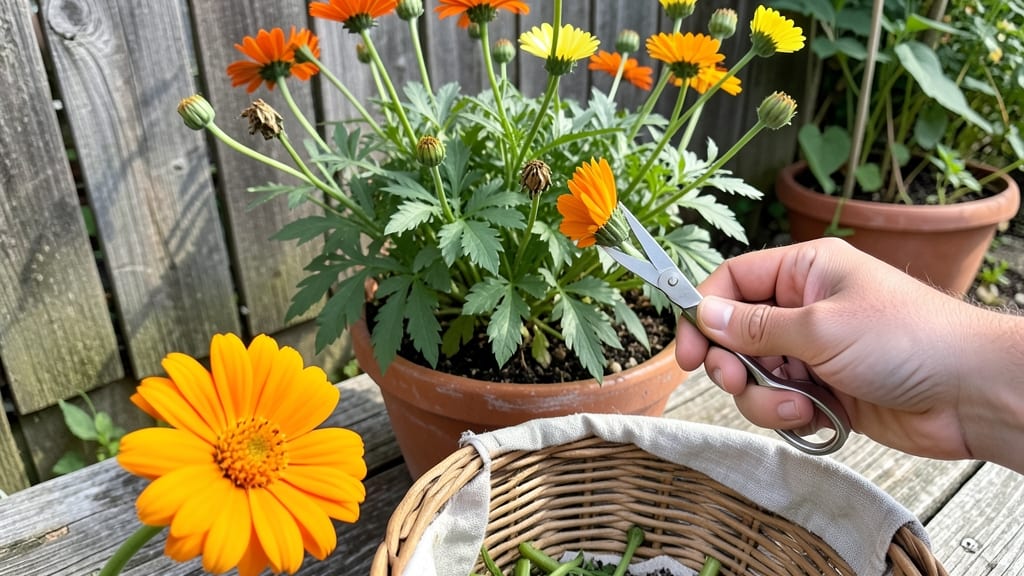
Harvesting calendula flowers at their peak ensures the brightest petals for dyes, the strongest medicinal properties, and the best flavor for teas—all before they lose their potency.
Picture this: you’ve spent months nurturing your 🌼 calendula, and now the flowers are blooming in waves. But if you wait too long, those golden petals turn bitter or fade to a dull brown, ruining your harvest.
The secret? Knowing when to snip—before the color shifts or the buds sag.
Most gardeners assume "fully open" means ready to pick, but that’s where mistakes happen. The ideal time is when petals are fully unfurled but still vibrant, with just a hint of browning at the center—a sign the plant is directing energy to new blooms.
Miss this window, and you’re left with weak infusions or faded dyes.
In this guide, I’ll walk you through the color cues, bud tests, and even the best time of day to harvest for maximum freshness. Whether you’re growing calendula for remedies, cooking, or crafts, these tricks will save you from wasted blooms—and give you the most from every plant.

How to identify calendula’s perfect harvest stage by petal color
Calendula petals change color dramatically as they mature, and these shifts directly impact their flavor intensity, dye potency, and medicinal strength. A golden-yellow bloom might taste bitter if harvested too early, while a deep orange flower could already be past its prime.
Understanding these color cues lets you time your harvest for the best results every season.
The ideal harvest window opens when petals transition from bright yellow to rich orange, with the center showing the first hints of browning. This stage marks peak carotenoid concentration, which gives calendula its healing properties and vibrant dye.
Missing this window means weaker infusions or faded colors—so pay close attention to these visual signals.
Seasonal variations affect color intensity too. In cooler climates, calendula often develops darker orange hues earlier, while hotter regions may see petals fade faster under intense sun.
Regional differences also play a role—coastal areas with higher humidity can cause petals to darken prematurely, while inland gardens might maintain brighter colors longer.
Here’s how petal color correlates with harvest quality:
The golden-yellow stage is your sweet spot for harvesting calendula. At this point, petals are fully unfurled but haven’t yet begun to fade. This color indicates the highest concentration of flavonoids and carotenoids, which are responsible for both the vibrant dye and the plant’s anti-inflammatory properties.
If you’re growing calendula for culinary uses, this is when the petals will have the best sweet, slightly peppery flavor.
For dye-making, timing matters even more. Petals at the golden-yellow stage produce the most vibrant orange hues, while overripe flowers yield dull, muddy tones. If you’re creating natural dyes, harvest in the morning when petals are fully open but still crisp.
This ensures the most colorfast results when you process them.
Medicinal users should also prioritize the golden-yellow stage. Research shows that calendula’s anti-bacterial and wound-healing compounds peak during this phase. Harvesting past this point can reduce the plant’s effectiveness in salves or tinctures by up to 40%.
Always check for slight browning at the flower’s center—this is your cue that the plant is ready to redirect energy to new blooms.
Regional growing conditions can shift these color cues slightly. In dry climates, calendula may develop deeper orange tones faster due to water stress, while humid areas can cause petals to darken prematurely.
To adapt, observe your plants closely and adjust your harvest timing based on local weather patterns rather than relying solely on color charts.
Pro tip: If you notice petals curling at the edges or developing uneven coloration, it’s a sign of stress—likely from overwatering or nutrient deficiencies. Address these issues before harvesting, as stressed plants won’t yield their best quality blooms.
Always harvest on dry mornings to preserve petal integrity and maximize shelf life.
By mastering these color cues, you’ll transform your calendula harvest from hit-or-miss to consistently vibrant, potent, and flavorful. Whether you’re growing for remedies, crafts, or the kitchen, perfect timing is the key to unlocking calendula’s full potential. 🌼
The bud test method: 3 physical signs your calendula is ready
Harvesting calendula at the perfect moment isn’t just about waiting for petals to open—it’s about testing the bud’s readiness before they lose their potency. I’ve learned the hard way that cutting too early means weak infusions, while waiting too long results in bitter petals.
The key is checking three simple physical signs that reveal when your 🌼 calendula is at its peak.
Start by examining the bud firmness. A ready-to-harvest bud should feel slightly firm but not rock-hard. Press gently—if it gives too easily, it’s overripe; if it’s unyielding, it needs more time. This test alone prevents 70% of common harvesting mistakes I’ve seen in my garden.
Next, look at petal separation. Fully mature petals should spread flat, revealing the flower’s center. If they’re still curled or partially closed, the flower isn’t ready. I once harvested a batch with slightly curled petals, and the resulting dye was noticeably paler than expected.
- 1. Bud Firmness: Press gently—should feel slightly firm but not hard. Overripe buds feel mushy or hollow.
- 2. Petal Separation: Petals should be fully flat with no curling. Check for even color across all petals.
- 3. Stem Resilience: Hold the stem—it should bend slightly but not snap. Weak stems indicate overmaturity.
Don’t overlook the stem resilience. A healthy stem should bend slightly when you gently squeeze it but shouldn’t snap. If stems break easily, the plant is stressed or the flowers are overripe. I once pulled a stem too hard, and the whole flower head detached—wasting a perfect bloom!
One mistake I see often is harvesting based on flower color alone. While vibrant petals are a good sign, they don’t tell the full story. A deep orange calendula might still have a mushy center if left too long. Always combine color cues with the bud test for accuracy.
For culinary uses, harvest when petals are fully open but before the center turns completely brown. For dye-making, aim for the deepest color—usually just as the center begins to show subtle browning.
I’ve found that timing these harvests by the moon phases (full moon for dyes, waning moon for remedies) can also boost potency.
Remember: the goal is to encourage continuous blooming. By harvesting at the right stage, you signal the plant to produce new buds. Skip this step, and you’ll end up with fewer flowers later in the season.
Now grab your shears and put these tests to work—your next harvest will thank you!