
How To
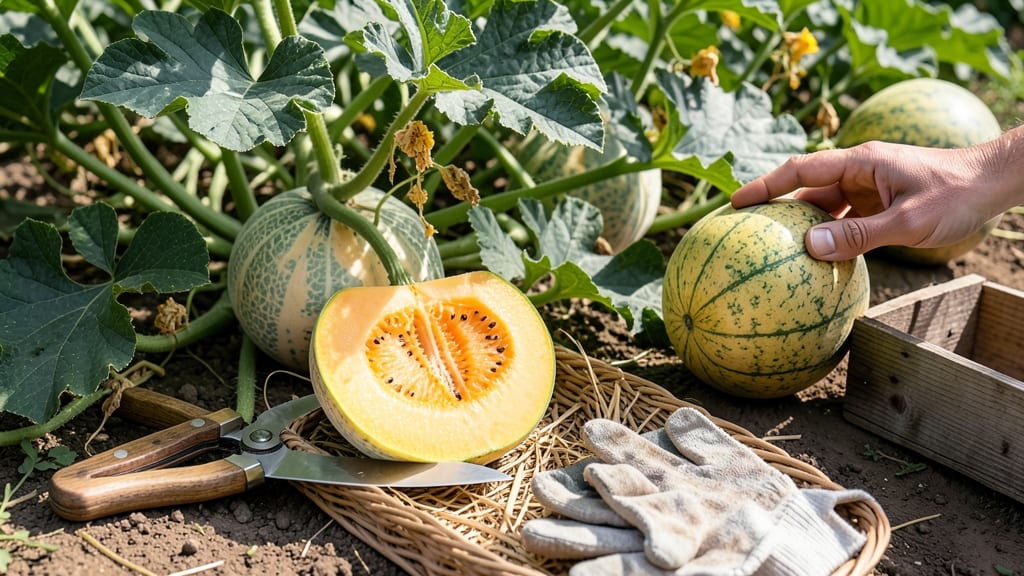
Harvesting muskmelon at the right time means the difference between a juicy, sweet reward and a bland, overripe disappointment.
Picking a 🍈 too early leaves you with hard, flavorless fruit, while waiting too long turns it into a mealy mess. So how do you know when that perfect moment arrives?
Most gardeners rely on a mix of visual cues, like skin color and stem changes, but the real secret lies in three simple tactile tests. These methods—stem separation, blossom-end color shifts, and the classic thump—reveal ripeness before the melon overdoes it.
Below, I break down exactly what to look for, how seasonal factors like heat waves or cool snaps can throw off timing, and the best way to store your harvest once you get it home.

3 Tactile tests to determine muskmelon ripeness before harvesting
Harvesting a muskmelon at peak ripeness transforms it from a bland garden curiosity into a sweet, fragrant treasure. The key lies in your hands and senses—three simple tactile tests reveal when your melon is ready.
These methods, backed by plant physiology, help you avoid the disappointment of underripe firmness or overripe mushiness.
First, understand that muskmelons rely on ethylene gas for ripening, which triggers both color changes and texture shifts. By combining visual cues with physical tests, you can pinpoint the exact moment when sugar content peaks.
Let’s explore the three foolproof methods I’ve used in my own garden to consistently harvest melons at their sweetest.
Gently twist the fruit at the stem. If it slips free with minimal force, it’s ready. Resistance means it needs more time.
Check the blossom end (opposite the stem). A deep cream or gold hue signals ripeness, while pale or green means it’s not ready.
Hold the melon and give it a firm thump with your knuckle. A deep, hollow sound means it’s ripe; a dull thud indicates overripeness.
The stem separation test works because muskmelons naturally detach from the vine as they ripen. This is a survival mechanism—when the fruit is ready, the plant releases it to spread seeds. In my experience, this test is the most reliable, especially in hot climates where melons ripen quickly.
Start by gently grasping the fruit near the stem and twisting. If it separates with just a slight pull, it’s time to harvest.
Next, inspect the blossom-end color, which often changes from pale green to a vibrant yellow or cream. This color shift is caused by chlorophyll breakdown and carotenoid accumulation, both of which indicate ripeness.
For example, Cantaloupes develop a golden blossom end, while Honeydews turn creamy white. Inconsistent coloring suggests uneven ripening, which can lead to uneven sweetness.
Finally, the thump test reveals internal texture without cutting into the fruit. A ripe muskmelon should produce a resonant, hollow sound when tapped—similar to knocking on a wooden door. This indicates the flesh is tender and juicy.
Overripe melons, however, feel mushy and produce a dull thud. I’ve found this test particularly useful for Crenshaw melons, which can be tricky to judge by color alone.
Combine these tests for the most accurate results. For instance, a melon that passes the stem test but still sounds dull when thumped may need another day or two. Conversely, a fruit with a golden blossom end but firm resistance at the stem might still need time.
Pay attention to the scent too—a ripe muskmelon emits a sweet, musky aroma near the stem, while unripe ones smell bland or grassy.
Timing is everything, especially in hot climates where melons ripen in as little as 70 days. If you miss the window, the fruit can overripen on the vine, leading to mealiness. In cooler regions, melons may take up to 90 days to mature, so monitor them closely.
I’ve learned that morning harvests yield the sweetest melons because the fruit’s sugar content is highest after a night’s rest.
Pro tip: Harvest melons in the morning when temperatures are cooler. This preserves their sweetness and prevents bruising. Use a sharp knife or pruners to cut the stem, leaving a small portion attached to the fruit.
This helps extend shelf life by slowing moisture loss. Store harvested melons in a cool, dry place (around 50°F) to maintain quality for up to a week.
By mastering these tactile tests, you’ll never again wonder if your muskmelon is ready. The combination of stem separation, blossom-end color, and the thump test gives you a foolproof way to harvest melons at their peak.
Next time you’re in your garden, try these methods—I guarantee you’ll taste the difference! 🍈
Muskmelon variety ripening guide: when to expect harvest based on cultivar
Not all muskmelons ripen on the same schedule—each cultivar has its own timeline, influenced by climate and growing conditions. Understanding these differences helps you plan your harvest window and avoid common mistakes like picking too early or missing peak sweetness. Let’s break down the ripening expectations for popular varieties.
From the fragrant Cantaloupe to the creamy Honeydew, each muskmelon type matures at different speeds. Even within the same variety, cooler climates can delay ripening by 1-2 weeks compared to warm regions. Knowing these timelines ensures you’re ready to harvest at the perfect moment for maximum flavor and texture.
🌱
| Variety | Days to Maturity | Harvest Window | Climate Adjustments | Common Mistakes |
|---|---|---|---|---|
| Cantaloupe | 60-75 days | July-August | Cooler areas: extend by 10-14 days | Picking before stem dries |
| Honeydew | 75-90 days | Late July-September | Hot climates: ripen faster; check scent | Ignoring blossom-end color change |
| Crenshaw | 80-90 days | August-September | Short seasons: prioritize early varieties | Overwatering before harvest |
For Cantaloupe, expect harvests between 60-75 days after planting, typically in July or August. In cooler climates, extend your timeline by 1-2 weeks to account for slower ripening.
The key is watching for the stem to dry and the fruit to slip easily from the vine—this usually happens just as the skin deepens to a golden hue.
Honeydew varieties take longer to mature, often 75-90 days, with harvests stretching into late summer or early fall. In hot climates, these melons can ripen faster, so focus on the blossom-end color (a creamy yellow) and the sweet musky aroma near the stem. Skipping these checks often leads to underripe, bland fruit.
Avoid the common mistake of harvesting based solely on size or days since planting. For example, Crenshaw melons, which take 80-90 days, often confuse gardeners by looking ripe when they’re still firm. Always perform the thump test—a ripe Crenshaw will sound hollow when gently tapped.
If you’re growing muskmelons in a short-season climate, choose early-maturing varieties like ‘Athena’ Cantaloupe (60 days) or ‘Earlidew’ Honeydew (70 days). These are bred to ripen faster while maintaining flavor. Pair this with row covers in early spring to extend your growing season by 2-3 weeks.
Finally, remember that overripe melons lose sweetness and develop mealy flesh. Once harvested, store them at 50-55°F and consume within 5-7 days. For the best results, harvest in the morning when temperatures are cooler and flavors are at their peak.
🌿