
How To
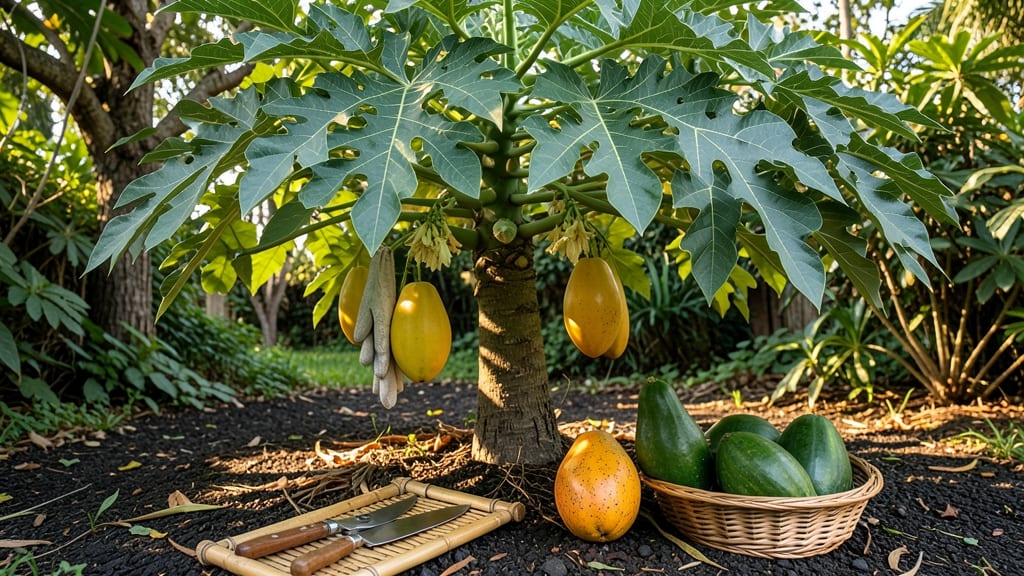
Harvesting papaya at the right time means the difference between a meal of juicy sweetness and a bland, seedy disappointment.
Picking a papaya too early means waiting weeks for ripening, while harvesting too late turns your fruit into a mushy mess. The key? Watching for three unmistakable signs: color shifts from green to yellow or orange, a slight give when pressed, and that unmistakable sweet floral scent.
In tropical regions like Florida or Hawaii, papayas ripen year-round, but in cooler zones, timing shifts to late spring or summer. I’ll walk you through exactly what to look for—plus how to handle your papaya after the harvest for the best flavor.
Skip the guesswork and learn the three foolproof clues that tell you it’s time to pick, so you never miss the perfect harvest window again.

Papaya ripeness by color: 3 stages to watch (with photos)
Papaya fruit ripeness is all about color transformation, but the exact shades depend on your climate and variety. In tropical regions like Hawaii or Florida, papayas often turn bright orange, while in cooler subtropical zones, you might see yellow-orange hues.
Understanding these 3 color stages ensures you harvest at peak sweetness.
Sunlight plays a crucial role—full sun exposure intensifies color, while partial shade can delay ripening. Even 10% less sunlight may result in paler fruit. Pay close attention to these visual cues to avoid underripe or overripe papayas that lack flavor.
📌 Key Tip: Never harvest based on size alone—some small papayas can be sweeter than large, underripe ones. Always check the skin color first.
The first stage is easy to spot—your papaya will be solid green, firm to the touch, and completely unripe. This is the "waiting period", where the fruit is still developing its sugars. In my Florida garden, this stage lasts about 4-6 weeks after the color shift begins.
During stage 2, you'll notice patches of yellow or orange emerging on the skin. This is where sunlight exposure becomes critical—fruits on the sunniest side of the tree will ripen faster.
Gently press the fruit; if it feels slightly soft (like a ripe peach), it's almost ready. In cooler climates, this stage may take 1-2 weeks longer.
By stage 3, your papaya should be uniformly colored—either bright orange (tropical varieties) or pale yellow-orange (subtropical types). The skin will have a slight sheen, and the fruit will yield gently when pressed near the stem.
This is your harvest window, and missing it means risking overripe fruit that becomes mushy.
Fun fact: Red-fleshed papayas (like 'Red Maradol') often have darker orange skin when ripe, while yellow-fleshed varieties (like 'Solo') turn pale yellow. Always check the fruit's natural color for your specific variety, as these differences can be dramatic.
If you're growing papayas in containers, expect the ripening process to be 10-15% slower due to limited root space. Container-grown fruit also tends to have lighter skin tones because of reduced sunlight penetration.
To compensate, place pots in the sunniest spot and use reflective surfaces (like white walls) to maximize light exposure.
One common mistake is harvesting papayas too early because they're small but colored. Remember: size doesn't equal ripeness. A papaya can be fully colored but still underripe inside.
Always combine color, texture, and scent tests (we'll cover that in the next section!) for the best results.
Pro tip: Take daily photos of your papayas during the ripening process. The color progression is fascinating, and you'll spot the perfect moment more easily over time. Plus, it's a great way to track how sunlight and temperature affect your specific variety.
Texture and scent tests: how to feel and smell a ripe papaya
Beyond color, the texture and scent of a papaya reveal its true ripeness. A ripe papaya should feel slightly yielding when pressed gently near the stem—like the give of a ripe avocado. This softness indicates the fruit’s sugars have fully developed, while still maintaining firmness to avoid mushiness.
In my garden, I always press the fruit with my thumb and index finger to test this gentle give.
Pay attention to the stem area, too. When ripe, the stem near the fruit’s base will turn dry and brown, almost papery. This is your cue that the fruit is ready to harvest.
If the stem is still green and moist, the papaya needs more time on the tree. This stem drying is one of the most reliable indicators of ripeness, especially in humid climates where color changes can be subtle.
⚠️ WARNING: Overripe vs. Perfectly Ripe ⚠️
The scent test is especially useful in cooler climates where papayas may ripen more slowly. Hold the fruit close to your nose and inhale deeply near the stem. A ripe papaya should smell sweet and tropical, almost like a mix of melon and citrus blossoms.
If you detect a sour or fermented odor, the fruit has passed its prime. This olfactory cue is often more reliable than color alone, particularly for yellow-fleshed varieties that may not develop deep orange hues.
For container-grown papayas, texture tests are even more critical because sunlight and temperature fluctuations can delay ripening. If your papaya’s skin is uniformly colored but feels rock-hard when pressed, it’s still underripe. In these cases, leave it on the tree for another 3-5 days and recheck daily.
The texture shift from firm to slightly yielding is the most accurate way to judge ripeness in less-than-ideal growing conditions.
One pro tip I learned from local growers in Florida’s Everglades: Tap the papaya lightly with your knuckles. A ripe fruit will produce a dull thud, while an unripe one sounds hollow and crisp.
This acoustic test works surprisingly well and doesn’t risk bruising the fruit. Combine this with the scent and texture tests for a three-pronged approach to perfect harvest timing.
If you’re harvesting papayas to ripen indoors, focus on fruits that are 90% colored but still firm to the touch. These will ripen evenly without becoming mushy.
Place them in a paper bag with a banana or apple to speed up the process—these fruits release ethylene gas, which triggers ripening. Check daily for the sweet floral scent and gentle give to avoid overripening.