
How To
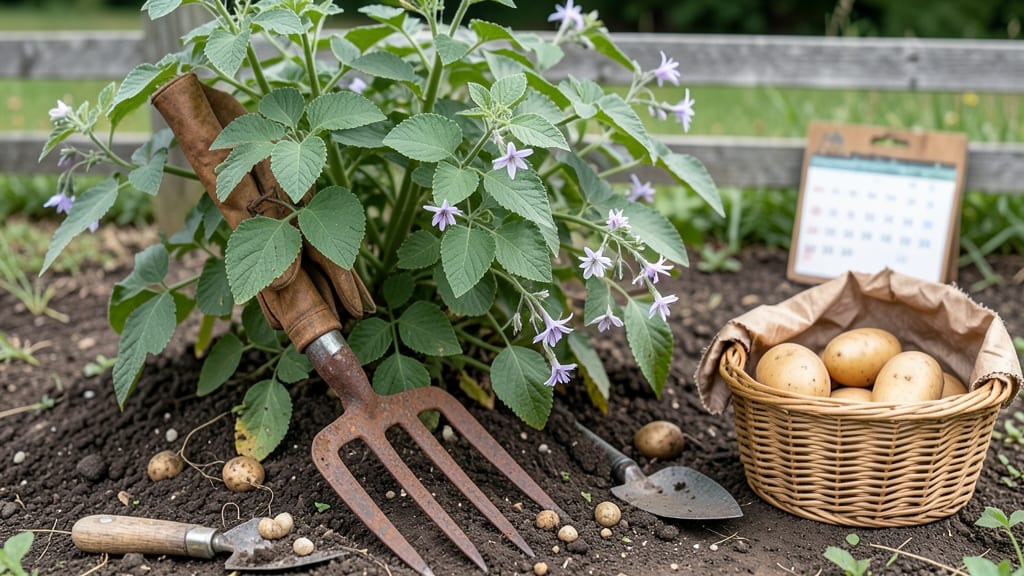
Harvesting potatoes in Idaho at the right time ensures you get crisp, flavorful tubers instead of mealy, shriveled ones — and missing the window means wasted effort.
Idaho’s dry spells, sudden rain, and short growing season make timing everything. One week too early, and you’ll dig up underdeveloped potatoes; one week late, and a hard frost turns them to mush. I’ve seen both happen, and neither is pretty.
Here’s how to read your plants and soil for the perfect harvest moment, plus how Idaho’s climate zones shift those timelines by weeks.
You’ll learn the exact signals to watch for, from foliage color to tuber size, and how to adjust for early vs. late varieties — so you can pull them when they’re just right.

Idaho-specific potato harvest timing based on variety & climate zones
Idaho’s cooler climate and shorter growing season demand precise timing for potato harvests. The state’s USDA zones 5b-7b mean early-season varieties must be harvested before frost, while late-season types need careful monitoring. Understanding your local microclimate and potato variety is key to avoiding mealy tubers or wasted effort.
Most Idaho gardeners plant potatoes between mid-April and early June, with harvest windows spanning July through October. However, high-altitude regions like northern Idaho (zone 5b) have earlier frost dates than southern areas (zone 7b).
This means early varieties like Yukon Gold may be ready by late July, while late-season Russet Burbank could wait until early October.
Idaho’s dry spells can accelerate maturity, while sudden cool snaps may trigger premature harvest signals. Always check soil moisture and plant foliage alongside calendar dates. Below is a breakdown of harvest timing for Idaho’s most popular varieties across climate zones.
For early-season varieties like Yukon Gold or Fingerlings, I recommend harvesting when tubers reach 1.5-2 inches in diameter—this gives you new potatoes perfect for quick cooking. These varieties mature quickly but also sprout faster in Idaho’s warm days, so don’t wait too long or they’ll become oversized and tough.
In
How to tell when Idaho-grown potatoes are ready: soil & plant signals
Idaho’s dry spells and sudden rain can throw off even the most experienced gardener’s timing. Unlike humid climates where foliage signals are clearer, our arid conditions mean you’ve got to dig deeper—literally—to confirm readiness.
I’ve learned the hard way that waiting for full foliage yellowing in late summer can mean frost-damaged tubers, while harvesting too soon gives you tiny, underdeveloped potatoes that won’t store well.
The key is combining three critical checks: soil moisture, plant foliage, and tuber size. Idaho’s USDA zones 5b-7b add another layer—early varieties in Zone 7b might be ready by late July, while late varieties in Zone 5b could wait until September.
Let’s break down exactly what to look for, so you don’t end up with a bin of green, bitter tubers or shriveled leftovers.
⚠️ Idaho-Specific Harvest Pitfalls
Don’t rely solely on foliage color—Idaho’s dry heat can cause premature yellowing without tuber readiness. Instead, combine soil checks and tuber tests. A common mistake? Harvesting new potatoes too late because the vines look healthy—by then, the tubers may have split or gone woody.
Start by checking the soil moisture around your plants. Stick your finger 2-3 inches deep—if the soil feels dry, it’s time to water deeply (1-1.5 inches) and wait 3-5 days before testing again.
In Idaho’s Zone 6b and 7a, where summer droughts are common, potatoes often mature faster when stressed slightly. However, if the soil is bone-dry, the tubers may be small and tough rather than fully developed.
Next, examine the plant foliage. For most varieties, look for 50-70% yellowing of the leaves, especially the lower ones. But here’s the Idaho twist: if your plants are in Zone 5b, watch for early frost warnings—harvest before the first frost, even if the foliage isn’t fully yellow.
For new potatoes, you can harvest when the flowers fade and the tubers are 1-2 inches in diameter, but store these immediately as they won’t keep long.
Finally, perform the tuber test: gently dig up a few potatoes from the edges of the plant. If the skin is thick and firm (not papery or easily pierced) and the tubers are consistent in size, they’re ready.
In Idaho’s sandy loam soils, tubers often form shallower than in clay soils, so dig carefully—you might find them just 3-4 inches below the surface. If the tubers are green or still growing, wait another week.
One pro tip for Idaho gardeners: Adjust for sudden rain. After a heavy downpour, the soil may feel moist, but the tubers can swell and split. If you’ve had 3+ inches of rain in 48 hours, wait 5-7 days before harvesting to avoid damaged potatoes.
And remember, late-season varieties like Russets need 100-120 days to mature—don’t rush them just because the weather cools.
Timing your harvest right means the difference between crisp, flavorful potatoes and a disappointing pile of mealy, shriveled spuds. By combining soil checks, foliage signals, and tuber tests, you’ll nail it every time—even in Idaho’s unpredictable climate. Now grab that fork and dig in! 🥔