
Container Gardens
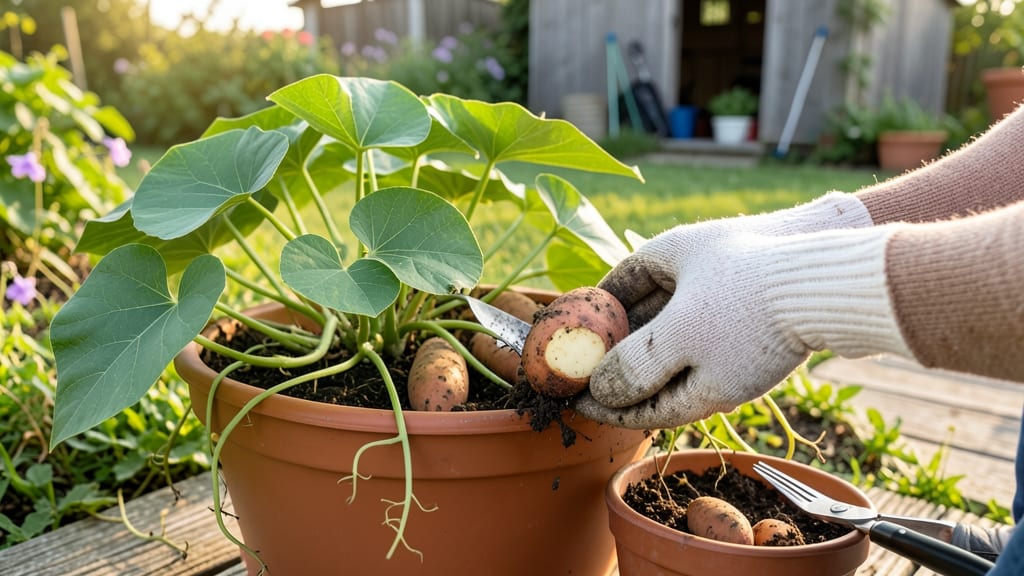
Harvesting sweet potatoes in containers at the right time ensures sweet, flavorful roots instead of tough, starchy ones — and a soil thermometer is your secret weapon for nailing the perfect moment.
Picture this: you’ve nurtured your 🍠 plants all summer, but if you dig too early, you’ll end up with undersized tubers. Wait too long, and the roots turn woody or split. The key is knowing when the soil temperature and plant signals align for peak harvest.
In containers, roots grow differently than in garden beds, so traditional timing tricks won’t cut it. You’ll need to watch for leaf yellowing, vine dieback, and skin toughness — plus a few extra steps to avoid damaging those precious tubers when it’s time to pull them.
By the end of this guide, you’ll confidently recognize the exact moment your container-grown sweet potatoes are ready, how to handle them without bruising, and even how to cure them for maximum sweetness and storage life.

How to use a soil thermometer to determine perfect harvest timing for container-grown sweet potatoes
Harvesting sweet potatoes from containers at the right time ensures maximum sweetness and optimal texture. Unlike garden beds, containers heat up faster, making soil temperature your best indicator. A soil thermometer helps you pinpoint the perfect moment—when roots reach peak flavor and size.
Without this tool, you risk harvesting too early (small, starchy tubers) or too late (woody, tough roots).
Sweet potatoes thrive in warm soil, and containers amplify heat retention. The ideal harvest temperature is between 80–85°F, where tubers develop their signature sweetness. Below this range, roots grow slower and taste bland.
Above it, they may overmature or rot. Containers made of black plastic or fabric reach these temps faster than ceramic or metal, so adjust your timing accordingly.
Here’s how containers affect root development: smaller pots (5-gallon size) restrict growth, forcing tubers to mature faster. Larger containers (10+ gallons) delay maturity but yield bigger roots. Material matters too—dark, heat-absorbing materials speed up the process, while insulated containers (like fabric grow bags) keep roots cooler longer.
Always check soil temps at the root zone, about 4–6 inches deep.
| Container Type | Ideal Soil Temp (°F) | Harvest Timeframe | Root Size Expectation |
|---|---|---|---|
| 5-Gallon Black Plastic | 80–85°F | 90–110 days | 3–5 inches |
| 10-Gallon Fabric Grow Bag | 78–82°F | 110–130 days | 5–8 inches |
| Ceramic or Metal (Insulated) | 75–80°F | 120–140 days | 4–6 inches |
| Wooden Half Barrel (20+ Gallons) | 82–86°F | 130–150 days | 6–10 inches |
To use a soil thermometer, insert the probe 4–6 inches deep into the soil, near the container’s edges where roots spread. Check temps early morning (before sun exposure skews readings) and late afternoon (peak heat).
Record daily temps for a week to spot trends. If temps consistently hit 80–85°F for 3–5 days, your sweet potatoes are nearing harvest. Pair this with visual cues like yellowing vines or toughened skin for confirmation.
Morning is the best time to harvest because soil temps are stable and roots are firmer. Avoid harvesting after heavy rain or when soil is waterlogged, as this can damage tubers.
If your container’s soil temp drops below 75°F at night, delay harvesting until daytime temps rebound. Frost risk is another critical factor—sweet potatoes won’t survive freezing, so harvest at least 2 weeks before the first expected frost in your zone.
Container size directly impacts how quickly roots mature. In smaller pots (5 gallons), roots may reach harvest size in as little as 90 days, while larger containers (10+ gallons) can take up to 140 days.
Monitor soil temps closely in smaller containers, as they heat up faster and may require earlier harvesting. If your container lacks drainage holes, roots can suffocate or rot—always use well-draining soil mixes with perlite or coconut coir to prevent waterlogging.
Pro tip: Shade cloth can help regulate soil temps in extreme heat. If your container’s soil exceeds 90°F for more than a day, drape 30–50% shade cloth over it to lower temps gradually. This prevents stress on the plants and extends the harvest window.
Pair this with evening watering to cool the soil naturally overnight. Overheated soil can cause bitter-tasting tubers or even root scorch, ruining your harvest.
Once you’ve confirmed the ideal 80–85°F soil temp and observed other readiness signs, it’s time to harvest.
Gently tip the container onto its side and sift through the soil with your hands to avoid damaging roots. Never wash harvested sweet potatoes—rinse off dirt with a damp cloth instead, as moisture promotes rot. Cure them in a warm (
5 Key signs your container-grown sweet potatoes are ready for harvest (beyond soil temperature)
Harvesting container-grown sweet potatoes at the right moment transforms your effort into sweet, flavorful roots. While soil temperature is critical, visual and tactile cues are equally important—especially in containers where roots grow differently.
Ignoring these signs can lead to woody tubers or premature vine death, both of which ruin flavor and storage potential.
Unlike in-ground sweet potatoes, container-grown varieties develop roots in confined spaces, making them more sensitive to timing. You’ll need to watch for leaf yellowing, vine dieback, and skin toughness—all signals that your sweet potatoes are ready to pull.
Missing these cues can mean the difference between a harvest of gourmet-quality tubers and a pile of tough, underripe roots.
- 1. Leaf Yellowing: 90% of foliage turns yellow-brown, starting from the bottom. This indicates the plant is redirecting energy to root development.
- 2. Vine Dieback: Vines wilt and dry completely, especially in cooler mornings. This is nature’s way of signaling tuber maturity.
- 3. Skin Toughness: Gently press a tuber through the soil—if the skin resists puncture, it’s ready. Early tubers feel soft and tender.
- 4. Root Size: Tubers should be 3+ inches long and firm. In containers, check by carefully sifting soil near the base of the plant.
- 5. Sweet Aroma: Cut open a small tuber—if it smells sweet and earthy, it’s harvest time. Starchy tubers smell bland or neutral.
One common mistake I see is harvesting too late, assuming more time means sweeter potatoes. But overripe tubers become woody and lose their natural sweetness. In containers, roots can also split or rot if left too long, especially in smaller pots where space is limited.
Always prioritize skin toughness and vine dieback over calendar dates.
To avoid damaging roots during harvest, gently sift soil from the container’s edges first. Use your hands to loosen tubers—never pry with tools, as this causes bruising.
Once pulled, let them cure in warm, humid conditions for 10 days to develop their signature sweetness. Skipping this step results in bland, short-lived storage life.
Pro tip: Harvest on a dry, sunny morning to minimize soil clinging to tubers and reduce the risk of fungal issues. Store them in a well-ventilated, dark place at 70–80°F until ready to cure. This simple routine ensures your container-grown sweet potatoes stay flavorful for months.