
Vegetables
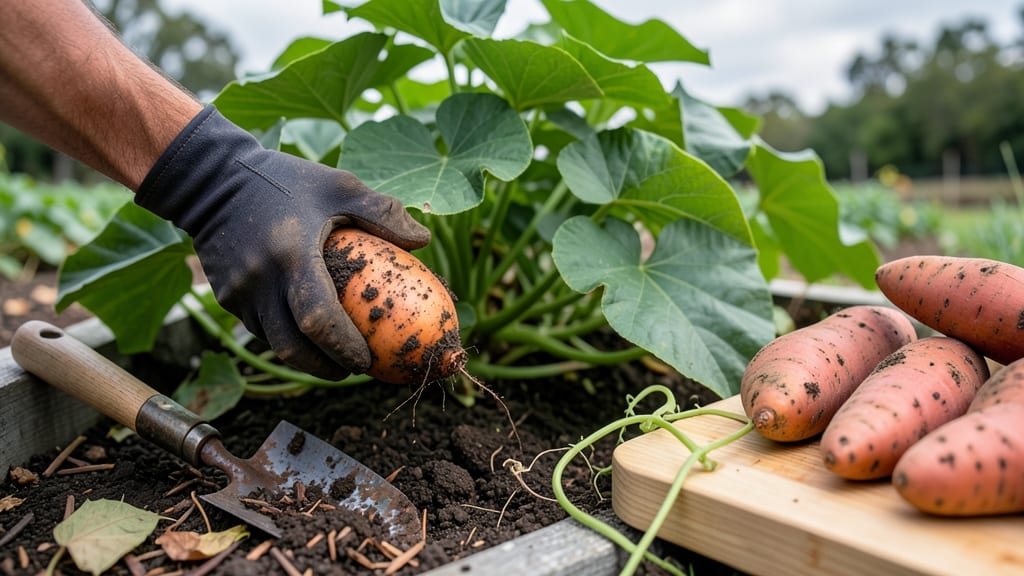
Harvesting sweet potatoes 🍠 at the right time ensures they’re packed with sweetness and store well for months—so timing is everything, and it’s all about the soil temperature, vine health, and tuber size.
Picture this: you’ve spent weeks nurturing your crop, only to pull them up too early and end up with bland, starchy tubers—or worse, leave them in the ground until frost ruins everything.
The key is watching for those telltale signs: yellowing foliage, firm skin, and soil temps dropping below 60°F.
In most regions, including USDA Zone 6a, the ideal harvest window falls between September 15 and October 31, but warmer climates can extend it later. Below, I’ll break down exactly how to check for readiness—so you never miss peak flavor or storage potential.
You’ll learn how to read the leaves, test the skin, and even use the thumbnail trick to avoid common mistakes that leave your crop underwhelming. Let’s get started.

Sweet potato harvest timing: soil temperature & vine health signals
Timing your sweet potato harvest correctly ensures maximum sweetness and longer storage life. The key factors are soil temperature (below 60°F/15°C) and vine health signals, which tell you when tubers are fully mature. Ignoring these cues can lead to underdeveloped potatoes or rotten harvests from frost damage.
In warmer climates like USDA Zones 9-11, sweet potatoes thrive year-round, but cooler temperatures trigger the natural dying-back of vines. Meanwhile, gardeners in shorter-season zones (6-8) must act quickly before the first frost—typically between September and October—to avoid ruined crops. Understanding these regional differences is crucial for success.
Soil temperature is your first clue: when it drops below 60°F/15°C, sweet potatoes signal readiness by yellowing leaves and drying vines. This shift forces the plant to redirect energy to the tubers, boosting their sugar content. Use a soil thermometer to monitor this critical threshold, especially in unpredictable climates.
Watch for foliage changes like yellowing leaves or wilted vines, which indicate the plant is shutting down. These signals appear 3-5 weeks before harvest, giving you time to prepare.
In longer growing seasons, you may see a second flush of growth before the final die-back—this is normal and doesn’t mean the tubers aren’t ready.
Frost warnings are another critical trigger. A light frost (28-32°F/-2 to 0°C) can kill the vines but won’t harm the tubers if harvested promptly. However, hard frosts below 28°F risk damaging the tuber skin, leading to rot during storage. Always harvest before the first frost in colder regions.
Regional climates dictate your harvest window. In Southern states (Zones 8-11), sweet potatoes mature 120-150 days after planting, often extending into November. Meanwhile, Northern growers (Zones 4-7) must harvest by late September to avoid frost.
Use your last frost date as a guideline, but prioritize vine health over calendar dates.
Harvesting too early results in small, starchy tubers with less sweetness, while delaying harvest risks frost damage or soil-borne diseases. The ideal window is when 70-80% of vines have yellowed and died back, and soil temps are consistently below 60°F. This balance ensures peak flavor and storage potential.
| Signal | Action | Best For |
|---|---|---|
| Soil temp < 60°F/15°C | Harvest within 1-2 weeks | All regions |
| 70-80% vine yellowing | Dig when dry soil (no rain forecast) | Warm climates |
| First frost warning | Harvest immediately before frost | Cool climates |
| Vines fully dried | Wait 1 week for full sweetness | Long seasons |
After spotting these signals, wait for dry soil (2-3 days without rain) to harvest. Wet soil makes tubers prone to cuts and rot, while dry conditions ensure a clean, long-lasting harvest.
Use a garden fork to gently loosen soil around the base of the plant, then pull vines upward to expose tubers.
In extreme heat (above 90°F/32°C), sweet potatoes may mature faster due to stress. Monitor soil moisture and adjust irrigation to prevent premature vine die-back. Conversely, cool, cloudy weather slows growth, so extend your harvest window slightly if vines aren’t ready on time.
Pro tip: Harvest a few tubers as test samples when vines start yellowing. If the skin is firm and the flesh is sweet, it’s time to harvest the rest. This spot-checking method saves you from waiting too long or harvesting too early—both of which compromise quality.
Regardless of your climate, prioritize vine health over rigid timelines. Sweet potatoes are forgiving if harvested at the right stage, but frost or neglect can turn a bounty into a loss. By tuning into soil temperature and vine signals, you’ll unlock sweeter, longer-storing potatoes every season. 🍠
How to check sweet potato size & skin color for perfect harvest readiness
When your sweet potato vines start yellowing, it’s time to dig deeper—but not just yet. The real test lies in the tuber size and skin texture. I’ve learned the hard way that harvesting too soon means small, starchy tubers, while waiting too long risks frost damage or rot.
Aim for tubers that are at least 4–6 inches long and feel firm when touched.
Start by gently brushing away the soil around the base of the plant. Look for tubers that are well-formed and matte in color. A shiny skin usually means they’re still growing, while a dull, rough texture signals readiness.
Pro tip: Press your thumbnail into the skin—if it doesn’t puncture easily, they’re ready to harvest.
Now, let’s talk size. Minimum 4 inches is ideal for most varieties, but some heirlooms like ‘Georgia Jet’ can reach 8+ inches. Measure a few tubers to ensure consistency—uneven sizes mean some may need more time in the ground.
If most are smaller than 2 inches, give them another 2–3 weeks.
Harvesting Sweet Potatoes: Pros & Cons
✅ DO Harvest When:
- Skin is firm and matte
- Tubers are 4–6+ inches
- Vines yellow and die back
- Soil temp drops below 60°F
❌ DON’T Harvest When:
- Skin is soft or shiny
- Tubers are <2 inches
- Frost is forecasted
- Stem end is green when cut
Don’t overlook the flesh firmness test. Cut a tuber in half—if the stem end is yellow, it’s ready. A green stem end means it’s too early. I once harvested a batch with green stems and ended up with bland, watery potatoes.
Lesson learned! Also, avoid harvesting if the soil is waterlogged, as this can cause rot.
One common mistake is waiting until the vines are completely dead. While this works in warm climates, in USDA Zone 6a, frost can kill the vines before the tubers are fully mature.
Instead, harvest when the vines are 70–80% yellowed and the soil is workable. This gives you the best chance of a successful harvest.
Finally, time your harvest for a dry, sunny day. Wet soil makes digging difficult and can damage the tubers. Cure them immediately after harvest by placing them in a warm (80–85°F), humid space for 5–10 days.
This step boosts sweetness and extends storage life. With these checks, you’ll never miss peak harvest time again!