
How To
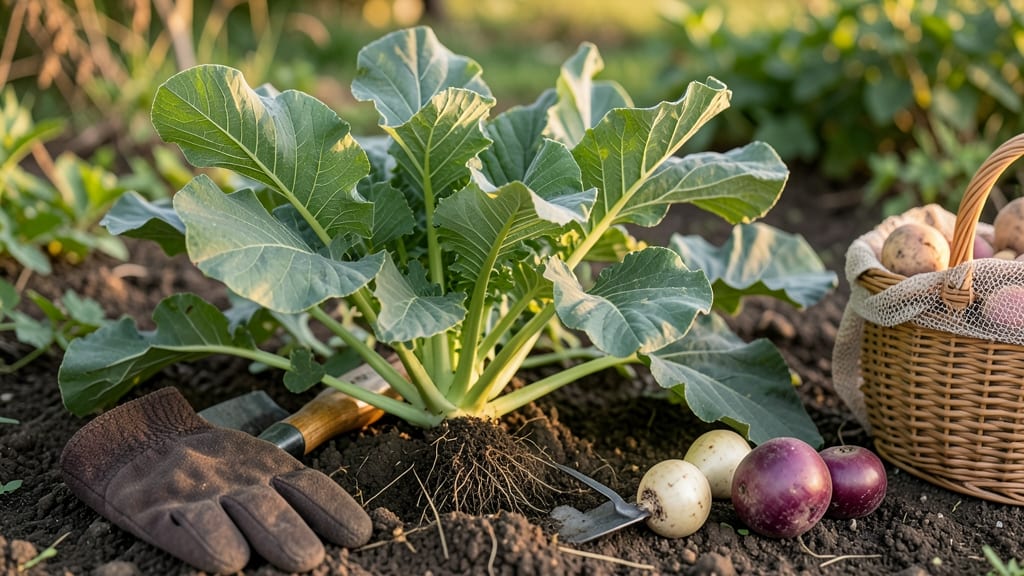
Harvesting turnips at the right time ensures you enjoy their crisp, sweet flavor before they turn woody or bitter—and the secret is all in the timing.
Picture this: you’ve nurtured your 🥕 plants all season, and now you’re staring at a patch of greens wondering, "Are they ready?" One wrong move, and those tender roots become tough and unappetizing. But with the right cues, you’ll never guess again.
Turnips are ready when their roots reach 1–2 inches in diameter, the leaves start yellowing, and they pull easily from the soil—three foolproof signs that mean dinner is about to get a whole lot tastier.
Below, I’ll walk you through exactly what to look for, plus how to avoid the #1 harvest mistake that ruins turnips faster than a late frost. No more second-guessing—just perfect roots, every time.

3 Visual cues to harvest turnips at peak freshness
Harvesting turnips at the perfect moment transforms a so-so root into a crisp, sweet garden treasure. The difference between a tender turnip and a woody, bitter one often comes down to three simple visual cues: leaf color, root size, and soil resistance.
Master these, and you’ll never second-guess your harvest timing again.
Turnips are ready when their leaves start yellowing at the edges—a sign the plant is redirecting energy to the root. This shift happens naturally 50–60 days after planting, depending on your variety. Ignore this cue, and your turnips will bolt or become tough, ruining their delicate flavor.
Now, let’s talk roots. The ideal harvest size is 1–2 inches in diameter, about the width of a golf ball. At this stage, turnips are firm, crisp, and packed with flavor. Wait too long, and those roots swell beyond edibility, developing a hard, pithy texture that’s nearly inedible.
Here’s where many gardeners trip up: they assume bigger always means better. But overmature turnips lose their sweetness and turn stringy. The key is consistency—check your plants every 3–5 days once they near maturity to catch that sweet spot.
🌱
The third cue is often overlooked but is the most reliable: soil resistance. When your turnip is ready, it should slip out of the soil with a gentle tug—no force needed.
If you’re wrestling with the root or hearing a squeaky sound as it pulls, it’s overripe. This resistance is your body telling you the root has hardened and lost its tenderness.
Pro tip: Harvest on a cool, cloudy day to reduce stress on the plant. The roots will stay fresher longer, and you’ll avoid the shock of pulling them during peak heat.
Store them in the crispest part of your fridge (usually the vegetable drawer) for up to 2 weeks.
One more thing: don’t ignore the greens! While the roots are the star, turnip leaves are edible too—just like baby spinach. Harvest them when they’re 4–6 inches tall for the most tender texture. You can even succession plant turnips every 2 weeks for a continuous harvest all season.
By combining these three cues—leaf color, root size, and soil resistance—you’ll never miss the perfect harvest window again. Next time you’re eyeing your turnip patch, grab a trowel and trust your eyes (and fingers!).
✂️
How to avoid common harvest mistakes with turnips
Harvesting turnips at the wrong time is the #1 mistake I see gardeners make—and it’s easy to do. Those perfect, crisp roots you’ve been dreaming of can turn woody and bitter in just a few days if left too long in the ground.
The key to success lies in understanding soil conditions, weather patterns, and the subtle signs your turnips are ready to be pulled.
Most gardeners assume turnips are ready simply because they’ve reached a certain size, but that’s where things go wrong. The real magic happens when you combine root firmness, leaf color changes, and soil resistance into your decision-making.
Ignore one of these factors, and you might end up with turnips that are either too small or past their prime.
Let’s start with the soil test, which is often overlooked. Before you even check the roots, gently tug on the plant. If it pulls easily with minimal resistance, that’s your green light.
If the soil feels too loose or the root resists, it’s not ready yet. This simple test can save you from harvesting turnips that are still developing.
⚠️ Warning: The Overlooked Sign of Overmaturity
Don’t wait until your turnip leaves fully yellow and wilt—this is a late-stage sign that your roots have already become tough and pithy. The ideal harvest window is when only the outer leaves start turning yellow, not the entire plant. This happens about 50–60 days after sowing, depending on your variety.
Weather plays a surprisingly big role in harvest timing. If you’re growing turnips in hot, dry conditions, they’ll mature faster and may become woody sooner. On the flip side, cool, wet springs can slow down growth, making you think they’re not ready when they actually are.
Always adjust your expectations based on your local climate—what works in Zone 5 might not apply to Zone 8.
Another pro tip: Harvest in the morning when the soil is moist but not soggy. This makes the roots easier to pull and ensures you’re getting the freshest, crispest texture.
If you harvest in the afternoon, the roots can start to wilt before you even get them to the kitchen, robbing you of that perfect crunch.
Finally, fix the #1 harvest mistake by setting a reminder to check your turnips every 3–5 days once they near maturity. Use a small trowel to gently loosen the soil around one plant, then pull it to test.
If it’s ready, harvest the rest within the next 24 hours—turnips don’t store well once they’re pulled, so timing is everything.