
Picking
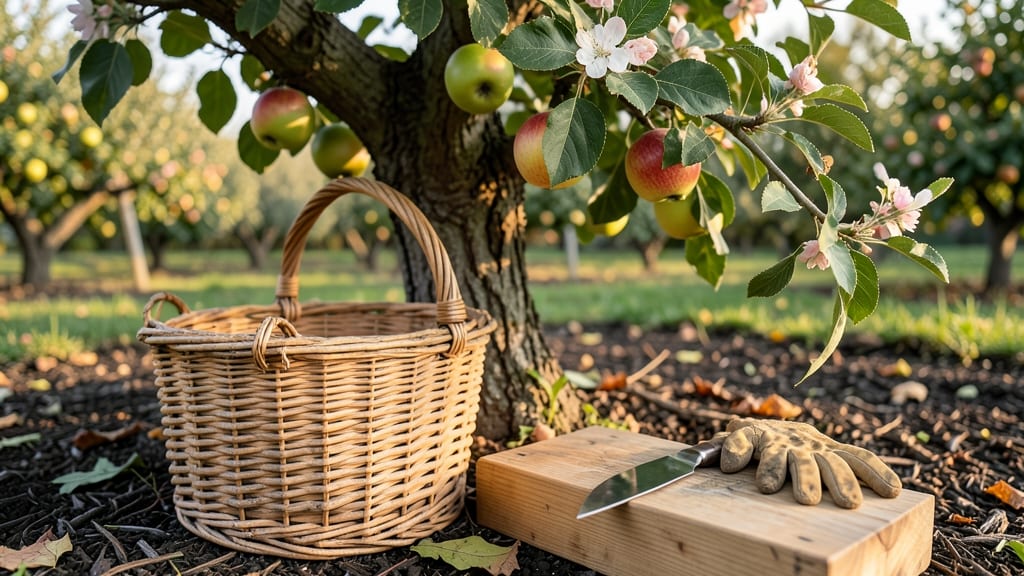
To pick apples at the perfect time means capturing that sweet, crisp flavor before they turn mealy or fall prey to frost.
Picking apples at the wrong time means sacrificing flavor, texture, and even storage potential—so knowing the exact moment to harvest is crucial for home gardeners and orchard owners alike.
One year, I waited too long on my 🍎 Honeycrisp tree, and the apples lost their snap, leaving me with a sad batch of mushy snacks instead of crunchy treats.
Timing depends on your variety, climate, and even the day’s temperature. Some apples, like Granny Smiths, need a chill to sweeten up, while others, like early-season McIntoshes, must be picked before the first frost hits.
I’ll walk you through the 3-step test to check ripeness—color, stem pull, and taste—so you never miss the window again.
By the end, you’ll know exactly when to grab your ladder, how to store your harvest for months, and which varieties play by their own rules. Let’s make sure your apples are peak flavor, not regret.

The 3-Step color-stem test for perfect apple ripeness
Determining the perfect moment to harvest apples can feel like guessing—until you master the 3-step color-stem test. This foolproof method combines skin color cues, stem separation, and blush development to ensure peak flavor and texture.
Whether you're harvesting Fuji, Honeycrisp, or Granny Smith apples, these visual and tactile clues will transform your harvest from hit-or-miss to consistently delicious.
I’ve learned the hard way that overripe apples turn mushy and lose their crispness, while underripe ones stay tart and lack sweetness. The key is catching them at that sweet spot—when their skin reaches full color, the stem separates cleanly, and their blush deepens just right.
Let’s break down each step so you can apply this test to your orchard or backyard tree with confidence.
🍎 Visual Cue 1: Skin Color Changes The first clue is the skin’s transition from green to full color. For red varieties like Gala or Red Delicious, this means a deep, vibrant red blush covering at least 50% of the surface. Yellow varieties like Golden Delicious should shift from pale green to a bright, golden hue. Even green apples like Granny Smith will develop a matte, even green without streaks of yellow or red.
🍎 Visual Cue 2: Stem Separation Test Gently grasp the apple and twist it slightly. If the stem snaps cleanly with a tiny crack near the branch, it’s ready. A stem that pulls but doesn’t break or leaves a ragedy stub means the apple needs more time. This test ensures the fruit has fully matured and won’t detach prematurely, reducing bruising during harvest.
🍎 Visual Cue 3: Blush Development Look for a deepened blush or color intensity on the sun-exposed side of the apple. A dull or patchy blush indicates underripeness, while a glossy, uniform color signals peak ripeness. For example, Honeycrisp apples develop a striking red-orange blush, while Fuji apples turn a rich crimson with golden highlights.
| Variety | Skin Color Cue | Stem Test | Blush Development |
|---|---|---|---|
| Fuji | Deep red with golden yellow | Snaps cleanly | Rich crimson blush |
| Gala | Striped red-orange | Clean break | Bright red stripes |
| Granny Smith | Matte green (no yellow) | Firm snap | Even green shade |
| Honeycrisp | Red-orange with yellow | Clean separation | Deep red blush |
| McIntosh | Red with green undertones | Easy twist-off | Faint red blush |
| Golden Delicious | Bright golden yellow | Clean snap | Sunlit yellow |
| Pink Lady | Red with pink blush | Firm break | Pink-red highlights |
| Jonagold | Red with yellow | Clean twist | Striped red-yellow |
| Ambrosia | Red with yellow-green | Easy snap | Bright red blush |
| Cortland | Red with green | Clean break | Deep red stripes |
Pro tip: Taste test one apple from each cluster to confirm sweetness. If it’s too tart, wait a few days; if it’s too soft, you’ve missed the window.
Remember, apples won’t ripen further once picked, so timing is everything. For varieties like Granny Smith, which stay firm longer, rely more on the stem test than color.
Once you’ve mastered these steps, you’ll never second-guess your harvest again. The color-stem test works for both backyard trees and commercial orchards, ensuring you pick apples at their peak. Store
Best time of year to harvest apples by variety
Apple varieties ripen at different times, so knowing your tree’s specific variety is half the battle. In my Zone 6a garden, I’ve learned that early-season apples like McIntosh must be picked by late August, while late bloomers like Granny Smith wait until October.
Regional frost dates also shift the window—northern growers may need to harvest 2-3 weeks earlier than southern climates.
Some apples, like Honeycrisp and Fuji, need full color and a crisp snap, while others, like Granny Smith, develop their signature tartness only after a frost. I’ve made the mistake of waiting too long, only to find apples turning mealy or splitting from rain.
The key is balancing ripeness cues with your local first frost date.
Here’s your variety-by-variety harvest guide, including regional adjustments for early vs. late bloomers:
🍎 McIntosh – Late August to early September (first to ripen)
🍎 Gala – Mid-September (northern zones) to early October (southern zones)
🍎 Golden Delicious – Late September (peak flavor after light frost)
🍎 Honeycrisp – Early to mid-October (wait for full red blush)
🍎 Fuji – Mid-October (needs full color and crispness)
🍎 Jonagold – Late September (northern) to October (southern)
🍎 Granny Smith – October to November (tartness peaks after frost)
🍎 Braeburn – Late October (avoid frost damage)
🍎 Pink Lady – Mid-October (wait for deep red blush)
⚠️ Pro Tip: Check your local frost dates—some varieties (like Granny Smith) actually improve in flavor after a light frost!
For dwarf varieties, harvest times stay consistent, but standard trees may ripen 1-2 weeks later due to their size.
I always mark my calendar with the average first frost date in my area and adjust accordingly. Honeycrisp, for example, can wait until mid-October in warmer zones but must be picked by early October in colder regions.
If you’re unsure, use the 3-step test (color, stem pull, and taste) to confirm ripeness. I’ve found that Granny Smiths often need that extra chill, while Galas are ready as soon as they blush. Never harvest based on calendar dates alone—always check the fruit first!
Once picked, store apples in a cool, dark place (like a basement) to extend shelf life. Some varieties, like Honeycrisp, store for 4-6 months, while others, like McIntosh, last only 1-2 months.
Knowing your variety’s storage potential helps you plan for baking, cider, or fresh eating all season long.