
Trees
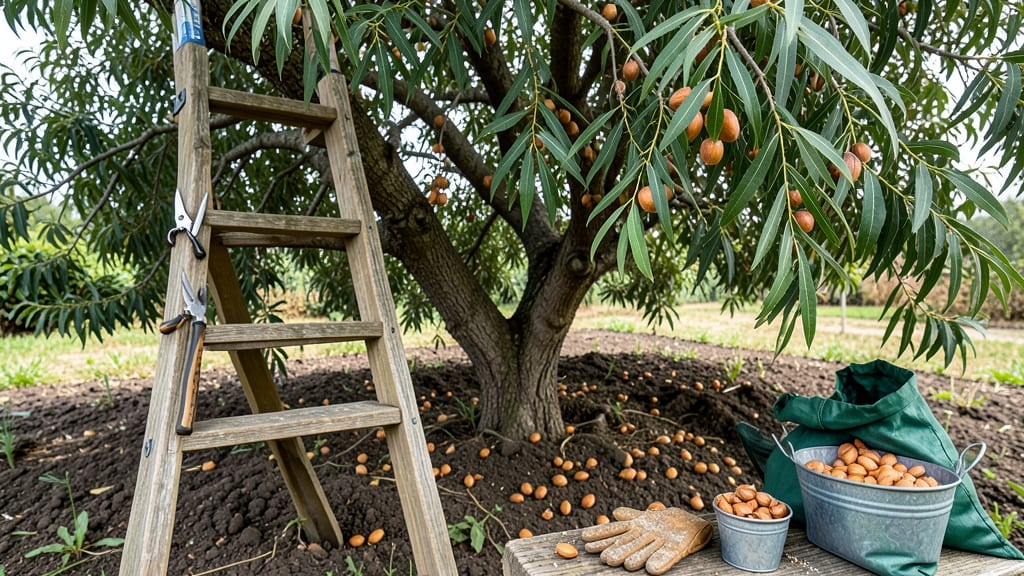
The best time to harvest almonds from your 🌰 tree arrives when hulls split open and shells rattle inside—usually between late summer and early fall, depending on your climate.
If you’ve ever picked almonds too early and ended up with bitter, underdeveloped nuts—or waited too long and lost them to pests—you know timing is everything.
This guide breaks down the exact cues to watch for, from shell hardness to leaf color, so you never miss the perfect harvest window again.
You’ll also discover how regional differences (like California’s long growing season vs. Mediterranean climates) shift your harvest dates—and the simple tricks to test nut readiness at home.

How to test almond tree nutrients & shell hardness for harvest readiness
Determining the perfect almond tree harvest time requires more than just checking the calendar. The shell hardness and nutrient levels in your tree are key indicators that tell you when those nuts are truly ready to pick.
Unlike many fruits, almonds don’t soften as they ripen—instead, their shells harden and the hulls dry out, signaling it’s time to harvest.
I’ve learned that leaf analysis and the thumb squeeze test are my go-to methods for assessing harvest readiness. These simple techniques help me avoid picking nuts too early (which can lead to poor storage life) or too late (risking pests and weather damage).
Let’s break down how to use these tests effectively to ensure you harvest almonds at their peak flavor and quality.
The thumb squeeze test is the simplest way to check shell hardness. Gently squeeze an almond between your thumb and index finger—if the shell feels firm but cracks slightly, it’s ready. If it feels too soft or doesn’t crack, wait a few more days.
I’ve found that mature almond trees (3+ years old) develop shells that are easier to test this way, while younger trees may require additional patience.
For nutrient testing, I recommend sending a leaf sample to a local agricultural extension office. They’ll analyze the nitrogen, potassium, and phosphorus levels in your tree’s leaves, which directly impact nut development. Ideal levels for harvest readiness are:
- Nitrogen (N): 2.0-2.5%
- Potassium (K): 1.5-2.0%
- Phosphorus (P): 0.20-0.25%
Environmental factors like temperature drops and day length also signal harvest time. In USDA zones 7-10, almonds typically ripen between late August and October, but exact timing depends on your local climate.
For example, California’s Central Valley (the world’s top almond producer) often sees harvests in early September, while Mediterranean climates may extend into October.
Watch for hull splitting, which is nature’s way of telling you it’s time to pick. When the outer hull cracks open, the nut inside is protected from pests and ready for harvest.
If you wait too long, the nuts may drop to the ground and become contaminated. I always harvest in the morning when humidity is low to prevent mold growth during drying.
One pro tip I’ve learned is to harvest in stages. Start by picking nuts from the lower branches first, as they often ripen slightly earlier than those higher up. Use a ladder or harvest pole to reach higher nuts safely.
After picking, spread the nuts in a single layer on a screen or mesh in a well-ventilated, shady area to dry for 1-2 weeks before storage.
If you’re unsure whether your almonds are ready, perform all three tests: thumb squeeze, hull color, and nut rattle. When all three confirm readiness, you’re ready to harvest for maximum flavor and storage life.
Avoid picking too early—underripe almonds won’t store well and may develop off flavors.
Remember, every almond tree is unique, so monitor your specific tree closely. Factors like tree age, variety (e.g., Nonpareil vs. Carmel), and local microclimate can shift harvest timing by a week or more. By mastering these tests, you’ll consistently harvest almonds at their peak—just like the pros!
Best almond tree harvest tricks to maximize yield & prevent waste
Once you’ve confirmed your almonds are ready using the thumb squeeze test and hull color cues, the next challenge is harvesting efficiently without wasting a single nut.
I’ve found that premature picking (when shells are still soft) leads to bitter, underdeveloped nuts, while delaying too long risks pest damage and nut drop. The key is listening to your tree—and learning these harvest hacks that professional growers swear by.
One trick I swear by is the popping sound test. Hold a branch with a few almonds and give it a gentle shake. If you hear a dull thud, the nuts are still too firm.
But when you hear a sharp popping sound as shells crack slightly, that’s your green light to harvest. This test works best in the early morning when humidity is low, reducing the risk of mold during drying.
⚠️ WARNING: Common Harvest Mistakes That Waste Your Yield ⚠️
⚠️ Ignoring Temperature Cues: Harvesting during high humidity (like late afternoon) can cause mold growth during drying. Stick to morning harvests when dew has evaporated but temperatures are still cool.
⚠️ Skipping Post-Harvest Drying: Freshly picked almonds have a moisture content of 40-50%. Failing to dry them properly leads to spoilage. Spread nuts in a single layer in a well-ventilated area for 1-2 weeks until moisture drops below 10%.
For large trees, I recommend using a harvest pole with a basket attachment to reach high branches safely. Start picking from the outer branches first, as these often ripen slightly earlier.
If you’re harvesting by hand, wear gloves to protect your hands from the sharp hull edges. Once picked, remove the hulls immediately—they contain hydrocyanic acid, which can be harmful if ingested.
After harvesting, the drying process is critical for storage life. Spread the nuts on wire mesh screens or clean burlap sacks in a shady, dry location with good airflow. Avoid direct sunlight, which can cause uneven drying and reduce quality.
Turn the nuts every few hours to ensure even drying. Once fully dried (they should feel light and brittle when shaken), store them in airtight containers in a cool, dark place.
To extend shelf life, I store my almonds in glass jars or food-grade buckets with silica gel packets to absorb moisture. Properly stored almonds can last up to 12 months without losing flavor. For long-term storage, consider freezing them—this preserves freshness for even longer while maintaining crisp texture.
One final trick: label your harvests by variety and harvest date. Different almond varieties (like Nonpareil or Carmel) have unique flavors and storage characteristics. By tracking these details, you can ensure you’re always enjoying the best-tasting nuts from your tree—and avoid wasting any of your hard-earned harvest!