
Picking
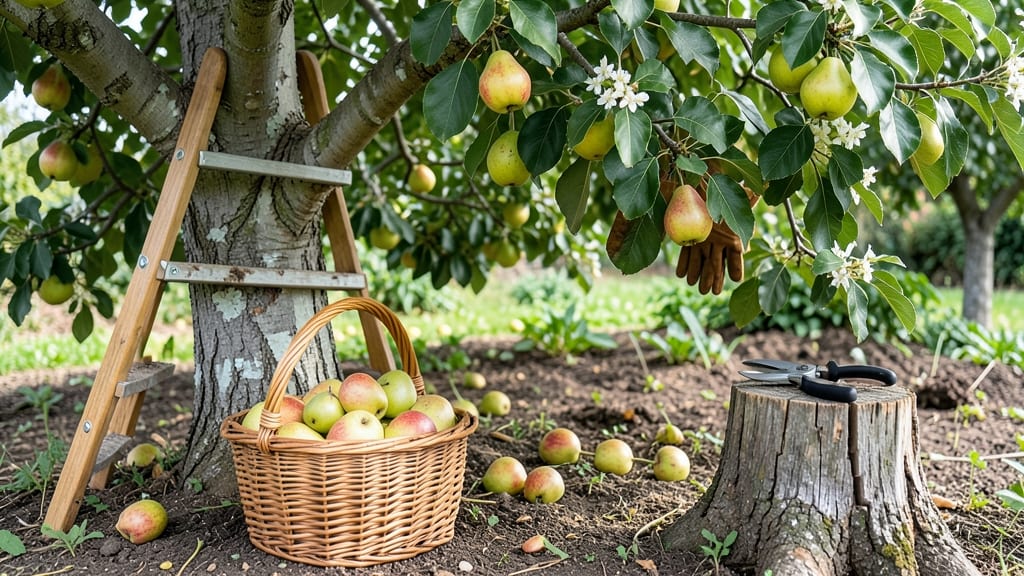
The Bartlett pear harvest time arrives when the fruit slips easily from the tree with a gentle twist 🍐 — a moment that separates sweet, juicy rewards from mealy, overripe letdowns.
Picture this: you reach for that perfect yellow-green pear, and instead of fighting the stem, it detaches with a satisfying snap. That’s your cue—miss it, and you’ll be left with pears that never soften right or spoil too fast.
The difference between a stellar harvest and a disappointing one often comes down to timing.
In USDA Zone 6a, Bartlett pears typically reach peak ripeness between late August and September, but climate quirks like early frost or hot spells can shift that window.
Learning the three foolproof ripeness tests—skin slip, stem snap, and color shift—will help you avoid guessing and ensure every pear you pick tastes like summer.
Below, I’ll walk you through exactly how to read your tree’s signals, adjust for your local weather, and even rescue pears that ripen too soon or too late. No more second-guessing—just perfect, flavor-packed fruit every time.

3 Surefire Bartlett pear ripeness tests (skin slip, stem snap & color shift)
Timing the harvest of your Bartlett pears is crucial—pick too early, and you’ll end up with bland, hard fruit. Wait too long, and they’ll turn mushy or fall prey to pests. The key lies in three simple but highly reliable tests that reveal when your pears are at their peak.
These methods combine visual cues with tactile feedback, ensuring you never miss the perfect moment to harvest.
First, let’s address the most common mistake: assuming all pears ripen at once. In reality, Bartlett pears often ripen over a 2-3 week window, so check your tree every few days during peak harvest season.
Early-maturing fruit will signal the rest to follow, but don’t wait for every pear to reach perfection—some varieties simply won’t ripen further once picked.
🍐 Bartlett Pear Ripeness Tests
- 1
- 2
- 3
Let’s dive deeper into the skin slip test, my go-to method for determining ripeness. This tactile check is especially useful in shady spots where color changes might be subtle. Hold the pear firmly in one hand and press your thumb against the skin near the stem.
If the skin moves slightly under your thumb (like a ripe peach), it’s ready. Pro tip: Test a few pears—some clusters ripen faster than others.
The stem snap test is a game-changer for gardeners who’ve ever struggled with pears that detach too easily (underripe) or crush in your hand (overripe). The key is the clean snap at the base. If the stem pulls out with resistance, the pear needs more time.
If it breaks with a dry, papery sound, it’s past its prime. This test works best in the morning, when stems are firmer.
Don’t overlook the color shift, which is often the easiest visual cue for beginners. Bartlett pears start deep green and gradually lighten to a yellow-green as they ripen. Pay close attention to the area near the stem attachment—this is where the color change is most noticeable.
A fully yellow pear is a red flag; it’s likely overripe and may spoil quickly.
Here’s a pro trick: Combine all three tests for 100% accuracy. A pear that passes the skin slip and stem snap but hasn’t shifted color may still need a day or two.
Conversely, a pear with a yellow-green hue that fails the stem snap test is best left on the tree. This layered approach ensures you never guess about ripeness again.
Regional climate plays a role in ripening timing. In warmer zones (7-9), Bartlett pears may ripen 2-3 weeks earlier than in cooler areas (5-6). If you’re in a hotter climate, start testing in early August.
In cooler regions, wait until late August or early September. Always monitor for frost warnings—unripe pears won’t ripen off the tree.
Once you’ve identified ripe pears, harvest them gently but firmly. Use both hands: one to support the fruit and the other to twist the stem cleanly. Avoid pulling—this can damage the tree.
Place harvested pears in a single layer in a cool, shaded spot for 24 hours before storing. This brief rest period helps them soften further and develop peak flavor.
Remember, Bartlett pears continue to ripen after harvest, but only if they’re firm but ripe when picked. Overripe pears won’t improve—they’ll only become mealy. By mastering these three tests, you’ll transform your Bartlett pear harvest from hit-or-miss to consistently delicious, every single season.
Bartlett pear harvest timeline: month-by-month guide by climate Zone
Timing your Bartlett pear harvest depends heavily on your USDA hardiness zone and local weather patterns. In Zone 5, for example, pears may ripen 2-3 weeks later than in Zone 8 due to cooler springs.
Early frost threats in northern zones can force an earlier harvest, while southern zones often enjoy a more extended window. Container-grown trees may ripen 1-2 weeks earlier than in-ground trees because of heat stress in pots.
Use this month-by-month guide to align your harvest with your climate. For container-grown Bartletts, monitor ripeness more closely—they’re prone to uneven ripening. If frost is forecasted, harvest immediately even if pears aren’t fully ripe; they’ll soften at room temperature over 3-5 days.
🚨 CRITICAL: Never let pears stay on the tree past their prime—they’ll become mealy and flavorless. Adjust your schedule based on local frost dates and tree maturity (young trees produce smaller yields).
In Zone 5-6, my Bartletts typically reach peak ripeness in mid-September, but I’ve had to harvest as early as late August during cool summers. To extend your harvest window, pick pears in stages—start with those closest to the ground, which ripen first.
For container-grown trees, move pots to a shaded area if temperatures exceed 90°F to prevent heat stress and uneven ripening.
Pro tip: Use a fruit lever or pruning shears to avoid damaging branches when harvesting. After picking, store pears at 32-40°F and 85-90% humidity to slow ripening. If you miss the harvest window, don’t despair—Bartletts can ripen off the tree over 1-2 weeks at room temperature.
Remember, frost is your enemy. If temperatures drop below 32°F, harvest immediately and ripen indoors. Container-grown trees are especially vulnerable—bring pots indoors or cover them with frost cloth if frost is forecasted. With this timeline, you’ll never miss the sweet spot again! 🍐