
Picking
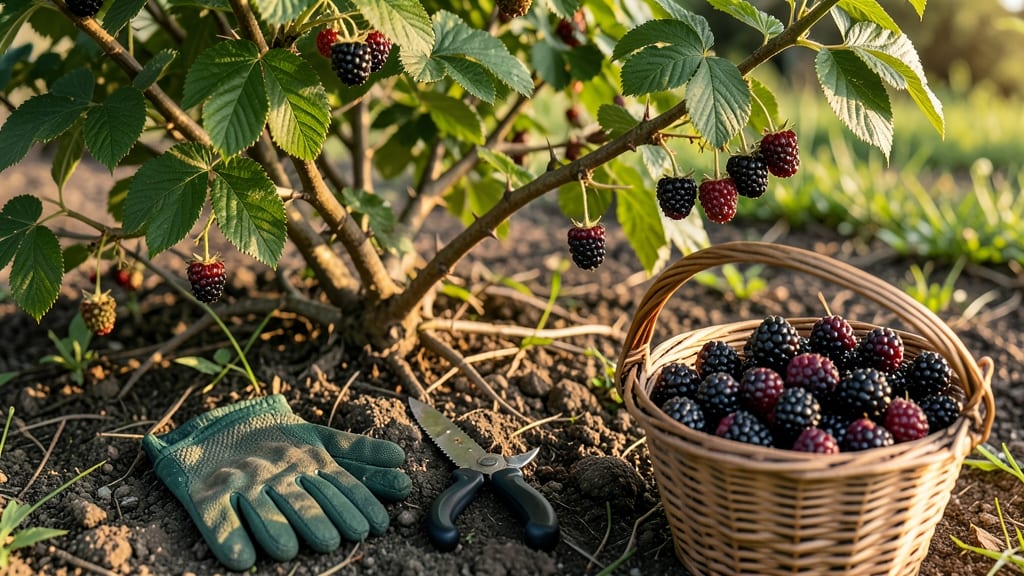
The blackberry harvest season in the summer of the Northern Hemisphere is when these luscious berries 🫐 reach their peak ripeness, offering a juicy, flavorful harvest that’s the highlight of any garden.
Picture this: you’re reaching for a handful of berries, only to find they’re still tart and underripe. Or worse, they’re mushy and overripe, turning your perfect summer snack into a disappointing mess. Knowing the best time to pick—when they’re fully sweet and ready—can make all the difference.
Blackberry harvest season typically runs from late June through August, but the exact timing depends on your region and the variety you’re growing.
Whether you’re in the cooler climates of Zone 5 or the warmer areas of Zone 10, understanding the signs of ripeness and how weather affects your berries will help you maximize your yield.
In this guide, you’ll learn how to spot perfectly ripe blackberries, the best tools to use for harvesting, and simple tips to keep your bushes producing well all season long. Let’s make sure your summer harvest is as sweet as it can be!

Best blackberry harvest season timeline in Northern Hemisphere summers
Summer in the Northern Hemisphere transforms your garden into a blackberry treasure trove, but timing is everything. Blackberries ripen at different rates depending on your climate zone, variety, and regional microclimates. Understanding these variables ensures you don’t miss the peak harvest window when berries burst with flavor.
From the Pacific Northwest to the Mediterranean coast, each region offers its own schedule for blackberry perfection.
In the United States, harvest seasons vary dramatically from Zone 5 to Zone 9. Early-season varieties like Triple Crown may ripen as early as late June, while late-season types like Chester can extend into early September.
Meanwhile, in Canada, shorter growing seasons mean blackberries typically ripen between mid-July and August, with Zone 6 gardeners enjoying a slightly later window than their Zone 4 counterparts.
European gardeners experience their own unique timing, particularly in Southern Europe where mild winters and warm summers push harvests into late August or September. In contrast, Northern Europe (like the UK) sees peak harvests between mid-July and August, often aligning closely with US Zone 6 timelines.
These regional differences highlight why knowing your local climate zone is critical for planning your blackberry harvest strategy.
| Region | Climate Zone | Early Varieties | Mid Varieties | Late Varieties | Peak Months |
|---|---|---|---|---|---|
| Pacific Northwest (US) | Zone 7-9 | Triple Crown | Natchez | Chester | July - August |
| Southeast (US) | Zone 8-10 | Arapaho | Ouachita | Apache | June - September |
| Canada | Zone 4-6 | Black Satin | Darrow | Chester | Mid-July - August |
| Southern Europe | Zone 9-10 | Loch Ness | Brazos | Navaho | Late August - September |
| Northern Europe (UK) | Zone 6-7 | Hull Thornless | Loch Tay | Glen Ample | Mid-July - August |
Climate zones play a pivotal role in determining your blackberry harvest window. In cooler zones (Zone 5-6), early-season varieties like Black Satin or Hull Thornless are your best bet, as they mature quickly before the first frost.
These regions often see their primary harvest between mid-July and early August, with a secondary flush possible if summers are exceptionally warm. Meanwhile, warmer zones (Zone 8-10) enjoy extended harvests, sometimes spanning from June through September, thanks to longer growing seasons.
Heat waves and drought conditions can accelerate ripening, causing berries to mature faster and sometimes shrink in size. I’ve found that in
How to identify perfectly ripe blackberries for maximum sweetness
Picking blackberries at the right moment transforms a simple snack into a flavor explosion. The key lies in understanding visual and tactile cues that signal peak ripeness. Overlooking these signs often leads to berries that are either tart or mushy, ruining your harvest efforts.
Let's break down how to spot the perfect blackberry every time.
First, focus on berry color as your primary indicator. Fully ripe blackberries should be a deep, uniform black (for black varieties) or solid red/purple (for other types).
Any lingering green or mixed tones means they need more time on the vine. This color shift happens when the berries complete their sugar development process.
✅ Perfectly Ripe Blackberries
Deep, uniform black (or solid red/purple)
Slightly soft when gently squeezed
Detaches easily with slight twist
Sweet with no tartness
❌ Overripe or Underripe Signs
Mixed green/black or dull appearance
Hard (underripe) or mushy (overripe)
Resists detachment (underripe) or falls off (overripe)
Tart (underripe) or fermented (overripe)
Don't rely solely on color—perform the stem separation test, which is foolproof. A perfectly ripe blackberry should detach from the plant with just a gentle twist.
If it resists, it's underripe; if it falls apart, it's overripe. This test works because ripe berries naturally separate from the stem as they reach peak sweetness.
Temperature fluctuations during summer can dramatically affect ripening. Hot days followed by cool nights accelerate sugar development, while prolonged heat waves can cause berries to ripen unevenly. Always check for ripeness in the morning when temperatures are cooler, as afternoon heat can make berries appear riper than they actually are.
One common mistake is harvesting berries based solely on size. While ripe blackberries are typically 1-2 inches in diameter, some varieties stay small even when fully ripe.
Instead, combine size with the other ripeness indicators. Another pitfall is picking berries too aggressively—this can damage the plant and reduce next year's yield.
For maximum sweetness, harvest blackberries in the early morning when their sugar content is highest. Store them in a single layer in the refrigerator to prevent bruising. If you miss the perfect window, don't despair—blackberries continue ripening slightly after picking, though they won't improve dramatically beyond their vine-ripe state.
🫐