
Picking
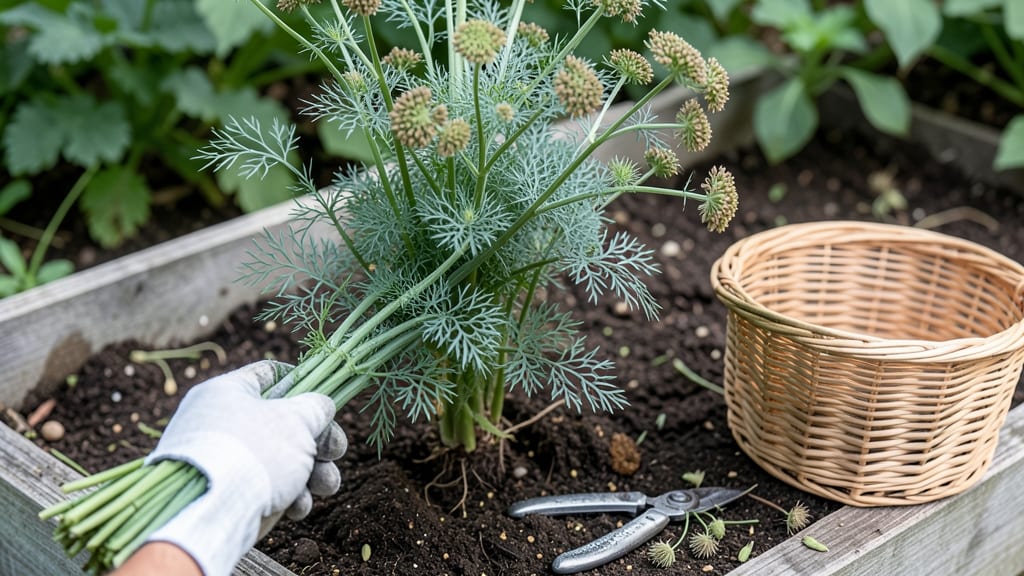
The best time to harvest dill is when its seed pods turn golden-brown and crumble easily at the touch—this is your cue for peak flavor and yield.
Picture this: you’ve nurtured your 🌿 dill all season, and now those delicate leaves are giving way to tiny, hardening pods. Waiting too long means bitter disappointment, but harvesting too soon leaves you with less than you could have had.
This guide breaks down the exact visual cues—from lush green leaves to seed pods ready for picking—and shares practical tips to maximize your harvest, whether you’re snipping for fresh cooking or saving seeds for next year.
You’ll learn how often to harvest, when to stop cutting leaves for seed production, and the one mistake that turns your dill bitter before its time.

When to harvest dill for fresh leaves vs. seeds (golden-brown pods guide)
Harvesting dill at the right time ensures the best flavor and maximum yield. For fresh leaves, timing is all about early intervention—before the plant shifts its energy to seed production.
Meanwhile, seed pods require patience, waiting until they reach that coveted golden-brown stage. Understanding these two distinct harvest windows transforms your garden from mediocre to magnificent.
Dill is a biennial herb that behaves like an annual in most climates. This means it produces leaves in its first year and flowers/seeds in its second. However, in warm regions, you can harvest both leaves and seeds from the same plant during a single growing season.
The key is recognizing the visual cues that signal readiness for each harvest type.
| Harvest Type | Optimal Time | Plant Height | Visual Cues | Flavor Impact |
|---|---|---|---|---|
| Fresh Leaves | 45-60 days after planting | 6-12 inches | Lush, green leaves; no flowering | Mild, sweet flavor |
| Seed Pods | 75-90 days after planting | 24-48 inches | Golden-brown pods; crumble easily | Strong, earthy flavor |
For fresh leaves, start harvesting when your dill reaches about 6 inches tall and the leaves are fully developed but still tender. This usually happens around 45-60 days after planting. The leaves should be bright green and free of any yellowing or browning.
If you wait too long, the leaves will become tough and bitter as the plant focuses on producing flowers and seeds.
To encourage continuous leaf production, harvest the outer leaves first, leaving the inner growth intact. This method allows your dill to keep producing fresh foliage for several weeks. Regular harvesting also prevents the plant from bolting too quickly, which is when it rapidly produces flowers and seeds instead of leaves.
When it comes to harvesting dill seeds, patience is key. You’ll know the seeds are ready when the flower clusters turn from yellow to golden-brown and the seed pods begin to crumble easily between your fingers.
This typically occurs around 75-90 days after planting, depending on your climate and growing conditions.
At this stage, the seed pods should be fully mature but not yet scattered by the wind. If you harvest too early, the seeds won’t be fully developed, and if you wait too long, they may fall to the ground.
To harvest, gently twist the seed heads off the stems or cut them with clean scissors. Place the seed heads in a paper bag and let them dry completely in a warm, dry place for about a week.
Once the seeds are fully dried, shake the pods to release the seeds into the bag. Store the seeds in an airtight container in a cool, dark place for up to a year. These seeds can be used for cooking, pickling, or even planting next season’s dill crop.
The flavor of dill seeds is much stronger and more complex than the leaves, making them a valuable addition to your garden harvest.
One common mistake gardeners make is waiting too long to harvest either leaves or seeds. If you let your dill go to seed prematurely, the leaves will become bitter and less desirable. On the other hand, harvesting seeds too early results in underdeveloped seeds that won’t germinate well.
Pay close attention to the visual cues and timing to ensure you get the best of both worlds from your dill plants.
By mastering the art of harvesting dill at the right time, you’ll enjoy a bountiful supply of fresh leaves for cooking and pickling, as well as a stash of seeds for future planting.
Whether you’re a seasoned gardener or just starting out, understanding these key moments will elevate your dill harvest to new heights.
Step-by-step dill harvesting process for maximum yield
Harvesting dill at the right time ensures you get the most flavorful leaves and seeds. The key is timing—cut too early, and you miss out on yield; wait too long, and the flavor turns bitter.
I’ve perfected my method over years of gardening, and these steps will help you do the same.
Start by identifying the perfect harvest window. For fresh leaves, harvest when the plant reaches 6-8 inches tall and the leaves are lush and green. For seeds, wait until the seed pods turn golden-brown and crumble easily between your fingers. This balance is crucial for maximizing your harvest.
Step-by-Step Dill Harvesting Guide
-
Step 1: Choose the Right Time
- Morning harvests yield the freshest leaves.
- For seeds, wait until 75% of pods are golden-brown.
-
Step 2: Use Sharp Pruning Shears
- Cut stems at a 45-degree angle to encourage bushier growth.
- Avoid tearing leaves to prevent damage.
-
Step 3: Harvest Strategically
- For leaves: Snip outer stems first, leaving inner growth.
- For seeds: Cut entire stems when pods are fully mature.
-
Step 4: Dry Properly
- Hang bundles upside down in a dark, dry place for 1-2 weeks.
- Alternatively, lay stems on paper bags in a single layer.
-
Step 5: Store for Freshness
- Store dried leaves in airtight containers away from light.
- Seeds keep for up to 2 years in a cool, dark spot.
After harvesting, I always rinse the stems under cool water to remove dirt, then pat them dry with a clean towel. This step is essential for preventing mold during drying. For fresh leaves, store them in the fridge wrapped in a damp paper towel for up to a week.
If you’re saving seeds, let them dry completely before removing them from the pods. Store them in a glass jar labeled with the harvest year. This ensures you’ll have fresh dill seeds ready for next season’s planting.
Remember, regular harvesting encourages more growth. I harvest my dill every 2-3 weeks during peak season to keep the plant productive. With these steps, you’ll enjoy a bountiful harvest all season long!