
Vegetables
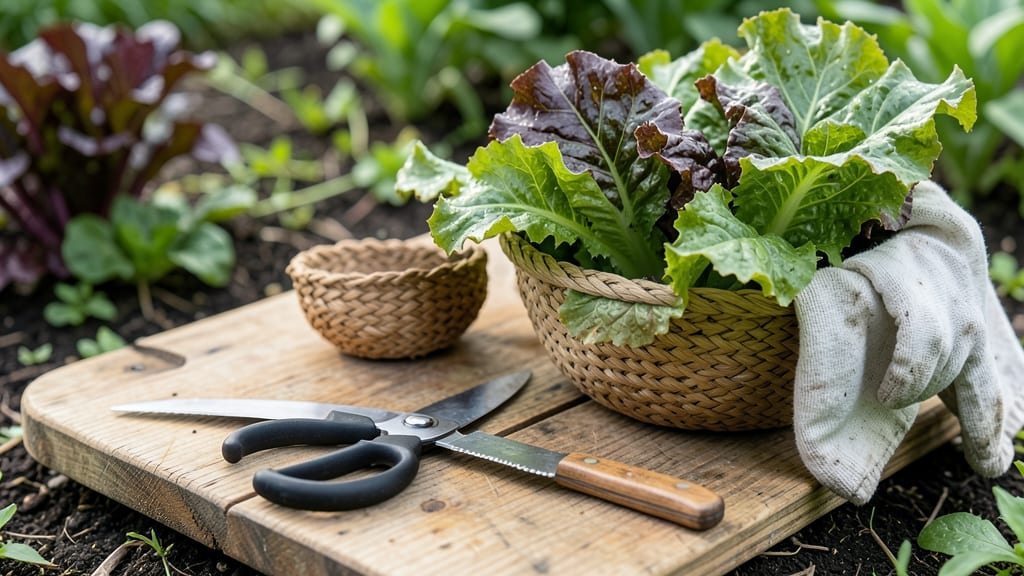
To harvest salad bowl lettuce at its perfect crunch, you need to know the exact moment when texture and flavor peak—before it bolts or turns bitter.
The crisp, satisfying crunch of a perfectly textured salad bowl lettuce 🥬 is what transforms a simple salad into a gourmet experience—but how do you know when to harvest it for that ideal bite?
Timing matters more than you think. Harvest too early, and the leaves lack that satisfying snap; wait too long, and the heat or drought turns them tough or bitter. In Zone 6a, spring lettuce hits peak crunch in May-June, while fall varieties shine in October-November.
Below, I’ll show you the crunchy stem test, seasonal tweaks for flavor, and how to store your harvest so it stays fresh longer than a grocery store bag ever could.

How to perform the crunchy stem test for salad bowl lettuce
The crunchy stem test is my foolproof method for determining when salad bowl lettuce reaches peak texture. This simple technique helps you avoid harvesting leaves that are either too tender or already bolting.
The goal is to find that perfect balance between buttery tenderness and satisfying crispness—the hallmark of a gourmet salad. Mastering this test ensures you enjoy lettuce at its prime, whether you're growing romaine, butterhead, or leaf lettuce varieties.
Timing your harvest correctly prevents two common problems: overmature lettuce that turns bitter or stringy, and underripe leaves that lack flavor. The crunchy stem test focuses on the stem's resistance and the leaf's firmness, which are direct indicators of ideal harvest readiness.
Unlike guessing by days after planting, this method accounts for variations in weather conditions, soil quality, and variety-specific growth rates.
Before performing the test, ensure your lettuce has reached 45-60 days of growth, depending on the variety. Check for fully developed outer leaves (typically 4-6 inches long) and a compact head shape.
These visual cues complement the tactile test, giving you a two-pronged approach to perfect harvest timing. The crunchy stem test works best in the early morning when leaves are fully hydrated, providing the most accurate results.
Step-by-Step Crunchy Stem Test
- 1 Select the largest outer leaf on the lettuce head. This leaf will give you the most accurate reading since it's closest to maturity.
- 2 Gently pinch the stem about 1 inch from the leaf base using your thumb and forefinger. Apply light pressure—just enough to feel resistance without crushing.
-
3
Assess the resistance level:
- Too soft: Stem bends easily—lettuce needs 5-7 more days.
- Ideal crunch: Stem resists slightly but gives under firm pressure—harvest now!
- Too stiff: Stem feels woody—lettuce is overmature and bitter.
- 4 Check leaf texture by gently rubbing the leaf between your fingers. Perfect lettuce should feel slightly waxy with a firm yet tender structure. If it feels slimy, it's overripe.
- 5 Harvest method: Use a sharp knife or pruning shears to cut the leaf 1/4 inch above the base. For continuous harvest, remove outer leaves first, leaving the inner leaves to mature.
For butterhead lettuce, the ideal harvest moment often arrives slightly earlier than for romaine varieties. Butterheads tend to develop a softer stem when ready, while romaine maintains a firmer structure even at peak harvest.
Pay attention to the leaf color too—vibrant deep green or reddish hues (for colored varieties) indicate optimal maturity. If leaves start developing yellow edges, it's a sign of stress or overmaturity.
Seasonal variations also affect the crunchy stem test. In cooler spring months, lettuce may take 5-7 extra days to reach harvest readiness compared to fall harvests, when cooler temperatures speed up maturation.
Always perform the test on a cloudy day if possible, as direct sunlight can cause leaves to lose moisture, making them appear softer than they actually are. This simple adjustment ensures your test results remain consistent throughout the growing season.
Pro tip: Keep a harvest journal to track when your specific lettuce variety reaches ideal texture. Note the days to maturity, weather conditions, and any soil amendments you used. Over time, you'll develop an intuition for when your lettuce is ready, even without performing the test.
For example, my romaine consistently tests perfect at 52 days in Zone 6a, while my butterhead hits the mark at 48 days.
Once you've mastered the crunchy stem test, you'll never settle for <
Best practices for maintaining optimal lettuce texture before harvest
Your salad bowl lettuce will only deliver that coveted crisp texture if you control its environment from seed to harvest. The key lies in consistent moisture, moderate sunlight, and nutrient balance—all while preventing stress that triggers bolting or bitterness.
Start with well-draining soil enriched with compost or a balanced fertilizer (like 10-10-10) at planting. Lettuce thrives in cool-season conditions, so aim for 50-65°F soil temps. In Zone 6a, this means planting in March-April or August-September for fall harvests.
💧 Pro Tip: The 3-Second Rule for Lettuce Watering
Check soil moisture by pressing your finger 1 inch deep. If it feels dry, water until moisture reaches 4 inches down. Morning watering prevents fungal risks, while evening shade cloth (30-50%) protects from afternoon heat.
Spacing is critical—crowded plants compete for nutrients and develop tougher stems. Space salad bowl varieties 12-18 inches apart in rows 18 inches apart. Thin seedlings to the strongest 2-3 plants per foot to avoid overcrowding, which stresses roots and reduces crunch.
Monitor sunlight carefully. While lettuce needs 4-6 hours of sun daily, afternoon shade prevents bolting in hot climates. Use shade cloth during peak summer heat (85°F+), but ensure morning sun exposure for flavor development.
Feed lightly but strategically. Apply 1 tbsp of 10-10-10 fertilizer every 4-6 weeks during active growth, but skip fertilizing in summer to prevent bolting. For organic gardens, use compost tea or fish emulsion for a gentle nutrient boost.
Finally, harvest outer leaves first to encourage continuous growth. Use clean scissors or pruners to cut leaves 1 inch above the base, leaving the center intact. This method extends your harvest window by 2-3 weeks while maintaining texture.