
How To
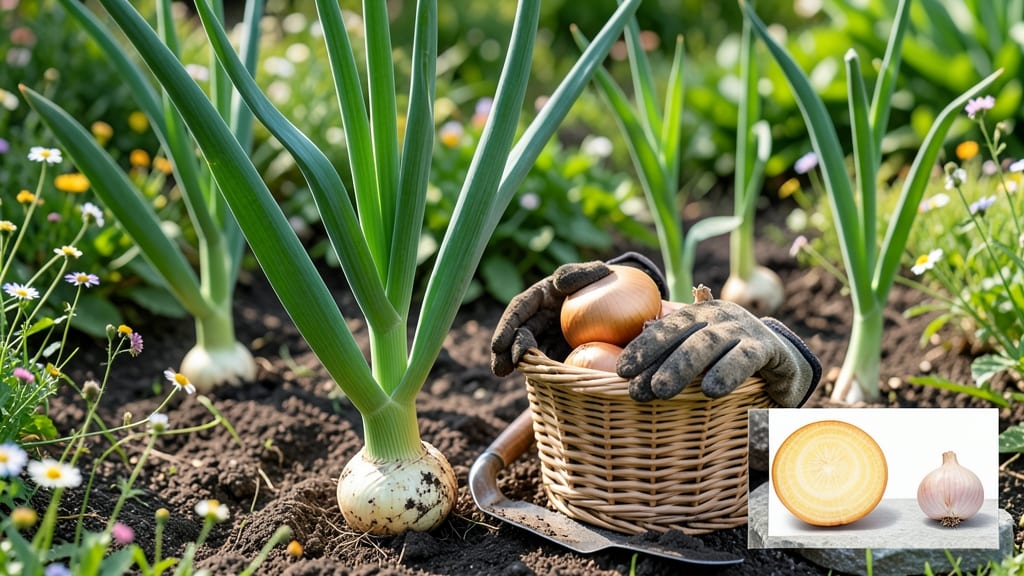
Knowing when to harvest onions means watching for three key signs: bulbs reaching 1-2 inches, tops turning yellow, and a papery neck that tightens like a drawstring.
Harvesting too early leaves you with small, pungent bulbs—like the time I pulled mine in June and ended up with onions that tasted more like regret than flavor. But wait too long, and you risk splitting or moldy storage. Timing is everything.
Most gardeners in Zone 6a should harvest between July and August for fresh onions, or wait until October for storage varieties. The trick is catching them at the peak: when the tops flop over but the bulbs are still firm.
Below, I’ll walk you through how to spot perfect harvest-ready onions, the best time of day to pull them, and how to cure them for long-term storage—so you never waste another crop again.

3 Visual signs your onions are perfectly ripe for harvesting
Harvesting onions at the right moment transforms your garden into a pantry goldmine. The key lies in three unmistakable visual cues that tell you when your onions are ready to pull.
Ignore these signs, and you risk ending up with small, pungent bulbs or moldy storage failures—neither of which you want after months of care.
I’ve learned the hard way that waiting too long can mean split bulbs or disease-prone onions, while harvesting too early leaves you with underdeveloped flavor. The secret? Watch for these three harvest-ready indicators that guarantee perfect storage life and taste.
Visual cues are your best friends when harvesting onions. Unlike some vegetables that rely on days-to-maturity charts, onions communicate their readiness through physical changes you can see and feel. These signs work for both storage onions and fresh-market varieties, making them universally applicable.
| Sign | Description | What to Do | Visual Cue |
|---|---|---|---|
| Bulb Size | Diameter reaches 1-2 inches | Gently brush soil away to check | 🤏 |
| Neck Drying | Stem shrinks and tightens like a drawstring | Run fingers along neck to feel dryness | 📄 |
| Leaf Condition | Tops yellow and flop over (60-70% dry) | Harvest within 1-2 weeks of yellowing | 🟡 |
| Skin Texture | Papery and dry (not wet or glossy) | Rub skin between fingers to test | ✅ |
The first sign to watch for is bulb size. When onions reach a diameter of 1-2 inches, they’re typically ready for harvest. This is especially true for storage varieties, which need larger bulbs to store well over winter.
I like to gently brush away soil to check—if the bulb feels firm and round, it’s on its way to being harvest-ready.
Neck drying is another critical indicator. As onions mature, the stem connecting the bulb to the leaves shrinks and tightens, almost like a drawstring. This happens naturally as the plant redirects energy to the bulb. If you run your fingers along the neck and feel it’s dry and papery, that’s your cue to harvest soon—usually within a week.
Don’t overlook the leaf condition, either. When about 60-70% of the tops turn yellow and flop over, your onions are signaling it’s time. This is nature’s way of telling you the bulb is fully developed.
I’ve seen gardeners miss this sign by waiting too long, only to find their onions split open or develop rot.
Finally, check the skin texture. Ready-to-harvest onions have dry, papery skins that feel rough to the touch. If the skin is still moist or glossy, give them another week or two. This final check ensures your onions will store well and won’t spoil prematurely.
Pro tip: Harvest in the morning when temperatures are cooler. This reduces stress on the plant and helps the bulbs dry more evenly. I’ve found that onions pulled in the heat of the day often sprout prematurely during curing, which shortens their storage life.
Once you’ve confirmed all three signs, it’s time to harvest. Use a garden fork to gently loosen the soil around the base, then lift the onions carefully.
Avoid cutting the tops—leave about 1-2 inches attached to help with curing. This simple step makes all the difference in how long your onions last.
Now that you know what to look for, you’ll never miss the perfect harvest window again. These visual cues work for Yellowstone onions, Sweet Spanish onions, and even red storage varieties. Happy harvesting—and may your pantry stay stocked all winter long! 🧅
When and how to harvest onions for maximum storage life
Timing your onion harvest correctly ensures bulbs store well for months—my yellow storage onions last until spring if I follow these steps. The key is balancing maturity with environmental conditions to avoid rot or spoilage.
Harvest too early, and you’ll get small, sharp bulbs. Wait too long, and they’ll split or develop mold.
Most gardeners harvest between late July and early October, depending on the variety. For fresh onions, aim for July-August when tops yellow but before they brown completely. Storage onions, like ‘Sweet Spanish’, need a full curing period in October for long-term storage.
Morning is the best time to harvest—cooler temps reduce stress on the plant, and bulbs stay firmer. Avoid harvesting after rain or in extreme heat, as damp soil can encourage rot during curing.
For most varieties, use your hands to gently pull onions from the soil rather than digging. This preserves the bulb’s outer skin, which protects against moisture loss. If soil is hard, use a fork to loosen roots without piercing the bulb itself.
Onions left in the ground past maturity split and rot. Check for these 3 warning signs of overripe onions:
- Tops turn brown and flop completely flat
- Bulbs feel soft when squeezed (sign of rot)
- Neck shrinks to nearly nothing (bulb is overmature)
After harvesting, trim tops to 1 inch above the bulb and let onions cure in a dry, shaded area with good airflow for 2-3 weeks. This hardens the skin, preventing moisture loss. I use a wire mesh rack under a carport to balance sun exposure and airflow.
For long-term storage, braid onions or store them in mesh bags in a cool, dark place with 50-60% humidity. Check weekly for soft spots—remove any affected bulbs immediately to prevent mold from spreading. With proper curing, my onions stay crisp and flavorful for 6+ months.