
How To
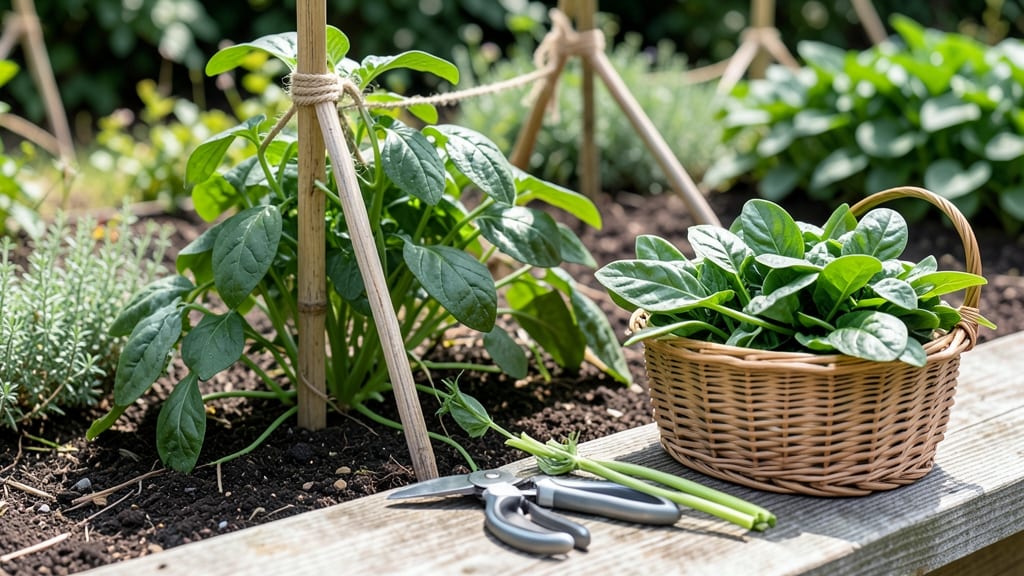
Harvesting climbing spinach 🌱 the right way means picking leaves when they’re 4-6 inches long—long enough to eat but short enough to keep the plant producing.
Picture this: you’re about to snip a leaf, and suddenly you’re staring at a bare stem because you cut too close. That’s the moment you realize timing and technique matter just as much as patience. Climbing spinach isn’t like its bushy cousins—it rewards leaf-by-leaf care, not wholesale yanking.
You’ll learn the exact moment to start harvesting (hint: it’s not when the leaves first appear), which tools to use, and how to cut without triggering regrowth roadblocks.
Plus, I’ll show you how to spot over-mature leaves that should stay on the vine—and why some gardeners accidentally turn their spinach into a sad, stunted mess.
By the end, you’ll harvest like a pro: tender leaves, happy plants, and a steady supply from July through September. No more guesswork, just a foolproof system that keeps your spinach climbing—and your kitchen stocked.

The perfect timing for harvesting climbing spinach without killing the plant
Climbing spinach thrives when you harvest it at the right stage—too early and you waste tender leaves, too late and you risk stunting regrowth. The key is patience and precision. I’ve learned that waiting for leaves to reach 4-6 inches in length ensures both flavor and future growth.
This delicate balance keeps your plant productive for weeks beyond the first harvest.
Seasonal timing matters just as much as leaf size. In my USDA Zone 6a garden, I start harvesting in late June when daytime temps stabilize above 65°F.
Early harvests in cooler months can stress the plant, slowing regrowth. Always check for deep green, glossy leaves—that’s your cue they’re ready.
| Harvest Stage | Leaf Size | Seasonal Timing | Regrowth Window |
|---|---|---|---|
| Early Harvest | 3-4 inches | Late June - Early July | 10-14 days |
| Prime Harvest | 4-6 inches | July - August | 7-10 days |
| Late Harvest | 6+ inches (tough) | September (before frost) | Slower regrowth |
I’ve found that spacing harvests 7-10 days apart gives climbing spinach enough time to recover. After each harvest, I inspect the plant for new growth at the base—this tells me it’s ready for another round. If you see yellowing leaves or stunted growth, you’ve waited too long.
Over-mature spinach is easy to spot: leaves turn brittle and yellow-edged, and stems become woody. These should be removed entirely to redirect energy to younger growth. I always save these tougher leaves for stir-fries or smoothies where texture matters less.
One trick I swear by is the "thumb test". Gently pinch a leaf—if it snaps cleanly with a slight crunch, it’s perfect. If it tears or feels mushy, hold off for another week. This simple check saves me from over-harvesting and keeps my plants happy.
Never harvest more than one-third of the plant at once, even if it looks abundant. I’ve learned this the hard way—my first year, I took too much too soon, and my spinach bolted before I could enjoy another harvest. Patience pays off with continuous production all season.
Morning harvests are ideal because leaves are cool and crisp, and the plant has all day to recover. Avoid harvesting after rain—wet leaves are more prone to disease spread and tear easily. I always use clean, sharp scissors to make precise cuts just above a leaf node.
If your climbing spinach starts flowering, it’s time to harvest everything immediately. Flowering signals the end of the harvest cycle, and seeds will form quickly. I’ve seen plants go from lush green to seed pods in just 10 days once flowering begins—don’t miss this final window!
Pro tip: Mark your calendar for October 15th (first frost date in Zone 6a). By then, you should have harvested all mature leaves. Any remaining growth will be tough and bitter, so don’t wait too long. With proper timing, I’ve harvested three full cycles from a single climbing spinach plant!
Remember, climbing spinach is a cut-and-come-again crop. The more you harvest correctly, the more it rewards you. Start small—pick just a few leaves at first—to train yourself to recognize the perfect moment. Your future harvests will thank you!
Leaf-by-leaf harvesting techniques to encourage regrowth (with visual cues)
Now that you know when to harvest climbing spinach, let’s focus on the how. Leaf-by-leaf harvesting isn’t just about snipping—it’s about preserving the plant’s energy so it keeps producing.
I’ve perfected a method that ensures regrowth while keeping leaves tender. The secret lies in selective harvesting and precise cutting techniques that avoid damaging the stem’s growth points.
Start by identifying the outermost, largest leaves—these are the first to mature and can be safely removed without stressing the plant. Avoid cutting leaves that are still curled or small, as these are the plant’s future harvests.
Think of it like trimming a hedge: you’re shaping the plant to encourage dense, healthy regrowth from the center.
- 1 Choose the right tool: Use clean, sharp pruning shears or a small knife. Dull tools crush stems, inviting disease. I keep a pair of bypass pruners dedicated solely to my spinach patch.
- 2 Locate the leaf node: Find the small bump where the leaf meets the stem. This is the growth point—never cut here. Aim to cut ½ inch above the node to leave room for new leaves to emerge.
- 3 Make a clean cut: Angle your cut 45 degrees downward to prevent water from pooling. This reduces rot risk. A clean cut heals faster than a jagged tear.
- 4 Remove only mature leaves: Leave 3-4 inner leaves per stem to maintain photosynthesis. These will fuel regrowth. Think of it as leaving a green umbrella for the plant.
- 5 Harvest in the morning: Leaves are cool and crisp after nighttime dew evaporates. This ensures the best texture and flavor. Plus, the plant has all day to recover.
- 6 Rotate your approach: Alternate sides of the plant each harvest to avoid uneven growth. This keeps the vine balanced and encourages uniform regrowth.
After harvesting, inspect the plant for new leaf buds at the base. These are your regrowth indicators—if you see them, your technique is working! I’ve noticed that climbing spinach responds best when you harvest every 7-10 days, giving it just enough time to recover.
Over-harvesting in short intervals can lead to stunted growth or even bolting.
One common mistake I see is cutting too close to the stem’s main growth point. This can sever the plant’s ability to produce new leaves. Always leave that ½-inch buffer—it’s the difference between a plant that keeps growing and one that gives up.
I mark my pruners with tape to ensure I never cut too deep.
For large leaves (6+ inches), consider harvesting the entire leaf rather than just the outer edges. This reduces stress on the stem. Smaller leaves (3-4 inches) can be harvested leaflet-by-leaflet, but always leave the central stem intact.
Think of the plant like a tree branch: you prune the outer leaves to encourage denser growth inward.
Pro tip: Use a small hand trowel to gently loosen soil around the base after harvesting. This encourages root development, which supports faster regrowth. I’ve seen plants recover 30% faster when their roots have room to breathe.
Pair this with a light fertilizer application (like 5-10-10) after harvest to give your spinach a nutrient boost for the next cycle.
Finally, store harvested leaves in a perforated plastic bag in the fridge for up to 5 days. The perforations keep humidity in check, preventing soggy leaves. If you’re not using them immediately, blanch and freeze them for long-term storage. This preserves their nutrient density and vibrant color.