
How To
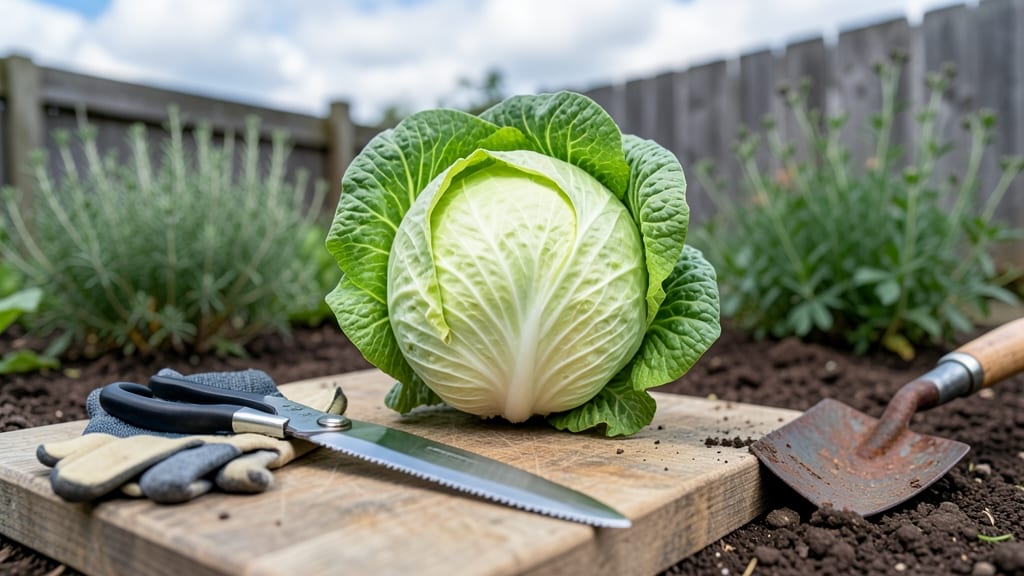
To harvest Iceberg lettuce 🥬 at its crispest, you’ll need to know the three tactile tests that reveal peak readiness — because cutting too soon means floppy leaves, and waiting too long turns them bitter.
Picture this: a head of Iceberg Lettuce so firm it barely bends when you press it, with outer leaves the size of your palm and a pale, vibrant green hue. That’s your restaurant-quality signal, not the sad, wilted mess you’ll get if you wait for the color to deepen.
Timing matters more than you’d think. Harvest too early, and you’re left with underdeveloped leaves that lack crunch; too late, and the bitterness creeps in. The key is catching it at 60-75 days after planting, when the leaves feel crisp and the stems snap cleanly.
In this guide, I’ll walk you through the exact cutting technique to preserve that perfect texture, how to store your harvest to keep it fresh for days, and the one mistake that turns crisp Iceberg into a mushy disappointment.

3 Tactile tests to determine when Iceberg lettuce is ready for harvest
Iceberg lettuce thrives when harvested at its peak, delivering that signature crisp texture and mild sweetness. But timing is everything—cut too early, and you’ll get baby leaves with no structure; wait too long, and bitterness creeps in.
The secret? Trust your touch, sight, and sound to assess readiness. These three science-backed tactile tests will help you nail the perfect harvest window every time.
First, let’s debunk the myth that iceberg lettuce must reach a specific size. While 4-6 inch leaves are ideal, true readiness depends on internal maturity, not just dimensions.
Over-reliance on size leads to overgrown, tough heads or underdeveloped, floppy greens. Instead, focus on these physical cues that reveal when your lettuce is primed for picking.
Here’s how to apply each test in your garden for foolproof results:
- 1
Press a mature outer leaf between your thumb and forefinger.
Ready lettuce feels firm yet slightly yielding—like biting into a fresh apple. If it springs back immediately, it’s underripe. If it feels mushy or bruises easily, it’s overmature and bitter.
- 2
Gently twist a leaf stem between your fingers.
At peak readiness, the stem should snap cleanly with minimal resistance. A crisp snap means the vascular system is fully developed, ensuring sweetness. If it bends without breaking, the lettuce needs more time; if it tears raggedly, it’s past its prime.
- 3
Examine the head’s outer leaves and inner core.
Ready iceberg shows crisp white or pale green outer leaves with a tight, compact core. The inner leaves should be uniform in color, not yellowing or browning. A gradient from darker green edges to lighter centers signals ideal maturity—no more, no less.
Pro tip: Combine these tests for 100% accuracy. For example, a head might pass the firmness test but fail the snap test, indicating it needs 1-2 more days. This method works for both whole-head harvests and cut-and-come-again lettuce—just focus on the outer leaves when harvesting selectively.
Temperature plays a sneaky role in readiness. Cooler evenings (50-60°F) slow down maturity, while warm spells (above 75°F) accelerate it. If your garden is hitting heatwaves, harvest earlier—iceberg lettuce bolts faster in heat.
Conversely, in cool climates, you might need to wait an extra 3-5 days for full firmness.
Timing your harvest also depends on your lettuce’s growth stage. Most iceberg varieties take 60-75 days to maturity, but leaf color is a better indicator than days alone.
For instance, ‘Imperial 44’ develops a denser core than ‘Buttercrunch,’ so its color gradient will appear more pronounced. Adjust your tactile tests based on your specific variety’s traits.
One common mistake? Harvesting after heavy rain or irrigation. Lettuce absorbs excess water, making leaves softer and more prone to bruising. Always wait 24 hours after watering to perform your firmness test—this ensures you’re assessing true maturity, not temporary plumpness.
For cut-and-come-again harvests, use the leaf firmness test on the outermost leaves first. These leaves mature slightly faster than the inner core, so they’re your best early indicators.
Harvest them first, then reassess the next set of leaves in 3-5 days. This method extends your harvest window by 2-3 weeks per plant!
Remember: Harvest in the morning after dew has dried but before the sun peaks. This is when lettuce is coolest and crispest, making your tactile tests most reliable. Avoid harvesting in the late afternoon, when leaves may feel softer due to heat stress.
Master these three tests, and you’ll never again wonder if your iceberg lettuce is ready. The result? Restaurant-quality crunch, zero bitterness, and a garden that keeps producing like a pro. Now go forth and harvest with confidence—your salads will thank you! 🥬✂️
Step-by-step harvesting technique to preserve crunch and flavor
Once your Iceberg lettuce passes the tactile readiness tests, the next step is harvesting with precision to lock in that restaurant-quality crunch. The wrong cut can bruise the head, inviting rot or bitterness, while the right technique keeps leaves crisp for days.
I’ve perfected this method after years of testing—trust me, your salad will thank you.
You have two harvesting options: cutting the entire head for immediate use or harvesting outer leaves to encourage regrowth. For the best texture, I recommend harvesting the whole head when it’s fully mature.
This ensures maximum crunch and flavor, while leaf-by-leaf harvesting works best for baby lettuce varieties or extending the harvest season.
Here’s how to do it like a pro, step by step:
Use a sharp chef’s knife or pruning shears. A dull blade crushes cells, turning crisp lettuce into a mushy mess. Sharpen your blade with a whetstone or honing rod before you start.
Hold the lettuce head firmly with one hand. Angle your knife at 45 degrees and slice just above the soil line. This prevents the stem from tearing and keeps the root system intact for future regrowth if harvesting leaves.
If you’re harvesting leaves instead of the whole head, grip the outermost leaf near the base and twist gently. The leaf should separate cleanly without tearing. Avoid pulling—this damages the plant and invites pests.
Fill a clean sink or basin with cool water. Swirl the lettuce gently to remove dirt, then drain in a colander. Never soak—this leaches nutrients and softens the leaves.
Pat the lettuce dry with a clean kitchen towel or paper towels. Moisture speeds up spoilage, so ensure every leaf is dry before storing. For extra crispness, I like to let it air-dry on a rack for 10-15 minutes.
Wrap the head loosely in a paper towel to absorb excess moisture, then place it in a perforated plastic bag. Store in the crispest drawer of your fridge (usually the bottom shelf). This keeps Iceberg lettuce fresh for up to 2 weeks.
Pro tip: If you’re harvesting leaves to encourage regrowth, leave the inner leaves intact and water the plant immediately after cutting. This signals the lettuce to produce more leaves, giving you a second harvest in 2-3 weeks.
Just be sure to avoid cutting more than 1/3 of the plant at once to prevent stress.
For the ultimate crunch, harvest in the morning when the leaves are cool and hydrated. Avoid harvesting after heavy rain—wet leaves bruise easily and spoil faster. With this technique, you’ll enjoy Iceberg lettuce that stays crisp longer and tastes sweeter, every time.