
How To
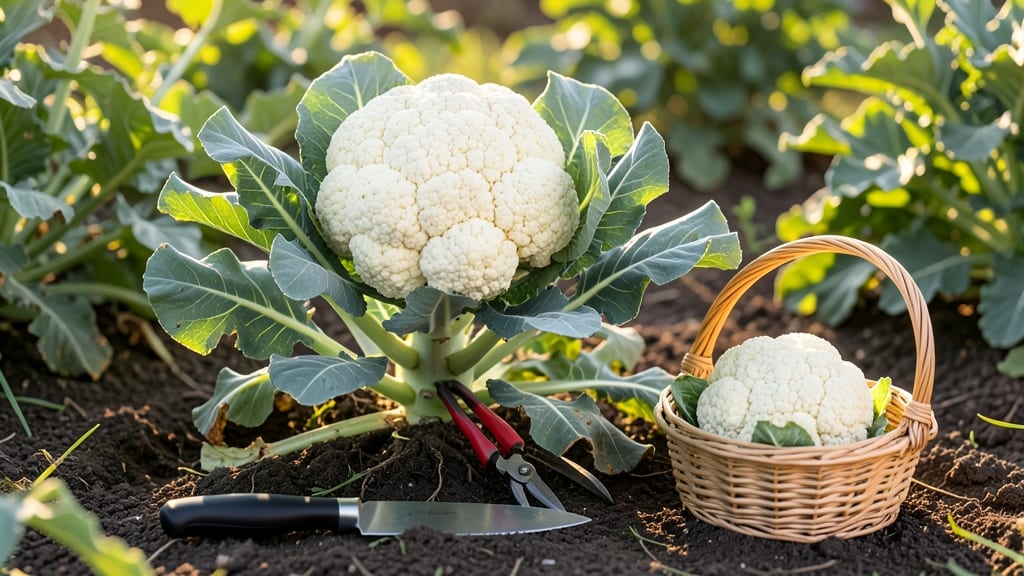
Knowing when to harvest cauliflower 🥬 means catching it at the peak of flavor and texture—before it turns tough or bitter.
You’ve spent weeks nurturing your plants, and now the moment of truth arrives: How do you tell if your cauliflower is ready? A single misstep can mean sacrificing tender curds for a meal of disappointment. The good news? There’s a simple way to check—just look for these three key signs.
First, the curd should be firm to the touch, like a well-set custard, not mushy or hollow. Next, the outer leaves will start yellowing, signaling the plant is redirecting energy to the head.
Finally, the color should be deep and consistent, whether white, purple, or green, with no signs of budding flowers.
In this guide, I’ll walk you through the exact steps to test your cauliflower’s readiness, how to avoid common mistakes, and what happens if you harvest too early or too late. By the end, you’ll know exactly when to reach for that knife—and how to preserve your harvest’s perfect flavor.

The 3 key signs your cauliflower is ready for harvest (color, size & curd firmness)
Harvesting cauliflower at the right moment transforms your garden into a treasure trove of tender, flavorful curds. But how do you know when your cauliflower heads are perfect for picking? The answer lies in three key indicators: color consistency, optimal curd size, and firmness to the touch.
Miss these cues, and you risk tough, bitter, or even split heads. Let's break down what to look for to ensure you harvest at peak perfection.
First, pay attention to the color of your cauliflower. Mature heads should display a uniform hue—whether white, purple, or green—without any yellowing or browning. This consistency signals that the curd has reached full maturity.
For example, a white cauliflower should be creamy and bright, while a purple variety will have deep, even tones. Uneven coloring often means the head is either underdeveloped or overripe.
Next, size matters. A fully grown cauliflower curd typically measures 6 to 8 inches in diameter. If your head is smaller, it may still need time to develop. On the other hand, if it’s larger, it might be past its prime.
For instance, varieties like Snowball Y Improved usually hit the sweet spot at around 7 inches. Always check the variety-specific guidelines for your cauliflower type, as some dwarf varieties stay smaller.
Now, let’s talk about the finger squeeze test, the ultimate tactile check. Gently press the curd with your thumb and forefinger. If it feels firm but slightly yielding, like a ripe avocado, it’s ready.
A hard, unyielding head is underripe, while a mushy or spongy one is overripe. This test is especially critical for loose-leaf varieties, which can split if left too long on the plant.
Don’t overlook the outer leaves of your cauliflower plant. As the curd matures, the leaves surrounding it will begin to yellow and die back. This is a natural sign that the plant is redirecting energy to the head.
If the leaves are still vibrant green, your cauliflower needs more time. Conversely, if the leaves are completely brown or wilted, the head may have already passed its prime.
Temperature also plays a subtle but important role. Cauliflower grows best in cool weather, ideally between 60°F and 70°F. If your region is experiencing a heatwave, the curd might mature faster, so keep an extra eye out for these signs.
Conversely, in cooler climates, the process slows down, and you may need to give your plants a little more time.
One common mistake is waiting until the buds start to open or the curd splits. By then, the texture becomes woody and bitter, and the flavor is compromised. Always harvest before this happens.
For example, if you notice small yellow florets peeking out from the center, it’s time to act fast. Use a sharp knife to cut the stem about 1 inch below the curd to avoid damaging the plant.
Pro tip: If you’re growing multiple varieties, like Romanesco or Broccolini, familiarize yourself with their unique maturity signs. For instance, Romanesco curds often have a fractal-like pattern and may take slightly longer to reach harvest size. Always refer to the seed packet or plant tag for variety-specific guidance.
Finally, remember that harvest timing is everything. A well-timed harvest ensures your cauliflower is at its peak flavor, texture, and nutritional value. By mastering these three key signs—color, size, and firmness
How to perform the curd firmness test (with common mistakes to avoid)
The curd firmness test is your best tool for determining if cauliflower is ready to harvest. Unlike relying solely on size or color, this tactile method reveals the internal texture that guarantees tender, flavorful curds.
Press your thumb gently into the curd—it should yield slightly but not dent deeply. Over-mature heads feel spongy or hollow, while underripe ones resist pressure.
Timing matters because environmental factors like temperature swings and humidity levels can speed up or slow down maturity. For example, hot afternoons may cause heads to ripen faster, while cool, cloudy days can delay readiness. Always test in the morning after watering when the plant is hydrated and firm.
⚠️ Common Mistake: Testing after rain or irrigation can give a false firmness reading. Wait until soil is dry enough to avoid waterlogged curds that appear firmer than they are.
✅ Pro Tip: Compare multiple heads—some varieties mature unevenly. Harvest the firmest curds first to prevent overripening.
To perform the test, locate the largest, most compact curd on the plant. Use your thumb and forefinger to apply gentle pressure—about 5 pounds of force. A ready curd will feel like a firm watermelon rind, giving just enough to show it's fully developed but not breaking down.
Watch for visual cues that confirm your tactile test. The outer leaves should start yellowing, and the curd should measure 6-8 inches in diameter. If buds begin opening or the color fades, the head is past its prime.
Purple varieties may darken slightly, while whites can turn pale yellow—both signs of overmaturity.
Environmental factors like high humidity can trick you into thinking a curd is firmer than it is. Test multiple heads daily during the last 3-5 days of expected maturity.
If your garden experiences unpredictable weather, consider harvesting slightly earlier—cauliflower holds up better in the fridge than it tastes after overripening.
If your curd feels too soft or spongy, it’s likely overripe. Cut it immediately to salvage what you can, but expect a milder flavor and tougher texture.
Underripe curds (too firm) can be left on the plant for another 2-3 days to mature, but don’t delay too long—pests like cabbage moths target stressed plants.
Mastering this test ensures you’ll never waste a harvest again. Keep a small notebook by your garden to log curd firmness notes alongside weather conditions—this helps you predict future harvests with precision.
With practice, you’ll develop an instinct for the perfect moment to harvest, turning your garden into a cauliflower success story. 🥬