
How To
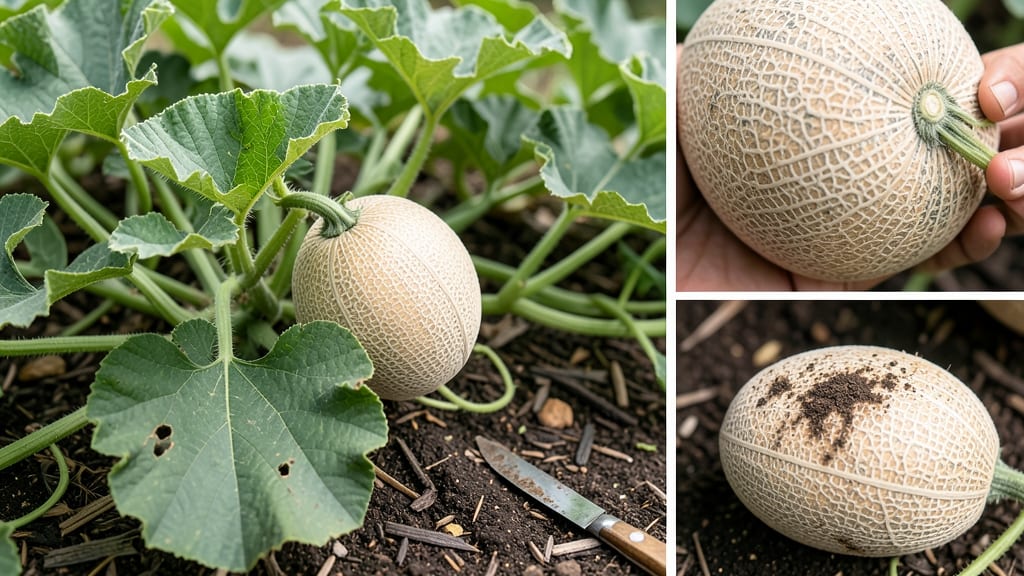
Knowing when to pick a cantaloupe 🍈 means the difference between a sweet, juicy reward and a mealy disappointment—so here’s how to spot the perfect moment.
Most gardeners wait for the classic cues—yellowing rind or a dry stem—but those alone can miss the mark. The real secrets lie in three often-overlooked signals that reveal true ripeness, like the texture of the blossom end or the smell near the seeds.
If you’ve ever cut into a cantaloupe only to find it still hard or bland, you’re not alone. These subtle but critical checks will help you harvest at peak flavor, avoiding both underripe firmness and overripe mushiness.
Below, I’ll walk you through the exact order to examine your cantaloupe, from stem to scent, so you can confidently pick it at its sweetest—just in time for summer’s best harvest.


3 Hidden ripeness signals most guides skip (but farmers use)
When I first grew cantaloupes, I relied solely on the color and stem checks—only to end up with underripe fruit that tasted like water.
Farmers I talked to laughed and said, "You’re missing the real signals." These three hidden clues—often overlooked in basic guides—are what truly separate a perfectly ripe cantaloupe from one that’s still hard or already overripe.
The first secret lies in the blossom end—the flat side where the stem meets the fruit. Most gardeners glance at the rind color, but the texture here is far more telling.
A ripe cantaloupe’s blossom end will feel slightly soft when pressed gently, almost like pressing a ripe peach. If it’s rock-hard or still green, it’s not ready yet.
Next, check the vein color running through the blossom end. When ripe, these yellowish-green veins will turn a creamy beige or even golden tan. This color shift happens because the sugars inside the fruit are breaking down.
Skip this step, and you might pick a cantaloupe that’s deceptively ripe on the outside but still bland inside.
Finally, the seed cavity smell is the ultimate test. Cut a small section near the seeds and take a deep sniff. A ripe cantaloupe will smell sweetly musky, almost like a mix of honey and ripe melon.
If it smells sour, fermented, or has no aroma at all, it’s either underripe or overripe. This is the signal farmers swear by—it’s foolproof.
| Ripeness Stage | Blossom End Texture | Vein Color | Seed Cavity Smell | Rind Color |
|---|---|---|---|---|
| Ready to Pick | Slightly soft when pressed | Creamy beige or golden tan | Sweetly musky, like honeyed melon | Dull golden-beige with net pattern |
| Overripe | Mushy or leaking liquid | Brown or blackened | Fermented or sour | Dull, wrinkled, or splitting |
| Underripe | Rock-hard, no give | Bright green or yellow-green | No aroma or slightly bitter | Greenish or pale, tight skin |
Let’s say you’re checking a cantaloupe in July, and the blossom end feels soft but the veins are still greenish. That’s a red flag—it’s not fully ripe yet.
On the flip side, if the veins turn golden but the rind is still tight, it might be overripe on the inside. The key is to check all three signals together.
One common mistake I see is assuming a heavy cantaloupe is automatically ripe. Weight matters, but it’s not the deciding factor. A heavy cantaloupe could still be underripe if the blossom end is hard and the veins are green. Always cross-reference with the other two signals to avoid disappointment.
Pro tip: If you’re growing cantaloupes in hot climates, they ripen faster. I’ve found that in USDA Zone 9, the vein color and seed cavity smell change within 24 hours of being ready.
In cooler zones like Zone 6, take an extra day to confirm ripeness—especially if nights dip below 60°F (15°C).
Finally, don’t ignore the sound test. Give the cantaloupe a gentle shake near the stem. A ripe one will make a hollow, rattling sound because the seeds have loosened inside.
If it sounds dull, it’s not ready. This trick works best when combined with the other two signals for 100% accuracy. 🍈
Step-by-step: the exact order to check cantaloupe ripeness
Mastering the art of cantaloupe ripeness starts with a systematic check—skipping steps often leads to missed cues. I’ve learned the hard way that rushing to pick based on color alone can leave you with bland fruit.
The key? Following this three-step sequence in order, from stem to scent, ensures you never miss the perfect moment.
Begin with the stem end, where the first signs of ripeness appear. A dry, brown stem signals maturity, but don’t stop there—this is just the starting point. Next, move to the blossom end, where texture and color reveal deeper clues.
Finally, the seed cavity holds the ultimate test: a sweet, musky aroma confirms peak ripeness.
Check the Stem End
Look for a dry, brown stem near the fruit. If it’s still green or moist, the cantaloupe needs more time. Gently twist the stem—if it snaps easily, it’s ready.
Examine the Blossom End
Press the blossom end lightly—it should yield slightly, like a ripe peach. Check for a creamy tan or beige color (not green or white). A dull, yellowish hue means it’s overripe.
Test the Seed Cavity
Cut a small section near the seeds. A sweet, musky aroma confirms ripeness. If it smells bland or fermented, wait a few more days. The seeds should also be fully formed and dark.
Pro tip: Combine these steps with a gentle shake test. A ripe cantaloupe will rattle when shaken—this means the seeds are loose inside, a final sign of sweetness. If it’s silent, it’s not ready yet.
Timing matters too—pick in the morning after dew dries for the freshest flavor. Overripe cantaloupes lose sweetness fast, so act when you spot all three signs. Now you’re ready to harvest like a pro!
Remember, cantaloupes don’t ripen further after picking, so accuracy now means perfect flavor later. Happy harvesting! 🍈