
How To
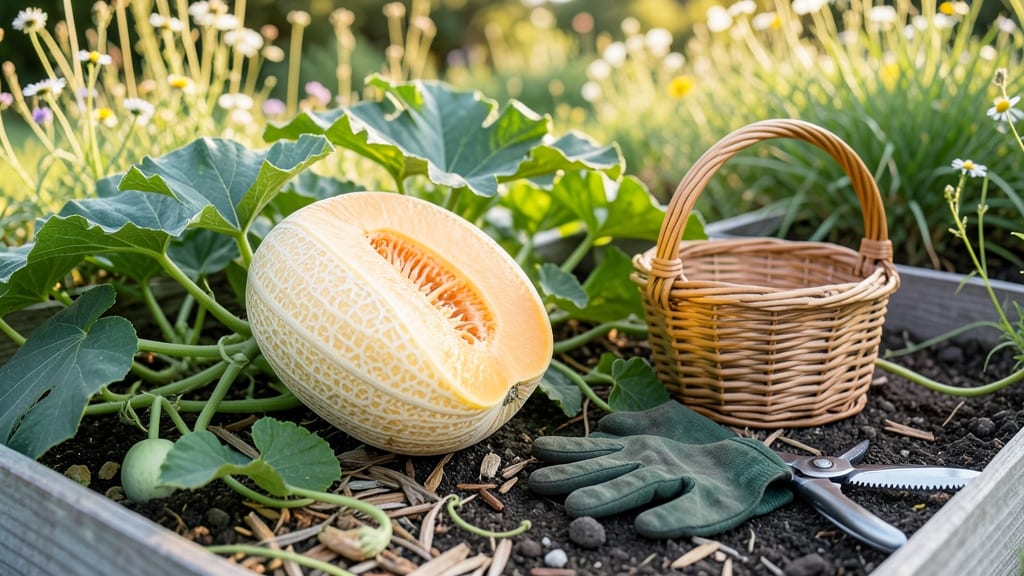
Picking cantaloupe at the right moment means the difference between a sweet, juicy reward and a meal of bland disappointment. 🍈
Picture this: you’ve waited all summer for your first ripe cantaloupe, only to cut into it and find it still hard or worse—overripe and mushy. The good news? You don’t need a guess—just a few simple, foolproof tests to know when it’s time to harvest.
Most gardeners miss the window because they focus on days after flowering instead of the fruit’s real signals. That’s why I’ve broken down the 3 non-destructive tests that tell you exactly when your cantaloupe is ready—no knife required.
In this guide, you’ll learn how to check the blossom end color, test for the right give when pressed, and sniff out that unmistakable sweet aroma. By the end, you’ll never second-guess your harvest again.


3 Non-destructive tests to check cantaloupe ripeness before picking
Knowing when to pick cantaloupe can feel like a guessing game, but it doesn’t have to be. The secret lies in three simple, no-cut tests that reveal the fruit’s true ripeness without damaging it. These methods work for both muskmelons and honeydews, so you’ll never miss the sweet spot again.
Many gardeners wait too long, ending up with overripe fruit that’s bitter or mealy. Others pick too soon, leaving them with hard, flavorless cantaloupes. The key is learning to read your plant’s signals—like the blossom end color, vine separation, and sweet aroma—before the fruit even detaches.
-
1. Vine Separation
Gently twist the cantaloupe near the stem. If it detaches easily with a slight tug, it’s ready. A firm grip means it needs more time. -
2. Blossom-End Color
Look at the end where the stem was attached. A ripe cantaloupe will have a creamy yellow or tan hue, not green or white. -
3. Sweet Aroma
Sniff near the blossom end. A ripe cantaloupe releases a strong, sweet fragrance—like a mix of honey and cucumber—when ready.
Start with the vine separation test first, as it’s the quickest way to gauge readiness. If the fruit doesn’t budge, check back in a day or two.
This test works best in the morning when the fruit is cool and firm, not after a hot afternoon when it might feel softer.
Next, inspect the blossom-end color. This is the most reliable visual cue, as it changes dramatically as the fruit ripens. Avoid picking if the end is still green or white—this means the cantaloupe needs more time on the vine to develop its signature sweetness.
Finally, trust your nose. A ripe cantaloupe emits a distinct sweet scent near the stem, almost like a cross between honey and fresh-cut grass. If you don’t smell anything, the fruit isn’t ready yet. Pro tip: Sniff near the blossom end while holding the cantaloupe—this amplifies the aroma.
For extra accuracy, combine all three tests. A cantaloupe that passes all three—easy vine separation, creamy blossom end, and strong sweet scent—is guaranteed to be at its peak. This method eliminates guesswork and ensures you harvest at the perfect moment.
One common mistake is waiting until the cantaloupe falls off the vine on its own. While this can happen, it often means the fruit is overripe. Instead, use these tests to pick it just before it detaches naturally, so you control the harvest timing.
If you’re growing multiple cantaloupes, test the oldest-looking fruit first. The first ones to ripen are usually the sweetest, so prioritize those. Keep an eye on the vine’s health too—if it’s wilting or drying out, the cantaloupes may not ripen fully.
Remember, cantaloupes won’t ripen further after picking, so timing is everything. By mastering these three tests, you’ll enjoy cantaloupes at their sweetest, juiciest, and most flavorful—every single time. 🍈
Cantaloupe ripeness by variety: what to expect from honeydew vs. muskmelon
Not all cantaloupes ripen the same way—honeydews and muskmelons have distinct cues that tell you when they’re ready to pick. While the basic tests apply to both, their size expectations, stem characteristics, and flavor profiles vary.
For example, the popular 'Athena' muskmelon develops a net-like pattern on its skin, while 'Hale’s Best' honeydew stays smooth and pale green. Understanding these differences ensures you harvest at the perfect moment for each type.
Honeydews typically reach 4-6 pounds at full ripeness, with a smooth, pale green rind that may show slight yellowing near the blossom end. Muskmelons, like 'Hale’s Best', often weigh 3-5 pounds and develop a tan or beige blossom end with a slightly ribbed texture.
The key is paying attention to these variety-specific traits while still relying on the universal ripeness tests we covered earlier.
| Variety | Expected Weight | Blossom End Color | Skin Texture | Flavor Profile |
|---|---|---|---|---|
| Honeydew ('Hale’s Best') | 4-6 lbs | Creamy yellow | Smooth, pale green | Sweet, mild, honey-like |
| Muskmelon ('Athena') | 3-5 lbs | Tan/beige | Ribbed, netted | Intense, musky sweetness |
| Muskmelon ('Ambrosia') | 5-7 lbs | Golden tan | Smooth, slightly ribbed | Balanced sweet-tart |
The stem characteristics also differ between varieties. Honeydews like 'Hale’s Best' often have a thicker, more robust stem that detaches cleanly when ripe, while muskmelons like 'Athena' may have a slighter stem that separates more easily.
Always test for vine separation first—this is the most reliable indicator across all cantaloupe types.
Flavor profiles vary dramatically too. Honeydews tend to be softer and milder, with a creamy texture that’s perfect for salads or smoothies. Muskmelons, especially 'Athena', pack a bold, aromatic sweetness that’s ideal for snacking or desserts.
If you’re growing both, harvest the muskmelons first—they often ripen slightly earlier than honeydews.
One common mistake is assuming all cantaloupes ripen at the same size or weight. A 3-pound honeydew is likely underripe, while a 7-pound muskmelon might be overripe. Always combine weight expectations with the other ripeness tests to avoid mistakes.
For example, a 'Ambrosia' muskmelon should never exceed 7 pounds—if it does, it’s past its prime.
Pro tip: Keep a harvest journal to track when your specific varieties ripen. Note the days to maturity, final weight, and flavor notes for each cantaloupe type.
Over time, you’ll develop an intuition for when your 'Athena' is sweeter than your 'Hale’s Best'—and that’s the mark of a true cantaloupe connoisseur. 🌱