
Picking
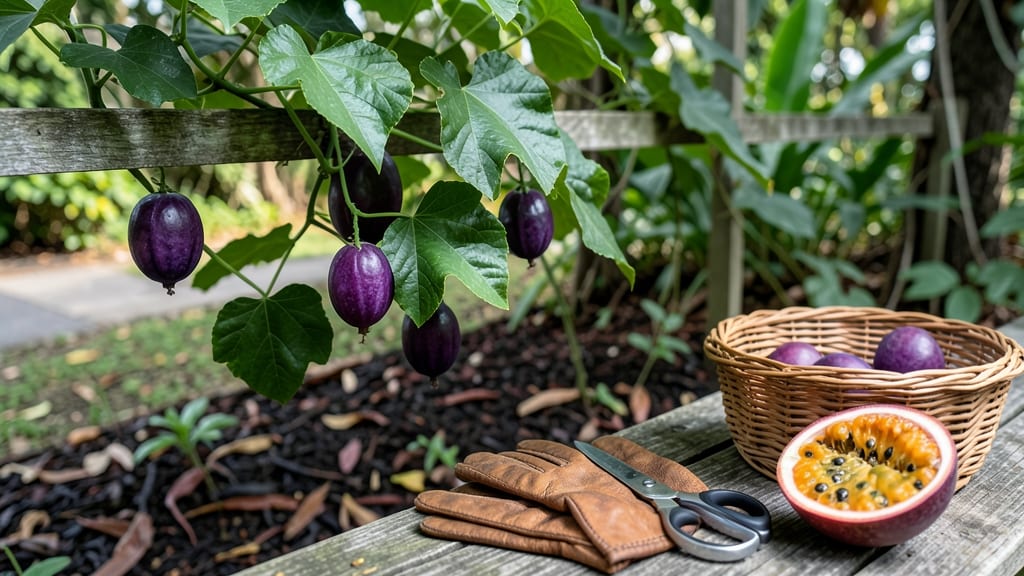
Timing the passionfruit harvest is the secret to turning tart green globes into explosively sweet, juicy gems 🍈 that taste like summer in a bite.
Picture this: you’ve been waiting months for your vine to fruit, only to pick too early and end up with bland, seedy disappointment. Or worse, you miss the window entirely and watch the fruit rot on the vine.
The difference between these two outcomes? Knowing exactly when to pluck your passionfruit for that perfect balance of ripeness and flavor.
In General (Tropical/Subtropical Regions) like USDA Zones 9-11, the harvest window typically opens 6-8 months after planting, but the real magic happens when you learn to read the fruit’s cues—color shifts, gentle give when pressed, and that unmistakable scent.
Whether you’re growing purple or yellow varieties, these signs will tell you when to act before the fruit overripens or falls prey to pests.
Below, I’ll walk you through the key ripening stages, how climate affects your harvest timeline, and pro tips to maximize sweetness—so you’re never left wondering if you picked too soon (or too late) again.

Passionfruit ripening stages: how to identify the perfect harvest time
Picking passionfruit at the right moment transforms your harvest from sour and seedy to bursting with tropical sweetness. Unlike many fruits, passionfruit ripen off the vine—meaning they won’t soften further once picked. That’s why mastering the visual and tactile cues is your ticket to juicy perfection.
Let’s break down exactly what to look (and feel) for, including how purple vs. yellow varieties differ in their ripening signals.
First, understand that passionfruit ripeness hinges on three key factors: color change, firmness, and stem separation. Ignoring any of these can lead to premature picking (tart, underripe fruit) or overripe fruit (mushy, fermented mess).
For example, a yellow passionfruit might look ripe when it’s still green inside, while a purple variety can stay hard even when fully colored. Let’s dive into the specifics to avoid these common mistakes.
For yellow passionfruit varieties, the skin should transition from green to a vibrant yellow-orange with slight wrinkling. Gently squeeze the fruit—if it feels like a soft tennis ball, it’s ready. A common mistake is picking too early because the fruit looks ripe; always check firmness.
Meanwhile, purple passionfruit (like Marañón) ripen to a deep, eggplant-like hue and may even develop a slightly translucent appearance when fully ripe.
Don’t rely solely on color—stem separation is your secret weapon. At the perfect moment, the fruit will twist off easily with a slight tug, and the stem end will look dry and browned. If the stem snaps or the fruit resists, it’s not ready.
This cue is especially critical for self-pollinating varieties, which often ripen unevenly. Pro tip: Harvest in the morning when fruits are coolest—this ensures you’re catching them at peak ripeness.
Another telltale sign? A sweet, floral aroma near the stem end. While passionfruit don’t emit a strong scent like apples, a subtle tropical fragrance means the sugars are peaking. Skip fruits with fermented or alcohol-like smells—these are overripe and past their prime.
I once picked a batch “just in case” and ended up with three-quarters of them fermented by the next day. Trust your nose!
Now, let’s address a critical misconception: passionfruit do not ripen further after picking. Unlike bananas or avocados, they won’t soften or sweeten off the vine. That’s why premature harvesting (picking green) is a recipe for disappointment. If you’re unsure, wait one more day.
The extra time in the vine can make all the difference between tart and sweet. For yellow varieties, this might mean waiting until the fruit is fully orange with wrinkled skin.
Regional climate plays a role too. In tropical zones, passionfruit ripen faster due to consistent warmth, while subtropical areas may need an extra week or two. If your vine is in a cooler microclimate, monitor fruits closely—they might stay hard longer.
A simple trick? Place a ripe passionfruit near your vine as a reference. The color and scent will guide your timing naturally.
Finally,
Best months for passionfruit harvest by climate Zone (tropical, subtropical, temperate)
Your passionfruit vine’s harvest window depends entirely on your climate zone—whether you’re basking in tropical heat or stretching the season in temperate regions.
In USDA Zones 10-11, where I’ve grown mine, the main harvest spans March through June, but cooler zones like Zones 9-8 can enjoy a staggered harvest from May to August with proper care.
Temperature fluctuations play a huge role: cooler nights slow ripening, while consistent warmth speeds it up.
To extend your harvest, I’ve learned that pruning in late winter (just before new growth) encourages a second flush of fruit, while regular watering prevents stress-induced fruit drop.
In temperate zones, where frost threatens, harvesting before first-frost warnings is critical—even if the fruit isn’t fully ripe, you can finish ripening indoors.
| Climate Zone | Primary Harvest Window | Secondary Harvest (With Care) | Key Ripening Factor |
|---|---|---|---|
| Tropical (Zones 10-11) | March–June | July–September (with pruning) | Consistent 80°F+ temps |
| Subtropical (Zones 9) | April–July | September–October (short season) | Cooler nights slow ripening |
| Temperate (Zones 8) | May–August | None (harvest before frost) | Frost risk cuts season short |
In tropical zones, where I’ve grown purple passionfruit, the first harvest arrives as early as March if planted in late summer of the prior year. The key is to monitor fruit color shifts—from green to deep purple—while ensuring daytime temps stay above 75°F.
In subtropical zones, like Zone 9, ripening slows with cooler nights, so I often see a secondary harvest in September after pruning to encourage new growth.
For temperate gardeners, the challenge is timing: harvest before first frost (typically October–November), even if the fruit isn’t fully ripe. I’ve had success finishing ripening indoors by placing fruit in a paper bag with a banana to speed up ethylene production.
This mimics the vine’s natural ripening process and can add 1-2 weeks of harvestable fruit.
Pro tip: Prune vines in late winter to remove old wood and encourage new, fruit-bearing branches. This not only extends your harvest but also improves air circulation, reducing the risk of fruit rot.
In my Zone 10 garden, this simple step has added 2-3 extra months to my harvest season—turning a 4-month window into a nearly year-round supply of passionfruit.
Remember, yellow passionfruit ripen faster than purple varieties, so adjust your harvest timing accordingly. And if you’re in a cooler microclimate, consider growing in containers for easier winter protection. With the right approach, you can turn your passionfruit vine into a year-round producer, even in less-than-ideal climates. 🍈