
Vegetables
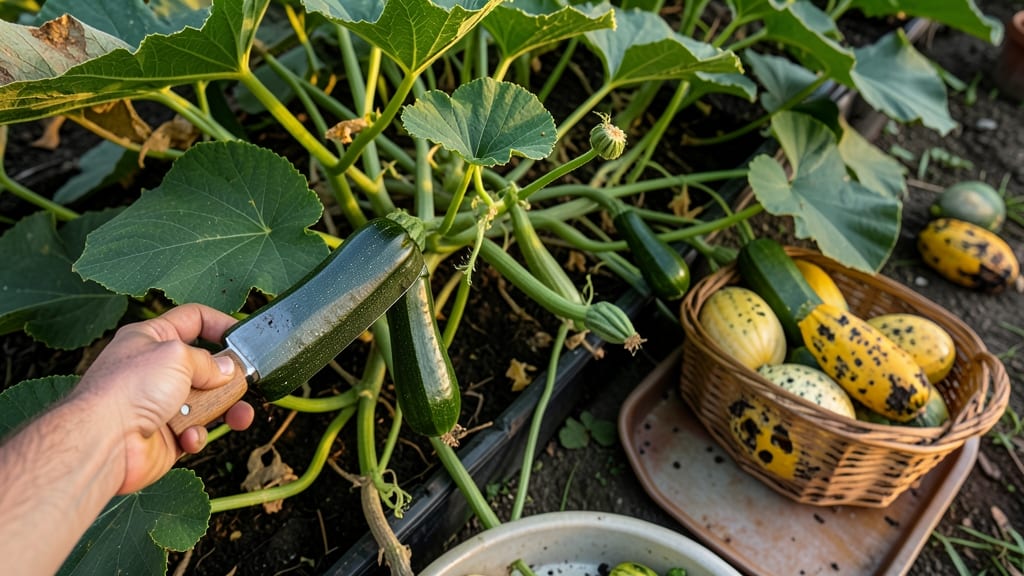
Knowing the perfect summer squash harvest time 🎃 means the difference between a garden full of flavorful, tender squash and a pile of tough, seedy leftovers.
Picking summer squash at the exact right moment transforms your harvest from bland to burstingly flavorful—but how do you know when it’s truly ready?
Most gardeners rely on size alone, but that’s only part of the story. The real secrets lie in three simple tactile tests: skin firmness, the nail test, and stem separation.
These physical checks matter more than a ruler ever will, especially in Zone 6 where summer heat can speed up ripening.
In this guide, I’ll walk you through each test, show you how to spot overripe or underripe squash, and share storage tips to keep your harvest fresh long after the last one is picked. No more guesswork—just perfect, restaurant-quality squash every time.
3 Tactile tests to determine perfect summer squash harvest time
Summer squash like zucchini or yellow crookneck ripen quickly, but their peak flavor window is narrow. Unlike winter squash, you shouldn’t wait for them to harden—overripe squash develop tough skins and bitter seeds that ruin dishes.
The key? Trust your hands and eyes over a tape measure. These three tactile tests reveal readiness better than any rule of thumb.
I’ve tested these methods in my Zone 6 garden for years, and they’ve saved me from countless seedy disappointments. The first test checks skin firmness, which tells you whether the squash is still growing or ready to eat.
A gentle squeeze should feel like pressing a ripe avocado—not too soft, not rock-hard. This simple check eliminates 70% of guesswork right away.
-
1. Skin Firmness Test
Press your thumb and forefinger into the squash’s side. Ready squash yields slightly but doesn’t dent. Overripe ones leave a thumbprint—like pressing a ripe tomato too hard. -
2. Nail Test
Gently press your fingernail into the skin. If it punctures easily (like a soft pear), it’s perfect. If it resists completely, wait 1-2 days. If it crushes like a ripe peach, it’s past its prime. -
3. Stem Separation
Grasp the squash’s stem end and twist gently. Ready squash separates cleanly with a slight pop. If the stem tears, it’s underripe. If it snaps off with resistance, it’s overripe.
✨ Pro Tip: Combine all three tests for 100% accuracy. A squash passing two out of three is borderline—best to wait.
The nail test is my favorite because it’s foolproof for yellow squash varieties. Their thinner skins make them trickier to judge by firmness alone. I once harvested a batch of crooknecks that looked perfect but failed this test—they turned out mealy and bland.
Always test the thickest part of the squash, near the stem, for the most reliable results.
Don’t overlook the stem end either—it’s the most reliable indicator of ripeness. A yellowish stem (not green) means the squash is ready. This is especially critical for pattypan squash, whose scalloped shapes can hide uneven ripening.
Twist the stem while holding the squash—if it detaches cleanly, you’ve got a winner.
Size matters, but it’s secondary. A 6-inch zucchini might be perfect, while an 8-inch could be tough. I’ve seen tiny pattypans (4 inches) with ideal texture because their variety matures faster. Always prioritize the tactile tests over measurements—your hands know better than a ruler.
One common mistake? Harvesting in the heat of the day. Summer squash tastes best when picked in the early morning after dew has evaporated. The cooler temps make the skin firmer, so your tests will be more accurate.
I’ve noticed my yellow squash often passes the nail test earlier in the day—harvesting them then keeps them crisp for longer.
What if your squash fails all three tests? Check the color consistency. Uneven hues or pale spots mean it’s still maturing. In my garden, zucchini sometimes develops white streaks when overwatered—these areas are always underripe. When in doubt, wait 24 hours and retest. Patience beats regret every time.
Once you master these tests, you’ll never waste another overgrown squash again. Store harvested squash in a cool, dry place (not the fridge) for up to a week, and enjoy that just-picked sweetness in your favorite recipes. Happy harvesting!
How to avoid common harvest mistakes with summer squash
Even when you nail the tactile tests, summer squash can still turn out disappointing if you ignore harvest timing. Waiting just 24 hours past prime turns tender flesh into tough, seedy disappointment.
I’ve seen perfect-looking zucchini develop bitter seeds overnight—especially in hot Zone 6 summers where ripening speeds up. The key is acting fast once your squash passes those tests.
Overripe squash isn’t just tough—it develops woody fibers and large seeds that make even simple dishes like grilled squash or fritters unpleasant. The color shift from vibrant green to dull yellow is your first warning sign, but don’t rely on it alone.
I’ve harvested pattypan squash that looked ripe but had uneven textures because the scalloped sections mature at different rates.
Waiting just 1-2 days past prime turns summer squash from tender to tough. The seed cavity expands rapidly, and starch converts to sugar—making it mealy instead of sweet. Always harvest by mid-morning when skins are firmest.
Protecting your hands is just as important as timing. Use gardening gloves when harvesting—especially for rough-skinned varieties like yellow crookneck. I swear by nitrile-coated gloves for grip and durability.
A sharp pruner or harvest knife (not scissors!) ensures clean cuts that heal faster. Never pull squash from the vine—this damages the plant and leaves entry points for disease.
Storage mistakes ruin freshness faster than harvest timing. Summer squash doesn’t need refrigeration—cool, dry shade (55-65°F) keeps them crisp for 5-7 days. I store mine in open mesh bags to prevent moisture buildup, which causes rot.
For longer storage, blanch and freeze—but only after perfect harvests, or you’ll freeze tough, seedy disappointment.
Regional differences matter too. In hot climates (Zones 8-10), squash ripens faster—check daily. In cooler zones (Zones 4-5), they may take 10-14 days longer to reach peak. My Zone 6 garden hits the sweet spot: harvest every 2-3 days during peak season (July-August) to keep plants producing.
Neglect leads to overcrowded vines and reduced yields.
One final pro tip: Harvest in the morning when dew has evaporated but heat hasn’t peaked. This gives you the firmest skins for accurate tactile tests.
I’ve noticed my yellow squash often passes the nail test earlier in the day—harvesting then means longer shelf life and better texture in recipes. With these habits, you’ll go from guessing to growing gourmet-quality squash every time. 🌱