
Picking
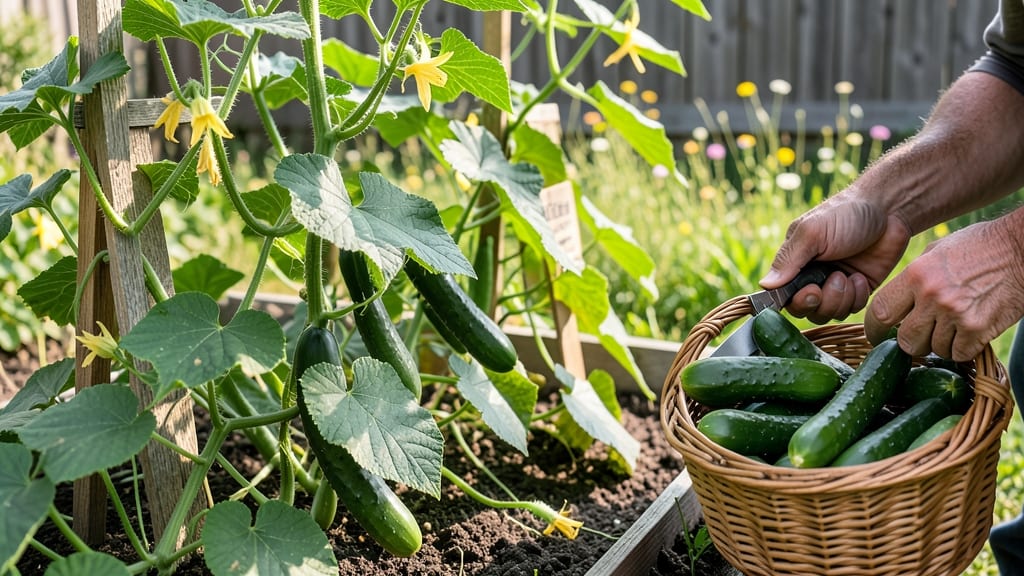
Harvesting cucumbers in what month do you harvest cucumbers your ticket to crisp, flavorful 🥒 slices straight from the vine—but miss the window, and you’ll end up with bitter, seedy disappointment.
Timing your cucumber harvest wrong can mean the difference between crisp, sweet slices and bitter, seedy disappointment—so knowing the exact month to pick matters more than you think.
Whether you’re in a warm Southern climate or a cooler Northern zone, the right moment depends on when you planted and which variety you grew.
Most cucumbers are ready to harvest 50 to 70 days after planting, but regional climates shift those dates.
In USDA Zone 6a (like much of the Midwest), your peak harvest window stretches from mid-July to early September, while Southern gardeners can enjoy cucumbers as early as June and as late as October—if they’ve chosen heat-tolerant varieties.
Below, I’ll break down the ideal months by zone, teach you how to spot perfectly ripe cucumbers (size, color, and texture cues), and share pro tips to extend your harvest season by weeks—no matter where you garden.

Best months to harvest cucumbers by growing zone (USDA map guide)
Timing your cucumber harvest is all about understanding your USDA growing zone and local climate quirks. Cucumbers thrive in warm weather but bolt (go to seed) when temperatures dip below 50°F.
Knowing your zone helps you pick the perfect window for crisp, flavorful harvests—whether you're in frost-prone Zone 3 or balmy Zone 11.
Most gardeners assume cucumbers are ready around mid-summer, but the truth is more nuanced. Early varieties in cool zones might be ready by late June, while late-season varieties in hot zones can keep producing until October.
The key is matching your planting date with your zone's last frost and heat tolerance.
Below is your zone-by-zone harvest guide, including early, main-season, and late-season windows. Use this to plan when to start picking—and when to extend your harvest with row covers or greenhouses.
If you're in Zones 3-4, focus on early-maturing varieties like 'Northern Pickling' or 'Sweet Success' to beat frost. These can be ready by late June if planted early. In contrast, Zones 9-11 gardeners can enjoy cucumbers nearly year-round, though summer heat may require shade cloth to prevent sunscald.
For Zones 5-8, the sweet spot is July through September, but you can stretch your harvest into early October with row covers or a cold frame.
Pro tip: Plant succession crops every 2-3 weeks to ensure a steady supply. This works especially well in Zones 7-8, where the growing season is long.
One common mistake is assuming all cucumbers ripen at the same time. Early varieties (like 'Bush Champion') mature faster (50-55 days), while main-season types (like 'Marketmore') take 60-70 days.
Plant both for a longer harvest window. In hot zones (9-11), heat-sensitive varieties may bolt prematurely, so choose heat-tolerant types like 'Armenian' or 'Lemon Cucumber'.
Don’t forget that greenhouse growing
How to tell when cucumbers are ready to pick (beyond the calendar)
Counting days after planting helps, but cucumbers don't always follow the calendar. Instead, look for these visual and tactile cues that tell you exactly when to harvest.
I’ve learned the hard way that waiting for the "perfect" month can mean missing the peak flavor window—or worse, ending up with mealy, seedy cucumbers that taste like disappointment. The key is understanding how size, color, and texture change as cucumbers mature.
First, don’t rely solely on the planting month to judge ripeness. Cucumbers grown in warmer climates (like Zones 8-11) may ripen faster than those in cooler areas (Zones 3-6).
For example, in my Zone 6a garden, slicing cucumbers are often ready by late July, while pickling varieties might wait until early August. The real secret? Pay attention to the plant’s signals rather than the calendar.
- 1. Size Matters: Slicing cucumbers should be 6-8 inches long (pickling varieties stop at 2-3 inches). Heirlooms like 'Lemon Cucumber' can stay smaller but still be perfect.
- 2. Color Shift: Deep, glossy green means readiness (or variety-specific hues like yellow for 'Lemon' or striped for 'Tiger'). Avoid cucumbers with yellow patches—those are overripe.
- 3. Firmness Test: Press gently with your thumbnail. The skin should resist slightly but not feel rock-hard. Soft spots mean it’s past prime.
- 4. Stem Check: The stem end should turn yellow or brown (not green). If it’s still green, the cucumber is still growing.
- 5. Taste Test: Cut one open—ripe cucumbers have crisp flesh and minimal seeds. Seedy, watery cucumbers are overripe.
One of the biggest mistakes I’ve seen (and made!) is harvesting cucumbers too late because they "look fine." Overripe cucumbers develop bitter compounds and turn mushy. On the flip side, picking them too early (under 4 inches) means they’ll never reach their full sweetness.
For pickling cucumbers, I aim for 1-2 inches—smaller is better for that tangy crunch.
Adjust your timing based on the cucumber type. Slicing varieties like 'Straight Eight' thrive when picked at 8-10 inches, while heirloom varieties (e.g., 'Armenian') can be harvested at 12+ inches.
Pro tip: If you’re growing greenhouse cucumbers, they’ll ripen 2-3 weeks earlier than outdoor plants due to controlled warmth. Always check the variety’s days-to-maturity label for a baseline, then fine-tune with these cues.
Extend your harvest season by 2-3 weeks with these tricks: Use black plastic mulch to warm the soil early, plant succession crops every 2 weeks, or try container growing for late-season pickings.
I’ve had success with bush varieties like 'Bush Champion'—they mature faster and produce in tighter spaces, letting me squeeze in extra harvests before frost.
Remember, cucumbers are self-pollinating, so the more you pick, the more they produce. Check your plants every 2-3 days in peak season—consistent harvesting keeps the plant focused on new growth. And if you’re unsure? Pick it and taste it—that’s the ultimate test. Happy harvesting! 🥒