
How To
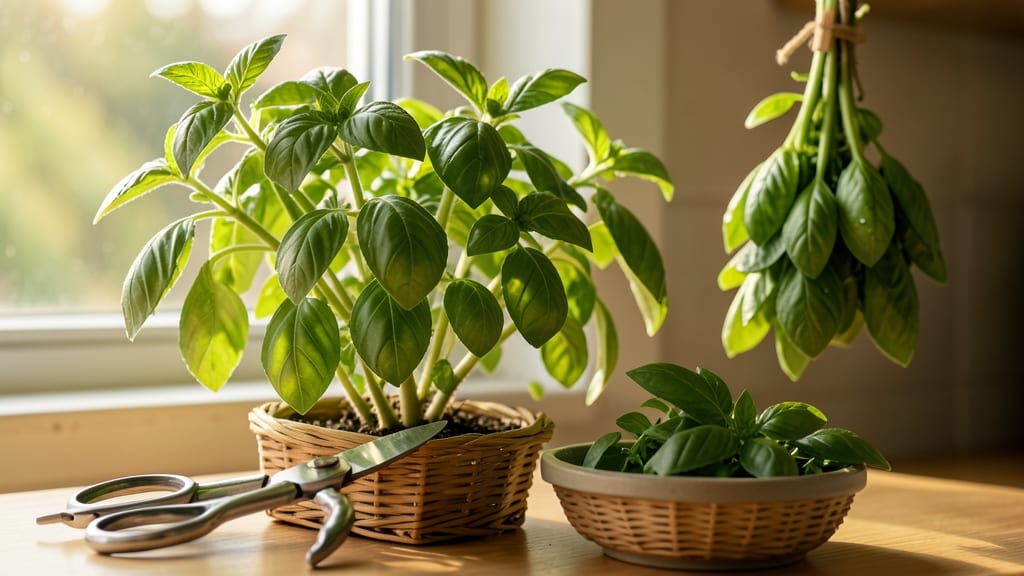
Harvesting basil for drying at the wrong stage can turn your hard work into bitter, flavorless leaves—so timing is everything.
Picture this: you’ve nurtured your 🌿 basil all season, only to dry leaves that taste like disappointment. The secret? Knowing when to pick stems for drying—before flowering but after the leaves are fully mature—makes all the difference.
I’ll show you the exact leaf pinch test and 2-week growth rule that keep your dried basil sweet and aromatic.
Most gardeners wait until basil is towering or flowering, but that’s when the flavor fades. The best time to harvest for drying is when stems are slightly woody and leaves are large but still vibrant. This guide cuts through the guesswork so you never waste another harvest.
You’ll learn how to spot the perfect moment, adjust for your climate, and even troubleshoot common mistakes—like harvesting too early or too late—that ruin flavor. Ready to dry basil that tastes as good as fresh?

The leaf pinch test: how to identify perfect basil for drying
Knowing when to harvest basil for drying is the secret to preserving its vibrant flavor and aroma. Basil loses its sweet, anise-like notes once it flowers, so timing your harvest is critical.
The leaf pinch test is my foolproof method to determine when basil is at its peak for drying—before it becomes bitter or woody.
Start by examining your basil plants for these key signs: fully opened leaves, slightly woody stems, and a height of at least 6 inches. These visual cues indicate the plant has reached maturity but hasn’t yet started flowering.
When you crush a leaf and smell a strong, fresh basil aroma, that’s your green light to harvest.
Harvesting too early means small, underdeveloped leaves that won’t dry well, while waiting too long results in bitter, tough stems. The 2-week growth rule helps balance this—harvest every 2 weeks to encourage bushier growth and prevent over-maturation.
This method works for all basil varieties, including Genovese, Thai, and Purple basil.
Here’s how to perform the leaf pinch test step-by-step to ensure you’re harvesting basil at the perfect time:
One common mistake is harvesting basil too early, which results in small, underdeveloped leaves that won’t dry properly. These leaves lack the oil glands that contain basil’s essential flavors, so your dried herb will taste weak. Always wait until the leaves are fully opened and aromatic before harvesting.
Another pitfall is waiting too long, allowing the basil to flower. Once those white or purple buds appear, the plant shifts its energy from leaf production to seed development.
This makes the leaves bitter and woody, ruining your harvest. If you spot buds, harvest immediately—even if the leaves aren’t at their peak size.
For container-grown basil, the leaf pinch test is even more critical because these plants mature faster due to limited root space. Monitor them closely and harvest more frequently—every 1-2 weeks—to keep them productive.
In-ground basil has more time to mature, so you can stretch your harvest intervals slightly to 2-3 weeks.
After harvesting, bundle the stems and hang them upside down in a dry, dark, well-ventilated space for 1-2 weeks. This slow-drying process preserves the flavor and color. Avoid direct sunlight or high humidity, as these can cause mold or discoloration.
Once fully dried, strip the leaves from the stems and store them in an airtight container away from light.
By mastering the leaf pinch test and sticking to the 2-week growth rule, you’ll always harvest basil at its peak for drying. Your dried basil will retain its sweet, aromatic essence for months, ready to elevate any dish. Happy harvesting! 🌿
The 2-Week growth rule: optimal harvest frequency for dried basil
Once you’ve mastered the leaf pinch test, the next key to drying perfect basil lies in harvest frequency. The 2-week growth rule is my secret for maximizing yield while preserving flavor—because basil grows surprisingly fast when given ideal conditions.
This science-backed interval ensures you harvest at peak maturity without letting plants become overripe or flower.
Research shows basil grows about 1-2 inches per week under optimal conditions (full sun, consistent moisture, and balanced fertilizer). A 2-week harvest window gives leaves time to fully develop their essential oil glands—the compounds that carry basil’s signature aroma—while preventing the plant from diverting energy to seed production.
For Genovese basil, this means harvesting every 14 days yields the largest, most flavorful leaves for drying.
| Basil Type | Optimal Harvest Frequency | Yield Potential (Fresh/Dried) | Key Adjustment |
|---|---|---|---|
| Genovese | Every 2 weeks | High (3x fresh yield than Thai) | Prune lower leaves to encourage bushiness |
| Thai (Holy Basil) | Every 1-2 weeks | Moderate (2x fresh yield) | Harvest smaller stems for milder flavor |
| Purple Basil | Every 2-3 weeks | Low (1.5x fresh yield) | Wait until leaves fully darken for best color |
Adjusting the 2-week rule depends on your basil’s variety and growing conditions. Thai basil, for example, grows faster than Genovese due to its compact growth habit, so I harvest mine every 1-2 weeks to prevent overcrowding.
Meanwhile, Purple basil matures more slowly, so I extend the interval to 2-3 weeks to let the leaves develop their signature deep color and robust flavor profile.
Climate also plays a role—basil in hot, humid zones (like Zone 9+) may need more frequent harvesting (every 10-14 days) to keep up with rapid growth, while cooler climates (Zone 6) can stretch intervals to 3 weeks without sacrificing quality.
Always check for flower buds first; if you spot them, harvest immediately, even if it’s not your scheduled day.
One common misconception is that harvesting more often reduces yield, but the opposite is true. The 2-week rule actually boosts total production by encouraging bushier growth. When you harvest stems at the right time, the plant responds by sending out new side shoots, creating a denser, more productive bush.
Over time, this can double your dried basil yield compared to harvesting just once before flowering.
Pro tip: Keep a harvest journal to track your basil’s growth cycle. Note when you harvest, the leaf size, and any environmental factors (like rain or heatwaves) that might affect timing.
Over a season, you’ll refine your schedule to match your specific growing conditions, ensuring every harvest is perfect for drying. With this rule, your dried basil will always outshine store-bought—sweet, aromatic, and ready to elevate any dish. ✂️🌿