
Picking
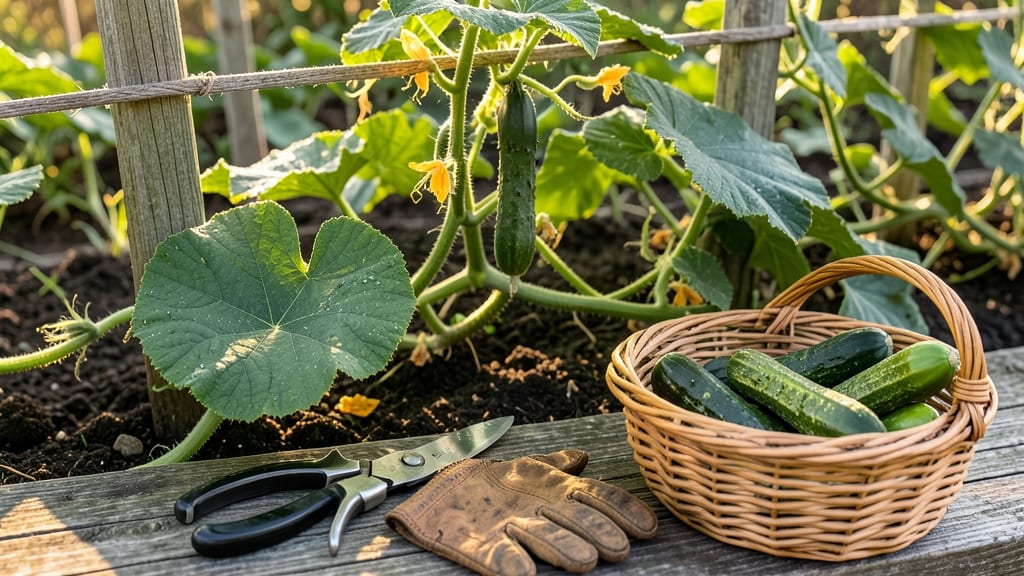
Harvesting cucumbers from your garden at the right time ensures they’re crisp, sweet, and full of flavor—so you’ll never settle for bland or bitter produce again.
Ever plucked a cucumber only to find it tough, seedy, or worse, bitter? That’s the sign you missed the sweet spot between too soon and too late. The difference between a crunchy, refreshing bite and a mushy disappointment comes down to three simple tactile tests: size, firmness, and color.
Most gardeners wait until cucumbers reach 6–8 inches long, but the real secret lies in their texture and the color of the stem end. A cucumber ready to harvest will yield slightly when pressed and have a stem that snaps cleanly—no tugging required.
And if you’re growing slicing varieties, watch for that telltale yellowing at the blossom end.
Below, I’ll walk you through these three foolproof tests, plus when to harvest for pickling versus slicing, so you can turn every vine into a steady supply of homegrown perfection.

3 Tactile tests to harvest cucumbers at peak ripeness
Nothing beats the satisfaction of biting into a cucumber that’s perfectly crisp and sweet—straight from your garden. But timing is everything! Harvest too early, and you’ll get tough, bland fruit. Wait too long, and you risk bitterness or even wasted yields.
The secret lies in using your senses to detect three key ripeness cues: size, color, and texture. These tactile tests work for both slicing varieties (like 'Straight Eight') and pickling types (like 'Boston Pickling'), though their ideal sizes differ slightly.
Most gardeners focus on color alone, but that’s only part of the story. Texture and size are equally critical for determining when cucumbers are ready to pick.
For example, a 6-inch pickling cucumber harvested at the right moment will be sweeter and crunchier than a 10-inch slicing cucumber left on the vine too long. Let’s explore the science-backed methods to ensure you’re harvesting at peak flavor and texture.
- 1. Size Check: Measure length and girth—slicing varieties (6-8") vs. pickling (3-4").
- 2. Color Test: Deep, even hue (green for most) with no yellowing or blotches.
- 3. Touch Test: Firm skin that yields slightly when gently pressed—like a ripe avocado.
Let’s start with the size test, which varies dramatically between cucumber varieties. For slicing cucumbers, aim for 6 to 8 inches in length.
These types (like 'Marketmore' or 'Lemon') are bred to grow larger, and harvesting them at this stage ensures they’re fully developed but not overripe. Pickling cucumbers, on the other hand, should be picked when they’re 3 to 4 inches long.
Waiting longer will result in cucumbers that are too large for pickling and often develop a seedy, bitter center.
Next, perform the color test to confirm ripeness. Most cucumbers should have a deep, consistent green color with no yellowing or uneven patches.
For slicing varieties, look for a slightly darker shade near the stem end, which indicates maturity. Pickling cucumbers should be uniformly bright green—any dullness or yellowing means they’ve passed their prime.
This test is especially important for heirloom or yellow varieties, like 'Lemon Cucumber,' where color changes signal overripeness.
The touch test is where the magic happens—literally. Gently press the cucumber’s skin with your thumb. If it feels firm but yields slightly (like pressing a ripe peach), it’s ready to harvest.
A cucumber that’s too hard likely needs more time on the vine, while one that feels mushy or spongy is overripe. For bush varieties, this test is crucial because they produce fruit faster and can overripen quickly if not monitored closely.
Pay attention to the stem end as a secondary cue. For slicing cucumbers, the stem end should turn yellowish or brownish as it separates from the vine. This indicates the cucumber is fully mature and ready for harvest.
In contrast, pickling cucumbers should still have a green stem end when harvested, as they’re picked before full maturity. If the stem end remains green but the cucumber is larger than 4 inches, it’s past its ideal pickling stage.
One common mistake is relying solely on days after planting to determine ripeness. While cucumbers typically mature in 50 to 75 days, environmental factors like temperature, sunlight, and water can accelerate or delay ripening.
For example, hotter summers may speed up growth, while cooler springs can prolong the process. Always combine the tactile tests with visual cues to avoid misjudging ripeness.
For container-grown cucumbers, the tactile tests are even more critical because space is limited, and overcrowding can lead to uneven ripening. Check your cucumbers every 2 to 3 days during peak production (June to August in most zones).
Use a small hand pruner or sharp knife to harvest, leaving a ½-inch stem attached. This reduces the risk of disease and encourages the plant to produce more fruit.
If you’re growing heirloom or specialty varieties, like long English cucumbers or round Persian types, the tactile tests still apply, but the ideal sizes may differ. For instance, Persian cucumbers should be harvested when they’re 2 to 3 inches long and still firm.
Always refer to the seed packet or plant tag for variety-specific guidelines, but trust your senses first—they’re the most reliable indicators of true ripeness.
Finally, remember that frequency matters. The more consistently you harvest ripe cucumbers, the more your plant will produce. Neglecting to pick fruit can lead to bitter, seedy cucumbers and even stress the plant.
Set a reminder to check your vines daily during peak season, and you’ll enjoy a steady supply of garden-fresh cucumbers that are crisp, sweet, and bursting with flavor. 🥒
Harvest timing mistakes that ruin your cucumbers (and how to avoid them)
Harvesting cucumbers too early or too late can turn your crisp, sweet rewards into bitter, seedy disappointments. The most common mistake? Waiting until cucumbers reach maximum size—when they’ve already passed their prime.
A 7-inch slicing cucumber left on the vine for another week becomes tough, watery, and packed with large seeds.
Even worse, overripe cucumbers develop bitter compounds called cucurbitacins, which ruin their flavor. I’ve seen gardeners toss perfectly good cucumbers because they didn’t recognize the subtle signs of overripeness early enough. The good news? These mistakes are easy to avoid with a few simple checks.
⚠️ When to Harvest Cucumbers: The 3 Critical Signs You’re Missing
1. Stem Color: Slicing varieties turn yellow at the blossom end—this means peak sweetness. Pickling cucumbers stay green but should be firm and bright.
2. Size Matters: Most slicing cucumbers hit 6–8 inches. Pickling types (like Boston Pickling) max out at 3–4 inches for crispness.
3. The Squeeze Test: Press gently—if skin yields slightly (like a ripe avocado), it’s ready. No give? Wait 2–3 days.
Another silent killer of cucumber flavor is overcrowding on the vine. When too many cucumbers grow at once, they compete for nutrients, resulting in smaller, unevenly shaped fruits.
I learned this the hard way my first year—my vines produced only half the expected yield because I ignored the "thin to 3–4 fruits per node" rule.
To fix this, harvest frequently—every 2–3 days during peak production. This trick extends your plant’s life by 2–4 weeks, giving you more harvests. Plus, it prevents disease pressure from overripe fruit rotting on the vine.
Pro tip: Use a sharp pair of pruners to cut stems cleanly, leaving a ¼-inch stub to avoid entry points for pests.
Regional variations also play a role. In hot climates (Zones 9–11), cucumbers ripen faster—sometimes in just 45–55 days. In cooler areas (Zones 3–6), they take 70–75 days.
Adjust your harvesting schedule by checking local frost dates and variety maturity times. For example, Armenian cucumbers (like Lemon Cucumber) stay crisp longer and can handle slightly later harvests.
Finally, resist the urge to harvest in the midday heat. Cucumbers left sitting in the sun for hours after picking can overheat and turn bitter. Store them in a shady, well-ventilated spot (like a mesh bag) until you’re ready to use them.
With these adjustments, you’ll go from wasted yields to a steady, flavorful harvest all season. 🥒