
How To
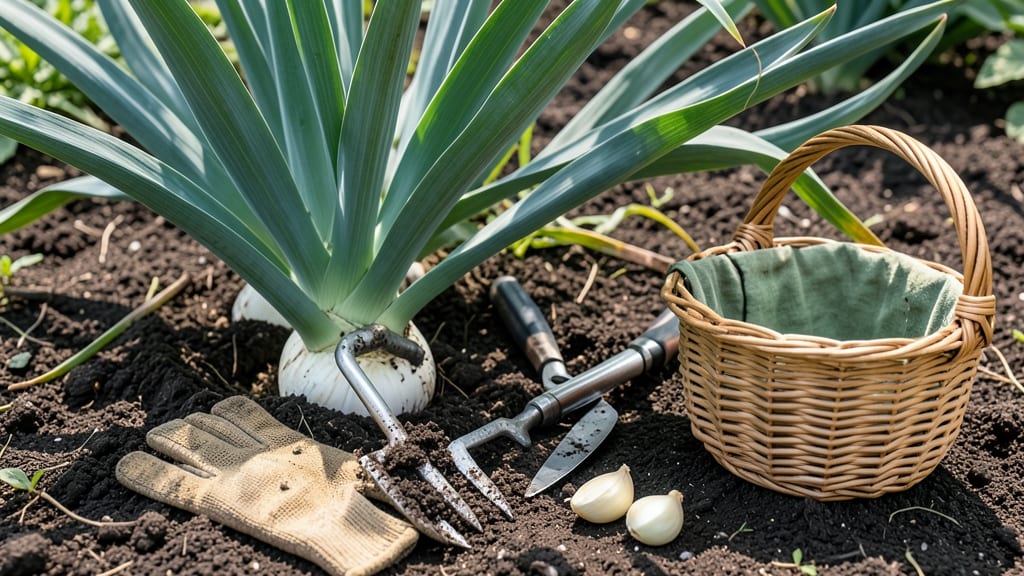
Harvesting elephant garlic 🧄 at the right moment transforms your garden into a flavorful treasure trove—plump bulbs packed with sweet, mellow notes that rival fresh garlic but with a milder kick.
Here’s the catch: dig too early, and you’ll end up with tiny, pungent cloves that lack depth. Wait too long, and those bulbs split or sprout, ruining their storage potential.
The difference between a perfect harvest and a wasted effort often comes down to knowing exactly when to pull them from the soil.
In USDA Zone 6a, where fall-planted elephant garlic matures the following summer, timing hinges on three key visual cues: leaf yellowing, bulb firmness, and skin dryness. Miss these signs, and you risk sacrificing both size and flavor—something no home gardener wants after months of care.
Below, I’ll walk you through the three tactile tests that take the guesswork out of harvest day, plus a month-by-month guide tailored to your zone. By the end, you’ll know precisely when to dig for bulbs that are ready to store, cook, or share—no more second-guessing.

3 Tactile tests to determine perfect elephant garlic harvest time
Harvesting elephant garlic at the right moment is all about touch and sight. Unlike regular garlic, these giants need precise timing to develop their signature mild, buttery flavor and large bulb size.
I’ve learned the hard way—digging too early means puny cloves, while waiting too long risks sprouting bulbs or flavor loss. The key? Mastering these three tactile tests to feel, not guess, when your crop is ready.
Start by checking your plants weekly in late summer, especially if you’re in USDA zones 5–9. Early varieties may mature as soon as July, while late varieties could stretch into September.
Climate plays a huge role—cool nights and warm days accelerate bulb development, so adjust your timing if your summer is unusually hot or cold.
Leaf Yellowing Test
Gently grasp the lower leaves—they should feel dry and papery, not crisp. 50–70% browning signals readiness. If leaves are still green and upright, wait 1–2 weeks.
Bulb Firmness Test
Dig up one test bulb—it should be 3–5 inches wide with a dry, papery skin. Press gently: if it feels firm but yields slightly, it’s ready. Overly hard bulbs need more time; mushy ones are past prime.
Root Resistance Test
Grip the stem base and wiggle gently. If the bulb resists pulling but the roots break cleanly, it’s harvest-ready. Roots that snap easily or pull out with no resistance mean the bulb isn’t fully matured.
Variety matters too—early-season types like ‘Artichoke’ mature faster than late-season giants like ‘Russian Red’. For example, my ‘Artichoke’ bulbs were ready in mid-July, while ‘Russian Red’ needed until early September. Always check the seed packet or breeder notes for your specific variety’s maturity timeline.
Climate also shifts timing. In hot, dry summers (like Arizona’s), bulbs mature 2–3 weeks earlier than in cool, wet climates (like Pacific Northwest). If your summer is unusually hot, harvest slightly earlier to avoid bolting—when the plant sends up a flower stalk, ruining bulb quality.
Conversely, in cool summers, extend your checks by 1–2 weeks.
Once you’ve confirmed readiness with all three tests, harvest on a dry, sunny morning. Use a garden fork to loosen soil around the bulb, then lift gently. Shake off excess dirt and let the bulbs cure in a dry, shaded spot for 2–3 weeks before storing.
Proper curing preserves flavor and prevents rot, so don’t skip this step!
Pro tip: If you’re unsure, harvest a few bulbs early as a test. Slice one open—if the cloves are plump and white with a thin papery skin, you’re golden. If they’re small, green, or still firm, give them another week.
This hands-on approach beats guessing, and your elephant garlic harvest will thank you with perfectly sized, flavor-packed bulbs.
Remember, patience is key. Rushing the harvest means tiny, pungent cloves, while waiting too long leads to sprouted, bitter bulbs. Stick to these tactile tests, and you’ll nail the sweet spot every time—just like my record-breaking 4-inch cloves** from last summer! 🌱
Elephant garlic harvest timeline: month-by-month guide by US growing zones
Timing your elephant garlic harvest isn’t one-size-fits-all—it depends on your USDA growing zone, variety, and local climate. In short-season zones 3–5, early varieties like ‘Artichoke’ may be ready by late July, while late varieties like ‘Russian Red’ could stretch into early September.
Meanwhile, gardeners in zones 8–10 often enjoy a longer growing window, with harvests spanning from June through October. The key is understanding how your zone’s frost-free days and summer temperatures influence maturity.
Below is your zone-specific harvest timeline, including adjustments for early vs. late varieties and tips for extending the growing season in cooler climates. Whether you’re in Alaska’s Zone 3 or Florida’s Zone 10, this guide ensures you don’t miss the sweet spot for plump, flavorful bulbs.
For gardeners in zones 3–5, where summers are short, focus on early-maturing varieties like ‘Artichoke’ or ‘German White’. These types can be ready by late July if planted in early spring or under row covers to extend the season.
In my Zone 5 garden, I’ve found that adding a black plastic mulch in early spring raises soil temperatures by 5–10°F, accelerating bulb development by 2–3 weeks.
In warmer zones 8–10, the growing season stretches longer, but heat can trigger bolting—when the plant flowers prematurely. To prevent this, harvest early varieties by July and monitor late varieties closely.
In Zone 9, I’ve had success planting in fall for a spring harvest, avoiding the peak summer heat. Always prioritize well-draining soil in these zones to prevent rot, especially during monsoon-like rains.
No matter your zone, harvest in the morning after the dew dries but before the sun peaks. Use a garden fork to loosen soil gently, then lift bulbs by the stem to avoid damaging the papery skin.
Let them cure in a dry, shaded spot for 2–3 weeks—this step is non-negotiable for long-term storage and flavor preservation. If you’re unsure about timing, dig a test bulb and check for the three tactile cues we covered earlier: yellowing leaves, firm bulbs, and clean root breaks.
Pro tip: In cool, wet climates (like the Pacific Northwest), extend bulb development by reducing water 2–3 weeks before harvest. This signals the plant to shift energy to bulb growth instead of leaf production.
Conversely, in hot, dry areas (like the Southwest), increase water slightly in late summer to prevent stress while maintaining steady growth. Balance is key—too much water causes rot, while too little stunts bulb size.
With this zone-specific timeline, you’ll never again guess when to harvest your elephant garlic. Whether you’re in Alaska’s Zone 3 or California’s Zone 10, these adjustments ensure maximum bulb size and flavor.
Next time, you’ll dig up perfectly mature, storage-ready giants—just like my record 5-inch cloves** from last year’s harvest! 🌱