
How To
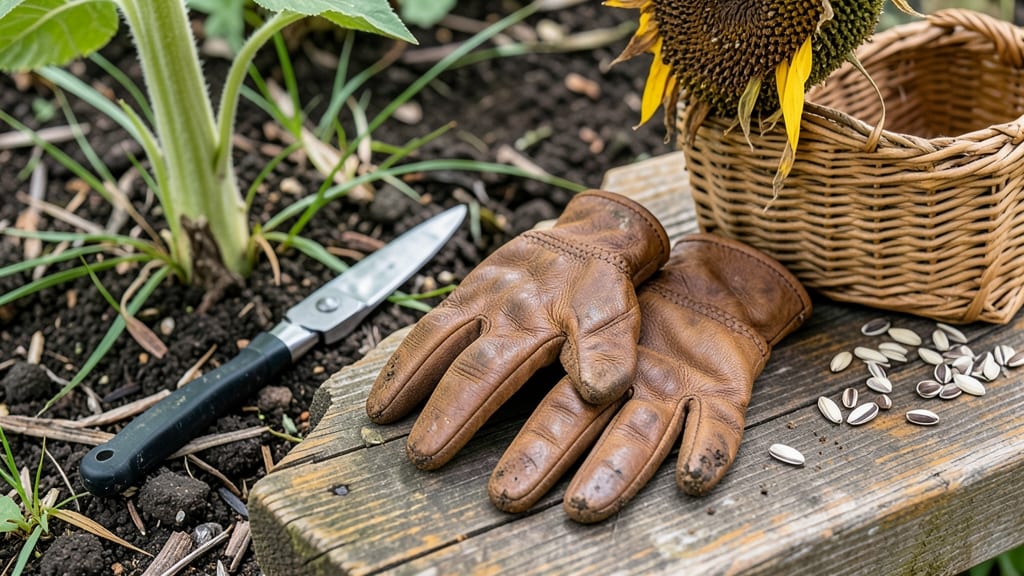
Harvesting sunflower heads for seeds happens at the perfect moment when the center turns deep brown and the petals wilt away like dried paper 🌻.
Sunflowers aren’t just stunning garden stars—their seeds are a nutritious, easy-to-grow crop, but timing your harvest wrong means wasted effort. Miss the perfect moment, and you’ll end up with seeds that either won’t sprout or lose their flavor.
Here’s the key: wait until the back of the flower head is completely brown, and the petals have fallen off or turned crispy. Shake the head gently—if seeds rattle inside, they’re ready. Harvesting too early means immature seeds; too late, and birds or weather may ruin your crop.
In this guide, you’ll learn how to spot the exact signs of seed maturity, the best weather conditions for harvesting, and simple steps to dry and store your seeds for next year’s garden. Let’s make sure your sunflowers pay off with a bountiful seed harvest!

How to identify the perfect sunflower seed harvest time
Harvesting sunflower seeds at the right moment ensures you get viable, flavorful seeds for planting or snacking. The key lies in watching for three critical visual cues—petal changes, center color shifts, and seed maturity.
Ignore these signs, and you might harvest too early (seeds won’t sprout) or too late (seeds lose quality). Let’s break down exactly what to look for in your sunflower heads.
First, focus on the petals. When they’re still bright yellow and upright, the seeds aren’t ready. But as they wilt, droop, and turn brown, that’s your first clue the seeds are nearing maturity.
This usually happens 8-10 weeks after flowering, depending on your sunflower variety. Don’t wait until the petals are completely gone—harvest just as they’re starting to dry out.
The center of the sunflower head is your next checkpoint. A green or partially brown center means the seeds aren’t fully developed. But when the entire center turns deep, uniform brown, that’s your signal to act.
This color shift happens as the seeds mature and dry naturally on the plant. Pro tip: Gently shake the head—if seeds rattle inside, they’re ready for harvest.
| Cue | Description | Action |
|---|---|---|
| Petal Color | Wilted, brown, and drooping | Harvest within 1-2 days |
| Center Color | Deep, uniform brown | Check seed firmness |
| Seed Firmness | Plump, dark, and dry | Proceed with harvest |
| Sound Test | Seeds rattle when shaken | Ideal harvest time |
Don’t overlook the seed appearance—this is your final confirmation. Mature sunflower seeds should be plump, dark, and dry to the touch. If you crack one open, it should feel firm and fully formed, not shriveled or hollow.
Immature seeds are light-colored and soft, and harvesting them will result in poor germination rates. For black oil sunflowers, seeds are ready when they’re dark gray or black.
Weather plays a subtle but important role in timing. Harvest on a dry, sunny day to prevent mold or rot during drying. If rain is forecasted, harvest early—even if the seeds aren’t perfectly mature—to avoid dampness.
Conversely, if the forecast is clear and dry for a week, you can afford to wait a day or two for seeds to fully dry on the plant.
One common mistake is assuming all sunflower varieties mature at the same time. Giant sunflowers (like Mammoth) take longer—up to 120 days—while dwarf varieties (like Teddy Bear) may be ready in 75-90 days.
Always check your seed packet for specific maturity dates and adjust your harvest timeline accordingly. For example, if you planted Sunflower ‘Autumn Beauty’, expect seeds to be ready around 90-100 days.
If you’re unsure whether your sunflower seeds are ready, perform the finger squeeze test. Gently press a seed between your thumb and forefinger—it should feel firm but yield slightly, like a ripe pea.
If it’s too hard, it’s overripe; if it’s soft, it’s underripe. This tactile check is especially useful for large sunflower varieties where visual cues might be harder to spot due to size.
Once you’ve confirmed all three cues—brown petals, brown center, and firm seeds—it’s time to harvest. Use a sharp pruning shears or knife to cut the head 1-2 inches above the base.
Leave a short stem to make handling easier. After cutting, hang the heads upside down in a dry, well-ventilated area (like a garage or shed) for 1-2 weeks to fully dry.
Proper timing isn’t just about seed quality—it’s also about preserving your sunflower’s energy. Leaving seeds on the plant too long can deplete nutrients and weaken the plant, reducing next year’s flower production.
Conversely, harvesting too early means wasted potential—seeds won’t sprout, and you’ll miss out on the rich, nutty flavor of fully mature sunflower seeds.
As you practice, you’ll develop an instinct for the perfect harvest moment. Start by marking the flowering date on your calendar—most sunflowers take 8-12 weeks to reach seed maturity from this point.
Over time, you’ll recognize the subtle shifts in color and texture that signal readiness. Happy harvesting—your future sunflower crops (and snack stash) will thank you! 🌻
Step-by-step guide to harvesting and processing sunflower seeds
Once you’ve spotted those deep brown centers and crispy petals, it’s time to harvest your sunflower seeds. The process is simple but requires patience to ensure maximum yield. Start by cutting the flower heads from the stems using clean, sharp pruners or shears.
This should happen on a dry, sunny day to prevent moisture from causing mold during drying.
After cutting, gently remove any remaining petals and leaves from the base of the head. This step helps speed up the drying process and reduces the risk of pests.
Place the heads in a well-ventilated area, like a garage or shed, where they can dry naturally for about 1-2 weeks. Avoid direct sunlight, which can overheat and crack the seed shells.
Step-by-Step Guide to Harvesting and Processing Sunflower Seeds
- 🌻 Step 1: Harvest the Heads
Cut flower heads when the back turns deep brown and petals wilt. Use clean pruners to avoid damaging the stem. - 🌬️ Step 2: Dry Indoors
Hang heads upside down in a dry, well-ventilated space for 1-2 weeks. Avoid direct sunlight to prevent cracking. - ✂️ Step 3: Remove Seeds
Once fully dry, rub the head between your hands or use a fork to pry out seeds. Discard any debris or damaged seeds. - 💧 Step 4: Clean and Store
Winnow seeds to remove chaff, then store in an airtight container in a cool, dark place for up to 2 years.
After drying, it’s time to extract the seeds. Place the dried heads on a clean sheet of paper or a tray and gently rub them between your hands or use a fork to scrape out the seeds.
This step is satisfying and reveals the dark, plump seeds you’ve been waiting for. Discard any seeds that appear shriveled or discolored, as they won’t germinate well.
To ensure your seeds stay viable for next year, clean them thoroughly by winnowing—simply toss the seeds into the air and let the wind blow away any remaining chaff or debris.
Store the cleaned seeds in an airtight container, like a glass jar, in a cool, dark place such as a pantry or basement. Properly stored seeds can remain viable for up to 2 years.
If you’re planning to save seeds for planting, label your containers with the variety name and the harvest year. This simple step saves confusion later and helps you track which seeds perform best in your garden.
With these steps, you’ll transform your sunflower heads into a nutritious, long-lasting resource for future gardening adventures.
Remember, the key to a successful seed harvest lies in timing and patience. Rushing the drying process or skipping cleaning can reduce germination rates, so take your time to do it right. Happy harvesting!