
Plants
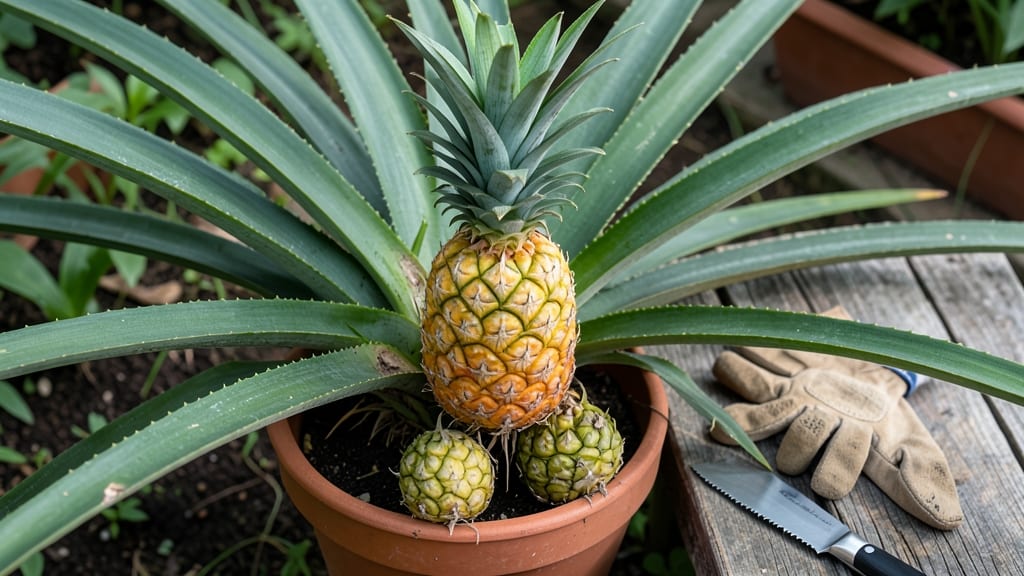
Picking a pineapple from your plant at the right time means the difference between a juicy, sweet reward and a bland, underripe disappointment.
Ever wondered why your pineapple plant took years to grow—and now you’re staring at a fruit that might be overripe or still green? Timing the harvest is everything, and the clues are right in front of you.
The key is watching for leaf color shifts—brown or yellow tinges at the base—paired with a sweet, tropical aroma. A ripe pineapple should also slip easily from the stem with a gentle tug, signaling it’s ready to harvest.
In this guide, I’ll walk you through the exact visual cues, environmental factors, and simple tests to nail the perfect harvest—so you don’t miss out on that sweet, golden payoff.

How to identify the perfect pineapple ripeness by leaf color changes
Your pineapple plant’s leaf color changes are the most reliable signals that harvest time is near. Unlike grocery store pineapples, homegrown fruit ripens slowly over 18-24 months, and missing these visual cues means waiting even longer—or risking an overripe mess.
The base of the plant (where the fruit meets the stem) is where you’ll spot the first clues. Healthy green leaves transition to yellow or brown tinges as the fruit matures. These aren’t just random color shifts—they’re your plant’s way of saying, “I’m ready!”
Here’s how to decode the leaf color signals and act at the right moment:
| Leaf Color Change | What It Means | Action Needed |
|---|---|---|
| Green leaves with yellow tips | Early ripening—fruit is still firm | Wait 2-4 weeks; monitor daily |
| Brown or black base (slight rot) | Peak ripeness—sugar content is highest | Harvest within 1-3 days |
| Red or purple tinges (varies by variety) | Genetic trait—doesn’t affect ripeness | Check other signals first |
| Dry, crispy leaves at base | Overripe—fruit may be fermenting | Harvest immediately or compost |
Environmental factors like sunlight exposure and temperature can speed up or slow down these color changes. Pineapples grown in full sun (6+ hours daily) ripen faster, while cooler temperatures (below 75°F) delay maturity. If your plant is indoors, place it near a south-facing window to mimic tropical conditions.
Pro tip: Smell the base—a sweet, tropical aroma confirms ripeness. If it smells faint or sour, wait a few more days. Overripe pineapples develop a fermented, alcoholic scent, which is a clear sign to harvest immediately.
Don’t ignore the fruit’s weight either. A ripe pineapple feels heavy for its size due to high sugar content. Gently tug the fruit—if it slips easily from the stem, it’s ready. If it resists, give it another week.
In cooler climates (Zones 6-9), pineapples may take longer to ripen. Extend the growing season by planting in large containers and moving them indoors before the first frost. Use a grow light to supplement sunlight if needed.
If your pineapple’s leaves turn completely brown or wilt before ripening, it might be stressed from underwatering or over-fertilizing. Adjust care immediately—ripe pineapples are worth the patience!
🌱
Seed maturity vs. fruit size: the hidden clues inside the pineapple
The internal maturity of your pineapple is just as important as its external cues. While leaf color changes signal ripening, the fruit’s core and weight reveal whether it’s truly ready to harvest.
A pineapple’s seeds (or core) develop from hard and fibrous to soft and edible as it matures—this is your first internal clue.
Start by gently cutting a small slice off the pineapple’s side (about 1 inch thick). If the core is still hard and fibrous, the fruit needs more time.
When the core becomes soft and slightly translucent, that’s your green light—sugar development is complete. This transition usually happens 2-4 weeks after the base turns yellow.
⚠️ callout warning ⚠️
Hard core = Underripe (bland, tart flavor)
Soggy core = Overripe (fermented, mushy texture)
Fermented smell = Too late—compost immediately
Never cut into a pineapple before harvest—it stops ripening!
The squeeze test is another foolproof method. A ripe pineapple should feel heavy for its size—this indicates high sugar content. Gently press the fruit: if it yields slightly (like a ripe avocado), it’s ready.
If it feels rock-hard, wait another week. For comparison, an unripe pineapple might bounce back when pressed, while an overripe one feels mushy.
Common mistakes include harvesting based on fruit size alone. Some pineapples (like 'Sugarloaf') stay small but ripen fully, while others (like 'Queen') grow larger but need internal checks.
Always combine leaf color, aroma, weight, and core softness for accuracy. Ignoring the core test is the #1 reason homegrown pineapples taste disappointingly tart.
For indoor-grown pineapples, maturity tests are even more critical since environmental control is limited. Use a small kitchen knife to test the core weekly once the base shows yellow.
If your pineapple is in a cool room (below 70°F), maturity will take 30-50% longer—adjust your testing schedule accordingly.
Once you’ve confirmed ripeness, harvest by twisting the fruit gently until it separates from the stem. The stem should come out cleanly with minimal resistance. Store your pineapple at room temperature for 2-3 days to let residual sugars develop—this is when its flavor peaks.
🌱