
How To
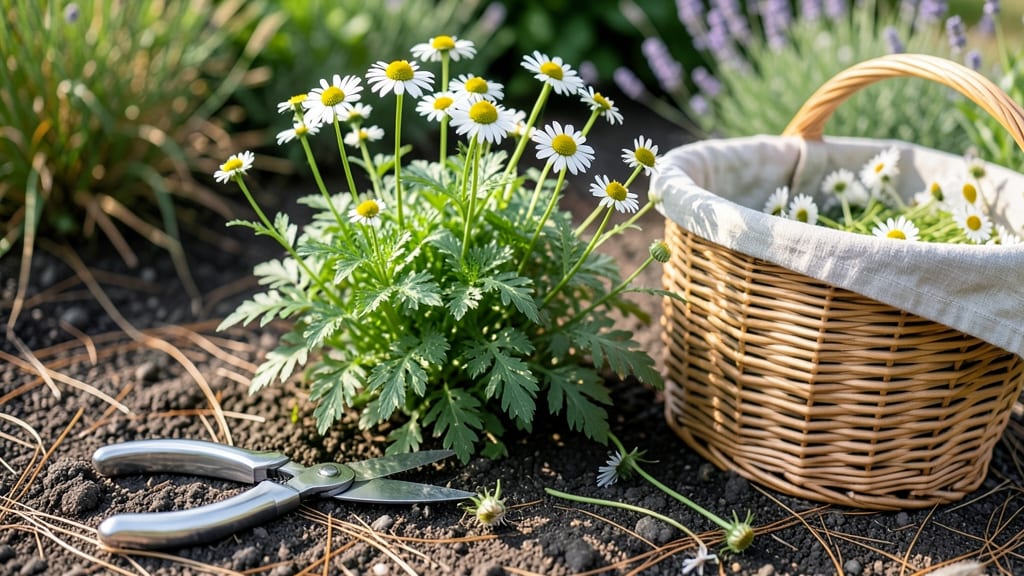
To pick chamomile at its peak for tea, medicine, or cooking, aim for mornings after dew dries—when the blooms are fully open but still fresh.
Those delicate white and yellow petals 🌼 pack the most flavor and healing power when harvested at the right moment, but many gardeners miss the window by waiting too long.
A few extra hours can turn sweet tea into bitter disappointment—or worse, leave you with flowers that’ve already started to wilt.
Below, I’ll show you the exact cues to watch for—from petal color to stem firmness—and how weather plays a role in timing your harvest for the best yield.
You’ll also learn how to extend your picking season, whether you’re growing chamomile in Zone 6a or a warmer climate, so you can enjoy fresh blooms from spring through fall.

Optimal harvest time for chamomile: moon phases, weather & flower stage
Timing your chamomile harvest is everything—picking at the wrong stage can turn sweet, fragrant blossoms into bitter or low-potency flowers.
The perfect moment occurs when floral oil content peaks, just before full bloom, but other factors like moon phases and daily weather also play a role in maximizing yield and flavor. Whether you're growing German chamomile or Roman chamomile, these nuances make all the difference.
Most gardeners focus solely on flower stage, but the time of day and moon cycle can double your harvest's potency.
For example, picking in the early morning after dew has dried preserves essential oils, while harvesting under a full moon is said to enhance the plant's energy—though science backs the dew timing more than lunar phases. Let’s break down the critical factors to ensure you’re harvesting at peak performance.
| Factor | Optimal Condition | Why It Matters |
|---|---|---|
| Flower Stage | Pre-bloom to fully open but not wilted | Maximizes floral oil content and sweetness; avoids bitter notes. |
| Moon Phase | Full moon (traditional) or waxing moon (modern) | Enhances plant energy and drying efficiency; waxing moon boosts above-ground growth. |
| Time of Day | Early morning (after dew dries) | Preserves essential oils and prevents wilting during harvest. |
| Weather | Dry, sunny days with light breeze | Avoids humidity (mold risk) and ensures flowers dry evenly. |
| Climate Adjustment | Temperate: June–September; Tropical: Year-round | Tropical chamomile thrives in consistent warmth; temperate regions need seasonal timing. |
Your chamomile’s flower stage is the most critical factor—harvesting too early (pre-bloom) results in bitter, underdeveloped flowers, while waiting too long (seed formation) reduces floral oil content and sweetness. Look for fully open petals with a defined yellow center but no brown edges.
This stage ensures the highest concentration of apigenin, the compound responsible for chamomile’s calming properties.
For German chamomile, which is larger and more robust, aim to harvest when about 70% of the flower head is open. Roman chamomile, with its smaller blooms, should be picked when 50–60% open to avoid over-maturity.
Both varieties benefit from regular harvesting—picking every 2–3 days encourages bushier growth and a longer harvest season.
The time of day you harvest also impacts quality. Always pick in the early morning, ideally between 8–10 AM, after morning dew has evaporated but before the sun intensifies.
This timing preserves volatile oils and prevents wilting. Avoid harvesting after noon, as the heat can cause flowers to lose potency and dry out prematurely.
While moon phases are often debated, traditional gardeners swear by harvesting chamomile under a full moon to enhance its energy and drying properties. Modern research suggests the waxing moon (when the moon is growing brighter) may be even better, as it’s associated with above-ground growth—perfect for leafy herbs like chamomile.
If you’re skeptical, stick to the flower stage and morning dew rule for guaranteed results.
Climate plays a surprising role in harvest timing. In temperate regions like the Pacific Northwest or Midwest, chamomile thrives from June to September, with peak harvests in July and August.
In tropical climates, such as Florida or Hawaii, chamomile can be harvested year-round, though yields may dip during monsoon seasons due to excess humidity. Always avoid harvesting after heavy rain or during drought conditions, as both stress the plant and reduce oil content.
To maximize your yield, pair your harvest timing with proper drying techniques. After picking, lay flowers in a single layer on a screen or paper towel in a dark, well-ventilated space. Avoid direct sunlight, which can degrade essential oils.
Within 1–2 weeks, your chamomile should be fully dried and ready for tea, tinctures, or culinary uses. Store dried flowers in airtight containers away from light to preserve their potency for up to 1 year.
One common mistake is harvesting over-mature flowers, which turn brown and lose their sweet aroma. Another is cutting stems too short, which stunts regrowth. Always leave at least 1–2 inches of stem above the foliage to encourage new blooms.
With the right timing, your chamomile plants can produce 3–4 harvests per season, ensuring a steady supply of this versatile herb.
🌼
How to tell chamomile flowers are ready: visual & sensory cues
Harvesting chamomile at the perfect moment ensures the sweetest flavor and highest medicinal potency. The key lies in observing three critical cues: petal color, stem firmness, and scent intensity.
When these align, you’ve hit the ideal harvest window—typically mid-morning after dew has evaporated but before the heat of the day sets in.
Look for fully open blooms with white or pale yellow petals that form a perfect daisy-like shape. The center should be a rich golden-yellow, not brown or fading.
These visual signals indicate the flower has reached peak floral oil production, which is when chamomile’s calming and healing properties are strongest.
| Harvest Stage | Petal Color | Stem Condition | Scent Intensity | Taste | Harvest Status |
|---|---|---|---|---|---|
| Too Early | Pale green/yellow | Soft, bendable | Mild, weak | Bitter | ❌ Avoid |
| Perfect Time | White/yellow | Firm, upright | Strong, sweet | Sweet, floral | ✅ Harvest |
| Too Late | Brown, wilting | Woody, brittle | Faint, earthy | Dull, bitter | ❌ Avoid |
Run your fingers gently along the stem—it should feel firm but flexible, not woody or brittle. A stem that bends too easily signals the flower is underdeveloped, while a hard, dry stem means the bloom has overripe.
Both extremes reduce flavor and potency. Pay attention to the leaves too; they should be a vibrant green, not yellowing or browned.
Your nose is your next tool: a fully ripe chamomile flower releases a rich, apple-like aroma with hints of honey. If the scent is weak or nonexistent, the flower hasn’t reached peak maturity.
Conversely, a musty or earthy smell means it’s past its prime. Trust your senses—this is how you’ll consistently harvest chamomile at its best.
Avoid the common mistake of harvesting in the afternoon, when oils can degrade under direct sunlight. Instead, pick in the early morning when temperatures are cooler. This preserves the flavor and medicinal compounds for up to 2 weeks if stored properly in a cool, dark place.
For drying, bundle stems and hang them upside down in a well-ventilated area away from humidity.
Pro tip: If you’re unsure, harvest a few blooms and taste them fresh. The sweetest, most floral chamomile will make the best tea, tinctures, or culinary garnishes. With practice, you’ll develop an eye for the perfect harvest moment—and enjoy chamomile’s full potential, season after season.