
Picking
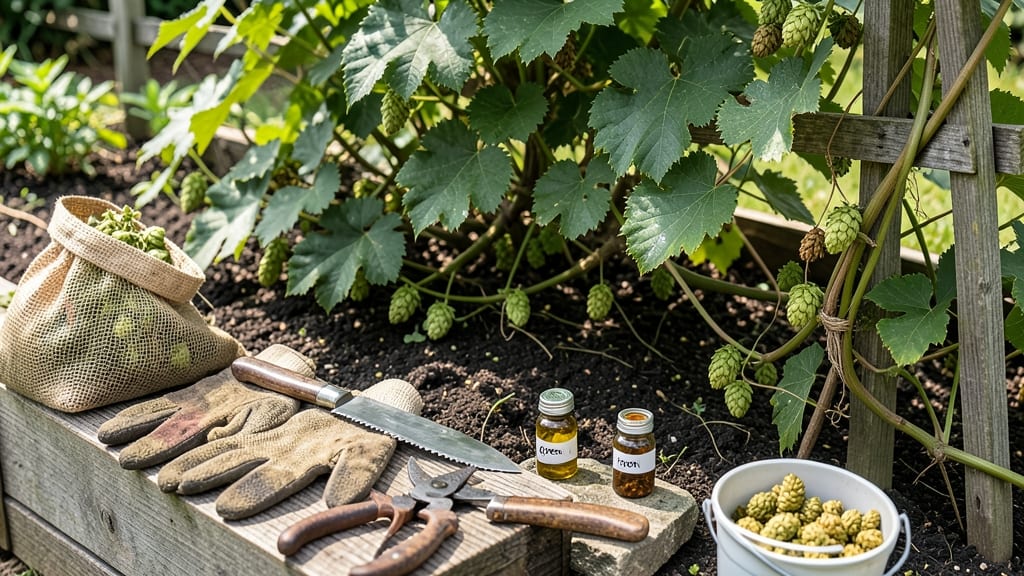
Picking hops at the right time ensures perfect flavor and aroma for your brews or culinary creations.
Picture this: you’ve spent months nurturing your 🌿 hops plants, watching them climb their trellis, and now the cones are ready—but how do you know? Miss the window, and you’ll end up with bitter, overripe cones that ruin your hard work.
Get it right, and you’ll harvest golden, resin-rich buds packed with the flavors you love.
Timing depends on more than just the calendar. In USDA Zone 6, hops typically reach peak maturity between late July and early September, but the real clues are in the cones themselves.
Look for golden-yellow or amber hues, crisp snap when pulled gently, and visible lupulin glands—those tiny, sticky dots that hold the magic. Ignore these signs, and you might pick too early (underdeveloped flavor) or too late (dry, brittle cones).
In this guide, I’ll walk you through the key stages of hop cone development, the best time of day to harvest for maximum alpha acids, and how to avoid common mistakes that turn a great harvest into a disappointment.
Whether you’re brewing your own beer or drying hops for cooking, these tips will help you nail the perfect pick every time.

Hop cone maturity stages: visual & tactile signs to harvest at peak flavor
Harvesting hops at the right moment transforms your backyard into a homebrew goldmine. The difference between underripe cones (weak flavor) and overripe cones (moldy, bitter) comes down to knowing these 3 key stages of development.
I’ve learned this the hard way—skipping just a few days can turn your prized harvest into disappointment.
Hop cones go through three distinct phases before reaching peak flavor: the pre-cone stage, cone formation, and maturity. Each stage has unique visual and tactile clues that tell you exactly when to act.
For example, the paper bag test is my go-to trick for confirming readiness—more on that later!
First, let’s break down the visual cues you need to watch for. In the pre-cone stage, your hops will show tiny green buds forming along the bines.
These buds are barely noticeable but signal the start of cone development. This stage lasts about 4-6 weeks after flowering begins, depending on your hop variety.
As cones enter the formation stage, they’ll grow rapidly and change color from bright green to a lighter greenish-yellow. This is where many gardeners make mistakes—they assume cones are ready just because they’re bigger.
But size ≠ maturity. You’ll also notice lupulin glands (tiny yellow dots) starting to appear on the cone surfaces.
The maturity stage is where things get exciting—and where timing becomes critical. Cones will turn golden-yellow or amber, and the lupulin glands will become prominent and sticky.
This is your harvest window, but it’s narrow. Waiting too long means cones will dry out on the vine and lose their aroma.
| Stage | Visual Cues | Tactile Test | Harvest Readiness |
|---|---|---|---|
| Pre-Cone | Tiny green buds forming | Soft, no resistance when touched | Not ready |
| Cone Formation | Greenish-yellow, lupulin glands visible | Slightly firmer, cones pull away easily | Not ready |
| Early Maturity | Golden-yellow, plump cones | Cones snap crisply when pulled | Harvest soon |
| Peak Maturity | Amber color, sticky lupulin glands | Cones separate easily with a crisp snap | Optimal harvest |
| Overripe | Brownish, dry, falling off bines | Cones crumble or fall apart | Too late |
🌿 Pro Tip: Use a magnifying glass to check lupulin gland color—bright yellow means peak flavor!
Now, let’s talk about the paper bag test, my favorite trick for confirming hop maturity. Simply place a few cones in a brown paper bag and seal it for 24 hours.
If the cones release a strong, resinous aroma when you open the bag, they’re ready to harvest. This test mimics the drying process and helps you gauge flavor intensity.
Another tactile test involves gently pulling a cone from the bine. At peak maturity, cones should snap crisply and separate cleanly. If they tear or crumble, they’re either underripe or overripe.
I’ve found that morning harvests often yield the best results because cones are firmer and less stressed from overnight humidity.
Regional differences also play a role in hop maturity. In cooler climates (like USDA Zone 6), cones may take 2-3 weeks longer to mature compared to warmer zones.
Always monitor your local first frost date—hops need at least 4-6 weeks of warm weather after flowering to reach full maturity.
One common mistake I see is harvesting based on cone size alone. Big cones aren’t necessarily ripe—always check the color and texture. For example, Cascade hops mature faster than Centennial hops, so timing can vary even within the same garden.
Keep a harvest journal to track your specific variety’s progress.
Finally, never harvest hops after they’ve fallen to the ground. Ground contact introduces dirt and increases the risk of mold and spoilage. If you miss the window, you’ll have to wait another year—so stay vigilant! With these visual and tactile cues, you’ll never second-guess your hop harvest again.
Best time of day & season to pick hops for maximum alpha acids
Timing your hop harvest isn't just about checking a calendar—it's about understanding how daily light and seasonal shifts impact alpha acid levels. These compounds, which give beer its signature bitterness, peak at specific moments during the day and across the growing season.
In my experience, harvesting at the wrong time can mean the difference between bold, aromatic hops and dull, flavorless buds.
For most USDA Zone 6 gardeners, the ideal harvest window falls between late July and early September. However, this can shift 2-4 weeks earlier in warmer Southern climates or 2-4 weeks later in cooler Northern regions.
The key is watching your hop cones more than the calendar—because weather patterns, like unexpected heatwaves or rainy spells, can accelerate or delay maturity.
I always recommend harvesting early morning between 6-9 AM when dew is still present but hasn't evaporated. This timing preserves alpha acids because cooler temperatures slow resin degradation. The paper bag test works well here—place a few cones in a brown paper bag for 24 hours.
If they release a strong, piney aroma, they're ready. Afternoon harvests risk heat stress, which can cause cones to overheat and lose potency.
Seasonal variations matter just as much as daily timing. In the Northern Hemisphere, aim for late August through September when daytime highs hit 70-75°F and nights dip below 60°F. This temperature swing signals cones are fully mature.
In the Southern Hemisphere, flip the schedule—harvest between February and March before summer's intense heat arrives. I've seen alpha acid levels drop by 15-20% when hops are left on the vine too long in hot climates.
Weather plays a sneaky role too. Humidity above 70% during harvest can trap moisture in cones, making them prone to mold during drying. If rain is forecast, harvest 2-3 days ahead of schedule.
Conversely, dry conditions with low humidity (<40%) can cause cones to dry out prematurely on the vine. In these cases, harvest slightly earlier and dry cones immediately in a well-ventilated area with good airflow.
Pro tip: Keep a harvest journal to track when your specific hop varieties reach peak maturity. Some, like Cascade or Centennial, mature 2-3 weeks earlier than Chinook or Fuggle. Over time, you'll spot patterns in your microclimate that help you predict the perfect harvest window year after year.
The goal is always maximum alpha acids—because that's what turns good beer into exceptional beer.