
Picking
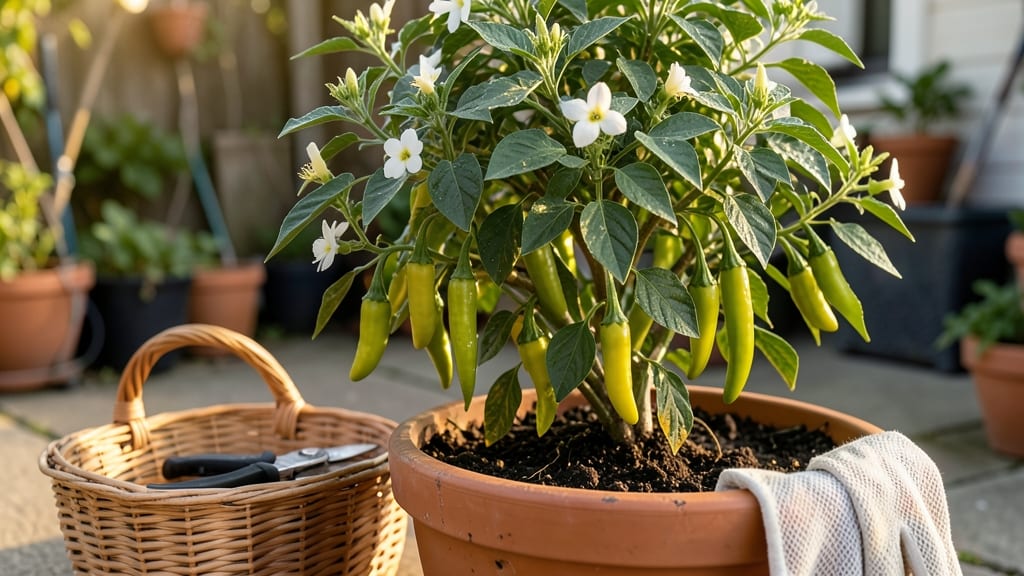
To pick pepperoncini at their peak tartness, watch for deep green peppers that snap when bent—usually 75 days after planting or when summer heat waves kick in.
That’s the moment they’re at their best, but miss it by even a week, and you’ll get bitter, shriveled peppers that taste nothing like the bright, tangy ones you crave. I’ve learned the hard way that waiting too long ruins the harvest faster than a sudden downpour can.
Heat waves are your best friend here—they signal when the peppers are ready, but only if you know the right cues. Too much sun can scorch them, while too little means they’ll never reach full flavor.
The trick is timing it just right, between 85°F and 95°F days, when the peppers are firm, glossy, and about 2-3 inches long.
In this guide, I’ll break down the exact signs to look for, how to avoid common mistakes that ruin flavor, and even how to store your harvest so it stays fresh and tangy for months. No more guesswork—just perfect pepperoncini every time.

How heat waves signal pepperoncini harvest readiness (without overripe risks)
Heat waves don’t just mean higher temperatures—they’re a clear signal that your pepperoncini are nearing peak harvest. When daytime temps hit 85°F to 95°F consistently, your plants are telling you it’s time to check for readiness.
This is when the tartness develops fully, but also when overripening risks appear if you wait too long.
I’ve found that the first 3 days of a heat wave are critical—this is when peppers grow fastest and flavors intensify. Miss this window, and you’ll end up with peppers that lose their bright tang and turn bitter.
The key is spotting the right cues before the heat becomes too extreme.
Your pepperoncini are ready when they show all three signs: deep green color, firm texture, and easy stem detachment. These indicators work together like a checklist—if one is missing, the peppers aren’t quite there yet. Let’s break down each one so you can harvest with confidence.
| Heat Wave Indicator | What to Look For | Temperature Range | Action Step |
|---|---|---|---|
| Fruit Firmness | Peppers feel firm when gently squeezed (like a ripe avocado) | 85°F - 95°F daytime | Harvest within 24-48 hours |
| Color Shift | Deep, glossy green (no yellowing or dull patches) | Consistent 3+ days above 85°F | Check stems for easy detachment |
| Stem Detachment | Peppers pull cleanly from stem (no tearing) | Nighttime temps above 70°F | Harvest immediately to preserve tartness |
| Size Check | 2-3 inches long (about the width of your thumb) | Any heat wave lasting 5+ days | Harvest every 2-3 days during peak heat |
The color shift is your first visual cue—pepperoncini should turn from pale green to a rich, deep green during heat waves. This change happens fastest when nighttime temps stay above 70°F. I always check this first thing in the morning when the peppers are cool and firm.
Next, test fruit firmness by gently pressing a pepper between your thumb and forefinger. Ready peppers should feel solid, almost rubbery, with no give. If they dent easily, they’re overripe and will taste bitter. This firmness is your guarantee of peak tartness.
Don’t overlook the stem detachment test—this is where many gardeners go wrong. A ripe pepperoncini should pull away from the stem with a slight twist, leaving a tiny stem nub on the pepper.
If it resists or tears, it’s not ready yet. I’ve learned this the hard way—waiting too long means the peppers shrivel on the vine.
Timing matters even more when temps climb above 95°F. At this point, peppers can develop sunburn or split, ruining their appearance and flavor. If your forecast shows extreme heat, harvest earlier in the day when temps are cooler.
I always check the weather app before heading to the garden during heat waves.
One trick I’ve picked up from local growers is to harvest pepperoncini in the early morning during heat waves. This gives you cooler temps and firmer peppers.
Plus, harvesting before the sun peaks means less stress on the plant. Just be sure to use sharp scissors or pruners to avoid damaging the stems.
If you’re unsure whether your peppers are ready, try the snap test: hold a pepper by its stem and bend it gently. A ripe pepperoncini will snap cleanly at the stem.
If it bends without breaking, it needs more time. This simple test has saved me from harvesting underripe peppers more times than I can count.
Remember, heat waves are a double-edged sword—they signal readiness but also speed up overripening. Once you spot the first signs, check your peppers every 2-3 days during peak heat. This frequent monitoring ensures you catch them at their tartest before they turn bitter.
Pepperoncini harvesting mistakes that ruin tartness (and how to fix them)
One of the biggest mistakes I see gardeners make is picking pepperoncini too early—before they’ve developed their signature bright tartness. When harvested too soon, these peppers lack the complex flavor you crave, tasting more like bland green beans than the zesty pickles you love.
I’ve had my share of bitter harvests from peppers that were simply underripe, and trust me, it’s a flavor crime.
The other side of the coin? Waiting too long turns your peppers into shriveled husks with a harsh, almost woody texture. Overripe pepperoncini lose their crispness and develop a pungent heat that’s far from the mild tang you’re after.
The key is finding that sweet spot between firmness and full flavor development.
⚠️ CRITICAL HARVESTING MISTAKE: Picking at the Wrong Temperature
Never harvest pepperoncini when temperatures exceed 95°F—the heat destroys flavor compounds and causes sunburn on the peppers. The ideal harvest window is during early morning when temps are between 70°F and 85°F. If you must pick in the heat, do it in the shade and immediately store them in a cool, dark place.
Another common error is using dull harvesting tools, which crush the peppers and trigger oxidation, leading to a mushy texture and bitter aftertaste. Always use a sharp pair of pruning shears or a clean knife to make a clean cut just above the pepper’s stem.
This prevents damage and helps the plant regenerate faster for a second harvest.
Improper storage is the silent flavor killer for pepperoncini. Many gardeners think these peppers can sit at room temperature, but they actually lose tartness quickly in warm conditions.
Within 24 hours of picking, store them in a perforated plastic bag in the crispest part of your fridge (usually the bottom drawer). This slows down ethylene gas production, which is what causes them to soften and spoil.
If you’ve already picked underripe or overripe peppers, don’t despair—there’s still hope! For underripe peppers, try curing them by placing them in a paper bag with an apple for 3-5 days. The ethylene gas from the apple helps ripen them naturally.
Overripe peppers can sometimes be revived by soaking in ice water for 10 minutes to firm them up, though they may never regain their peak tartness.
Remember, the best pepperoncini are firm, glossy, and deep green when they’re 2-3 inches long. When you see them snapping easily when bent, that’s your cue to harvest. With these tips, you’ll avoid the most common mistakes and enjoy a flavor-packed harvest every time. Happy picking!