
Picking
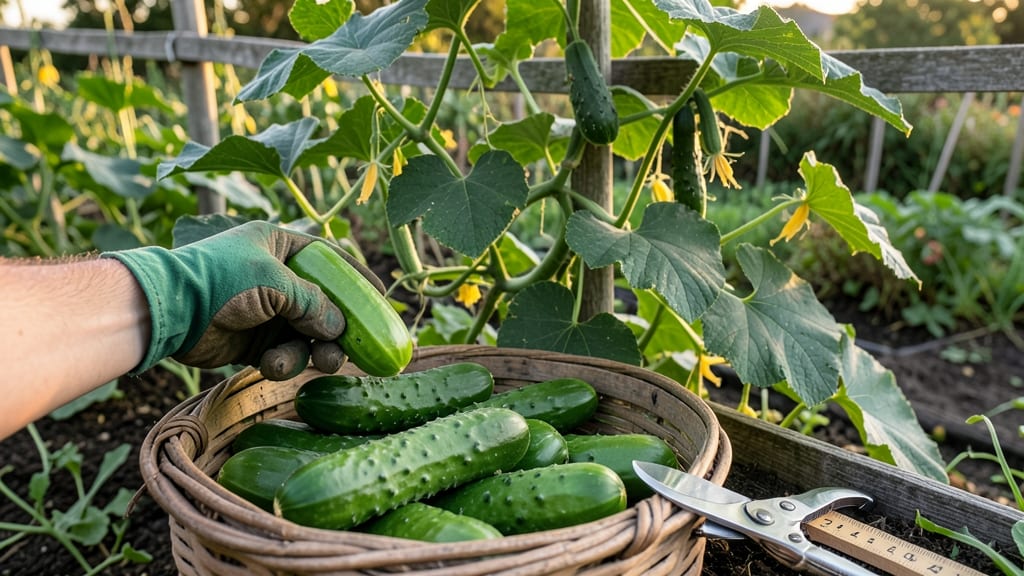
To pick pickling cucumbers at the perfect moment means harvesting them when they’re 1.5–3 inches long and still firm, not waiting for color to darken.
Most gardeners assume bright green means ready, but by then, your 🥒 might already be past prime—leaving you with rubbery, seedy cucumbers that turn homemade pickles into a mushy mess. The key? Size and texture, not hue.
In USDA Zone 6a, your peak window runs from June to September, but daily checks in the morning are your secret weapon. That’s when cucumbers are crispest, and the stem snaps cleanly—two sure signs you’ve caught them at their best.
Below, I’ll break down the exact size chart, texture tests, and why harvesting early (even if small) beats waiting for that "perfect" green. Spoiler: Your future pickles will thank you.

The exact size and texture to harvest pickling cucumbers
Harvesting pickling cucumbers at the right moment transforms your garden into a pickle-making powerhouse. The golden window for size is 1.5–3 inches long, where they’re crisp, tender, and packed with flavor. This range ensures your pickles stay crunchy—not rubbery—no matter the recipe you use.
Most gardeners make the mistake of waiting for cucumbers to darken in color, but bright green isn’t the only indicator. By the time your cucumbers reach a deep green hue, they’re often past their prime.
Instead, focus on firmness and length, which are far more reliable signs of readiness.
Here’s the non-negotiable rule: If a cucumber feels soft or spongy when you gently press it, it’s already overripe. The same goes for cucumbers longer than 3 inches—they’ll be seedy and tough, ruining your homemade pickles before you even start canning.
| Size (Length) | Texture | Color | Stem Test | Harvest Time |
|---|---|---|---|---|
| 1.5–2 inches | Very firm, crisp | Bright green | Snaps cleanly | Ideal for pickling |
| 2–3 inches | Firm, slightly less crisp | Bright to medium green | Snaps with slight resistance | Still good for pickling |
| Over 3 inches | Soft, spongy | Dark green to yellowing | Pulls away from vine | Overripe—avoid for pickling |
To test readiness, twist a cucumber gently at the stem. If it snaps cleanly without tearing, it’s perfect for pickling. If the stem pulls away easily, the cucumber is overripe and best used for slicing or composting.
Morning is the best time to harvest because cucumbers are cool and crisp after the night’s dew. Avoid picking in the heat of the day, as cucumbers can wilt and lose their firmness, making them less ideal for pickling.
One of the biggest mistakes I see in home gardens is waiting too long because the cucumbers “look ripe.” Color is the least reliable indicator—a cucumber can be bright green but still seedy and tough inside. Always prioritize size and texture over color.
If you’re unsure whether a cucumber is ready, err on the side of harvesting early. Smaller cucumbers (around 1.5 inches) still make excellent pickles and encourage the plant to produce more. Think of it as a win-win: better pickles and a longer harvest season.
For variety-specific tips, check the seed packet—some pickling cucumbers like Boston Pickling or National Pickling mature faster than others. But regardless of variety, the 1.5–3 inch rule remains your best guide.
Pro tip: Use a small ruler or measuring tape in your garden to track cucumber growth. This simple tool saves time and ensures you never miss the perfect harvest window.
Harvesting schedule: daily checks vs. weekly picking for peak flavor
Deciding between daily checks and weekly picking for your pickling cucumbers isn’t just about convenience—it’s about preserving flavor and texture. Daily harvesting keeps cucumbers at their peak crispness, while weekly picking risks overproduction, leading to yellowing leaves and tough, seedy fruits.
The right balance depends on your plant’s variety and your garden’s capacity.
For most pickling cucumbers like Boston Pickling or National Pickling, daily checks are ideal. These varieties produce rapidly, and cucumbers can go from perfect to overripe in just 24 hours.
Skipping a day means risking cucumbers that grow beyond 3 inches, becoming too seedy and soft for pickling. Think of it like pruning—regular harvesting encourages more fruit production and healthier plants.
Here’s how to tell if your plant is overproducing: Look for yellowing leaves, especially on the lower stems. This is your plant’s way of saying, “I’m struggling!” Overripe cucumbers also signal stress. When this happens, reduce water slightly and focus on harvesting every 1-2 days until the plant recovers.
- 🌱 Day 1-3: Check cucumbers daily in the morning. Harvest all 1.5–3 inch cucumbers—this prevents overcrowding and maintains quality.
- 🥒 Day 4-6: If cucumbers are growing faster than you can harvest, pick every 48 hours. Use a small ruler to measure—consistency is key.
- 💧 Day 7: If you notice yellowing leaves or cucumbers exceeding 3 inches, switch to daily harvesting immediately. Reduce water slightly to slow production.
- ✂️ Ongoing: Always harvest in the morning. Cucumbers are coolest and crispest then, ensuring peak flavor and texture for your pickles.
- 🌿 Weekly Reset: Every 7 days, inspect your plants for pests or disease. Prune any damaged leaves and adjust your harvesting schedule as needed.
Balancing yield and quality isn’t just about timing—it’s about reading your plants. If your cucumbers are consistently smaller than 1.5 inches when ready, your plant may need more sunlight or nutrients. On the other hand, if they’re over 3 inches by harvest time, you’re likely not picking frequently enough.
Adjust your schedule based on these cues, and your plants will reward you with a longer harvest season.
Pro tip: Keep a simple harvest journal. Note the date, cucumber size, and any signs of stress like yellowing leaves. Over time, you’ll spot patterns—like certain varieties producing faster in heatwaves—and fine-tune your schedule.
For example, in USDA Zone 6a, July and August often mean daily harvesting due to rapid growth, while June and September may allow for every-other-day picks.
Remember, the goal isn’t just to pick cucumbers—it’s to pick them at their absolute best. When you strike the right balance, your pickling cucumbers will stay crisp, flavorful, and perfect for canning, no matter how many jars you fill.