
Picking
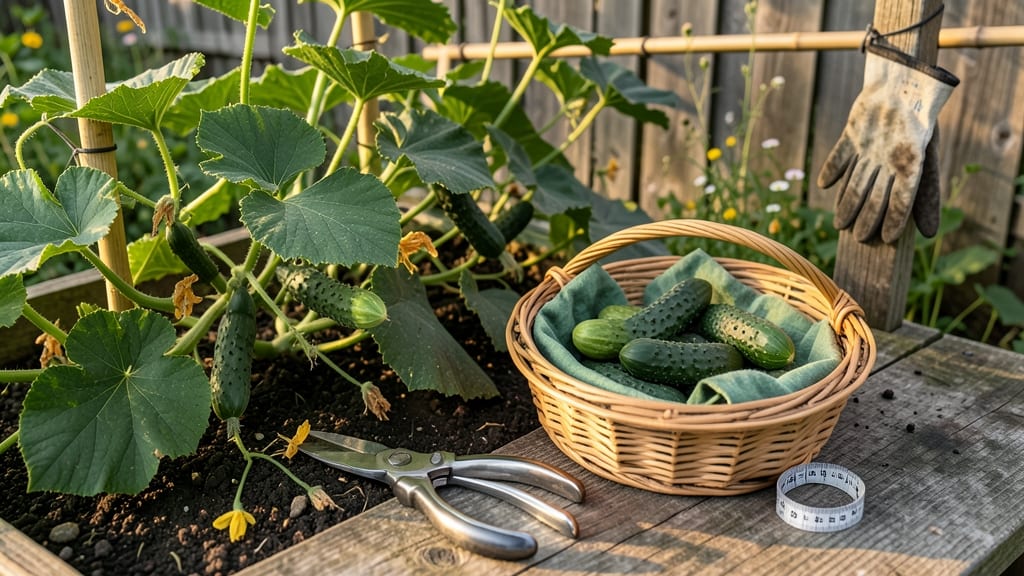
To pick cucumbers for pickling, you need them at 1-3 inches long with firm skin and hard seeds—any later and your jars will turn out mushy or bland.
If you’ve ever opened a jar of homemade pickles only to find them mushy or bland, you’ve likely missed the perfect harvest window—because timing is everything when picking cucumbers for pickling.
Most gardeners wait too long, assuming bigger cucumbers mean better flavor, but that’s a myth. The smaller and firmer you pick them, the crunchier and tangier your pickles will be.
Below, I’ll show you the exact size, color, and seed test to nail every harvest, plus the best times of day to pick for peak flavor and texture.

The ideal cucumber size for pickling: why small beats large
When it comes to pickling cucumbers, size matters more than you think. The perfect cucumber for pickling is 1-3 inches long, not the giant 8-inch monsters you might see in grocery stores.
These larger cucumbers are bred for slicing or snacking, not fermenting. Their thick skin, seedy centers, and watery flesh make them terrible candidates for crisp, tangy pickles.
Think of it like this: a 1-inch cucumber is like a baby—firm, tender, and packed with potential. A 6-inch cucumber, on the other hand, is like an adult with tough skin and a mouthful of seeds.
The longer you wait, the more the cucumber’s texture shifts from crunchy to mealy, and its flavor goes from bright to bland.
The science behind this is simple: cellulose and pectin (the compounds that give cucumbers their crunch) break down over time. As cucumbers grow, their water content increases, diluting their natural sweetness and making them less ideal for pickling.
Even the skin thickness changes—thinner on small cucumbers means better brine absorption during fermentation.
I’ve made this mistake myself—waiting "just a little longer" for bigger cucumbers, only to end up with jars full of sad, mushy pickles. The key is harvesting frequently to encourage more production.
Cucumbers grow fast, so checking your plants every 2-3 days ensures you catch them at peak pickling size.
Here’s a quick visual trick: hold the cucumber next to a standard pencil. If it’s shorter than the pencil’s eraser end (about 2 inches), it’s perfect. If it’s longer than your thumb (about 3 inches), it’s past its prime for pickling.
Even if you’re growing heirloom varieties or pickling cucumbers (like 'Boston Pickling' or 'National Pickling'), the rule stays the same: smaller is better. These varieties are bred to stay crisp longer, but they still need to be harvested at the right size.
The difference? They’ll tolerate being slightly larger (up to 4 inches) without losing quality, but you’ll still sacrifice some crunch.
Another common mistake is assuming color determines ripeness. While bright green is ideal, some cucumbers (like 'Lemon Cucumbers') stay pale yellow even when perfect for pickling.
Always go by size and firmness, not color. I’ve seen gardeners swear by "waiting until they turn yellow," only to end up with bitter, seedy pickles.
For the best results, aim to pick your cucumbers when they’re 1-2 inches long—this gives you the sweet spot between tenderness and texture. If you’re short on time, even 3-inch cucumbers can work if their seeds are hard and skin is firm, but don’t push it.
The longer you wait, the more you risk bitterness (from cucurbitacin buildup) and waterlogged texture.
Remember: pickling cucumbers aren’t meant to ripen on the vine. The moment they reach 1 inch, they start counting down to "pickle prison." So grab your basket, check your plants daily, and enjoy that satisfying crunch in every jar!
How to test seed hardness: the proven method for perfect pickling cucumbers
While size is the first clue, the real secret to perfect pickling cucumbers lies in their seed hardness. This simple test tells you whether your cucumber is truly ready for the jar or still needs time on the vine.
The seed squeeze test is my go-to method because it’s faster than waiting for size alone and more reliable than guessing by color.
Here’s how to do it: pick up a cucumber that’s 1-3 inches long and gently squeeze one end where the seeds are concentrated. If the seeds feel hard as a pea and don’t give way under firm pressure, it’s perfect.
If they dent or feel soft, keep it on the vine for another day or two. This test works because hard seeds indicate the cucumber’s cell structure is fully developed for crispness.
⚠️ WARNING: Common Mistake Alert! ⚠️ Don’t confuse seed hardness with overripe cucumbers. Some gardeners squeeze too hard and think all cucumbers are soft when they’re actually just tender. The test should feel like pressing a pebble—if it feels like a marshmallow, it’s past its prime.
Also, avoid testing cucumbers that are yellowing or blemished, as these are already too old for pickling, no matter how hard their seeds feel.
For pickling-specific varieties like 'Boston Pickling' or 'Northern Pickling,' you can sometimes get away with slightly softer seeds (think almond-hard instead of pea-hard), but never compromise on firm skin. The skin’s thickness is your backup indicator—if it’s thin and glossy, the seeds are likely hard enough.
Pro tip: test 2-3 cucumbers from different vines to account for natural variations in your garden.
If you’re still unsure, try the stem snap test as a backup. Hold the cucumber by its stem and bend it gently—if it snaps cleanly near the vine, it’s ready. A stem that bends without breaking means the cucumber needs more time.
This works because the stem’s strength correlates with the cucumber’s internal firmness. I’ve used this combo test for years, and it’s saved me from more than a few mushy pickle disasters.
Timing your harvests with these tests ensures your pickles stay crisp and tangy instead of soggy or bland. The seed hardness test is especially critical in hot climates, where cucumbers grow faster and can go from perfect to overripe in just 24 hours.
Check your plants in the early morning when cucumbers are cool and firmest—this is when the seed test is most accurate.
Remember: the harder the seed, the better the pickle. This simple trick has become my non-negotiable step before harvesting. Once you master it, you’ll never second-guess whether a cucumber is ready again—just give it a squeeze and decide! 🌱